


In 2025, a modern ugc agency for creators is less about “getting you free products” and more about building a real, scalable business around your content. Brands are shifting budget into user-generated content that looks and feels native to TikTok, Reels, and Shorts, while performance teams obsess over CPM, CPC, and conversion rates. In that world, creators are increasingly turning to ugc agencies, ugc creative agencies, and ugc content creation agencies that can bring vetted briefs, real contracts, and reliable payment workflows.
But not every user-generated content agency is built the same. Some ugc agencies with dedicated support and conflict resolution for influencer collaborations offer real, strategic value. Others simply resell low-paid briefs, overreach on usage rights, or hide behind vague terms. If you’ve ever wondered what is a ugc agency, what ugc agencies offer dedicated client support, or what makes a successful ugc creator partnership, this guide is built for you.
If you’re new to the brand side of this ecosystem, you can get a sense of Quimby’s overall approach to growth, UGC, and performance media on the Quimby Digital homepage.
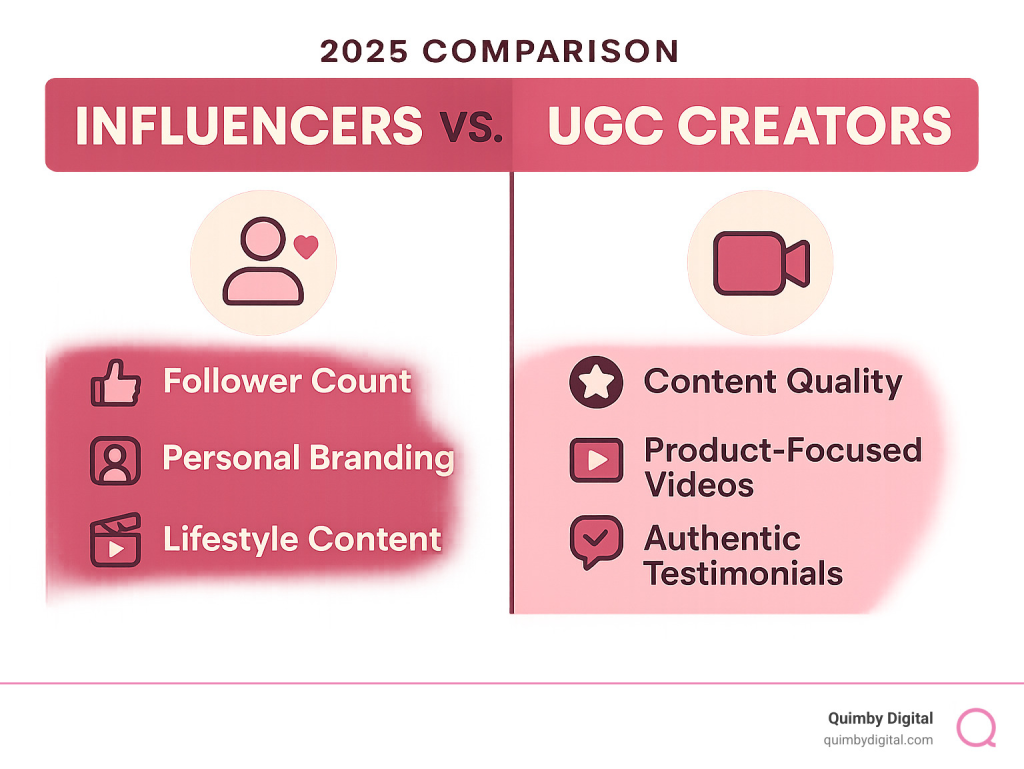
What a UGC Agency, Really? (Meaning and Business Model)
At its core, a ugc marketing agency sits between creators and brands. Think of it as a blend of:
- Talent management
- Creative direction
- Campaign matchmaking
- Contract and usage rights negotiation
- Payment and operations support
A good ugc agency for creators acts as your ugc creative partner and performance ugc partner, not just a pass-through marketplace. They help brands figure out what kind of content they need, then plug in the right vetted creators to deliver it.
If you want a more brand-side explanation of this world, Quimby has a dedicated piece on navigating the best digital influencer and UGC agencies and a deep dive into what an uncovered UGC agency partnership looks like. Those resources help clarify the user-generated content agency definition and the qualities of a great agency partner for scaling digital products.
From the creator lens, the agency’s job is to build creator management inside UGC pipelines: sourcing briefs, clarifying deliverables, aligning expectations, and moving campaigns through structured UGC approval workflows for agencies so you’re not chasing updates in random DMs.

Why Creators Are Turning to UGC Agencies in 2025
You absolutely can land deals through cold outreach, DMs, or inbound. But as platforms get more crowded and briefs get more complex, creators are asking bigger questions:
- How to find vetted content creators for TikTok ads through a UGC agency if I’m a brand?
- How can I, as a creator, plug into best UGC agencies for creators with real budgets and performance targets?
- What are the best ugc agencies that specialize in quick creator matching for influencer marketing campaigns?
On the brand side, marketers are dealing with rising Instagram advertising costs, shifting TikTok ad CPMs and CPCs, tight margin pressure, and complex social media marketing cost structures. That’s why they lean on agencies like Quimby, who combine influencer marketing agencies’ UGC paid media experience with performance frameworks.
As those pressures increase, creators are gravitating to ugc agencies that:
- Understand real marketing ROI in 2025
- Know what businesses really pay in CPC and monthly budgets for high-performing creative
- Treat UGC as part of a broader cross-channel growth plan
If you want to think like those marketers, Quimby’s articles on what businesses really pay in CPC, creative testing as the #1 ROI driver, and marketing ROI in 2025 show how much your content actually matters to the bottom line.
What a UGC Agency Actually Delivers for Creators
A strong ugc agency for creators doesn’t just send you a Google Doc and vanish. They typically deliver a mix of:
- A steady pipeline of briefs (not just one-off freebies)
- Clear contracts that define payment, usage, and exclusivity
- Structured revision processes and timelines
- Access to multi-creator coordination for UGC campaigns
- Insights from performance data (where brands and platforms allow)
From the brand side, they’re building UGC scaling frameworks for agencies, plugging your content into broader paid social campaigns, and balancing UGC against other creative formats like performance TV or YouTube ads.
If you want to see how UGC fits inside a full-funnel system, Quimby’s Your Ultimate Social Media Marketing Playbook and their guide to navigating the modern marketing funnel are useful context reads.
UGC Pricing in 2025: Why It Varies by Niche and Scope
One of the most confusing topics for creators is why UGC pricing varies by niche and scope. A male UGC creator doing low-margin product demos might not charge the same as someone producing UGC video for high-ticket CPG or femtech brands backed by significant ad spend.
Here’s how UGC services are typically priced in 2025:
- Single short-form UGC video (15–45 seconds): around $150–$800
- Three-video package: around $500–$2,000
- Static photos/image sets: around $150–$600
- Monthly retainer (multi-platform + reports): $1,500–$6,000+
Those ranges move up when:
- The brand wants full-funnel usage (organic + paid + whitelisting)
- Usage spans multiple markets or platforms
- Timelines shorten
- Revisions or reshoots are likely
A high-performing ugc marketing partner will help you understand and communicate this value, especially when brands run your content against structured creative testing programs or plug it into bigger CPG marketing strategies.
If you want a broader sense of how brands look at budgets, Quimby’s breakdown of social media marketing costs in 2025 is a good yardstick for what’s reasonable.
Micro-Creators, Niche Expertise, and Why Brands Love Them
One of the biggest myths about UGC is that you need 100k+ followers to matter. In reality, UGC creators agency rosters are increasingly stacked with micro- and nano-creators:
- Engagement tends to be more authentic and consistent
- Content feels like real user experience, not polished celebrity endorsement
- Costs are more manageable for test campaigns
- Niche expertise is easier to find
For example, brands in femtech, wellness, or parenting often look for specialists. Quimby writes about this directly in content like Instagram for femtech and wellness brands, and their detailed guide to health and wellness brand marketing services. Those same nuances are exactly what ugc agencies look for when building specialized rosters.
So if you’re wondering what are top agencies are in the UGC marketing space or who are the best agencies specialising in UGC campaigns, one answer is: the ones that can match niche creators to niche brand problems.
Building a Portfolio That Gets You Signed by Top UGC Agencies
To catch the attention of top UGC agencies, UGC influencer agencies, and UGC talent agencies, you need a portfolio that signals:
- You understand how to speak to a specific audience
- You can adapt to brand voice and paid media goals
- You know how to drive outcomes, not just views
Your portfolio should include:
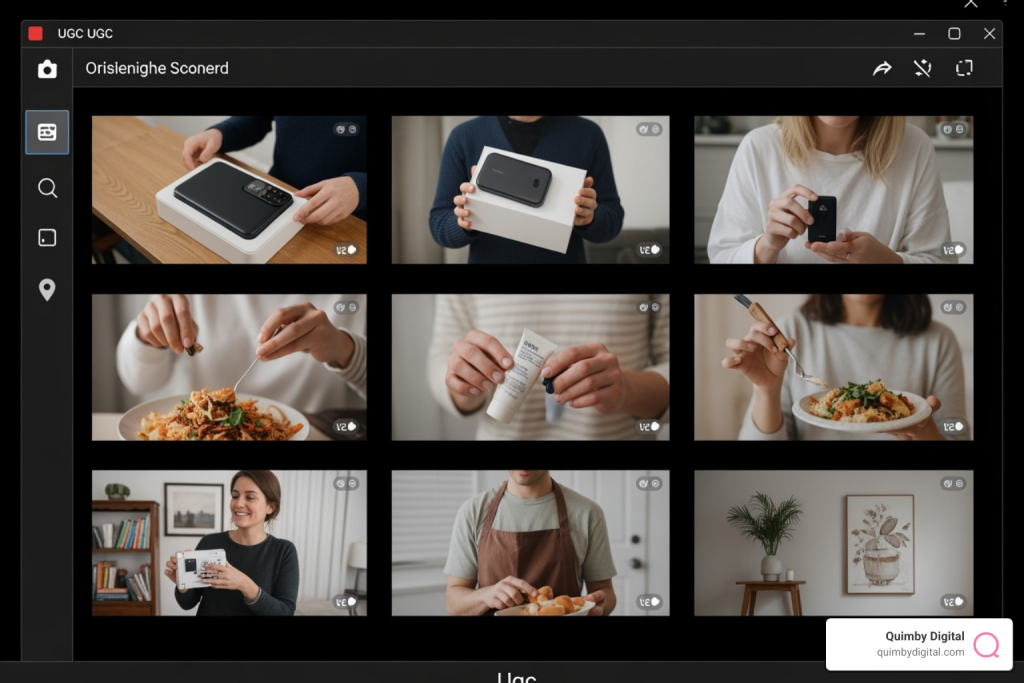
- A mix of UGC concepts (unboxings, POV storytelling, tutorials, “day in the life,” problem–solution videos)
- Short context around each campaign’s goals
- Any available performance metrics (CTR, saves, shares, watch time)
- Testimonials or positive brand feedback
- Clear contact or “work with me” instructions
You don’t need a custom-coded site. A simple user generated content services hub, a Notion page, or even a polished PDF works. If you want to see how a professional, case-study-driven portfolio feels from the agency side, check out Quimby’s Our Work hub and ecom-specific Quimby e-commerce, plus specific case studies like Stardust, Space Capital, Antigua Apparel, and Imaginary Authors.
For a deeper framework on what makes memorable content, Quimby’s guides on building brand authenticity and developing a powerful brand voice and content strategy are directly useful to creators too.
Key Contract Terms to Watch in UGC Agency Agreements
Before you sign with any UGC partner for brands or a creator-focused UGC company, make sure you understand:
- Payment structure and timing: Net 30, Net 45, Net 60; when the clock starts; whether you’re paid per deliverable or performance-based.
- Usage rights and ownership: Does the brand get 30 days organic use? One-year paid usage? All-digital channels? Global? The broader the scope, the higher the rate should be.
- Exclusivity and category restrictions: Reasonable category exclusivity can be fine; vague, industry-wide restrictions with no extra pay are a red flag.
- Revisions and reshoots: Clear boundaries around what counts as a revision vs. a new deliverable are essential.
- Termination and cancellation: Kill fees, partial payments, and what happens to content when a campaign pauses.
Creators often learn the hard way that ugc contracts can lock up their best work for years. A strategic ugc content agency or ugc influencer agency will walk you through each clause and support negotiation.
If you want to see how Quimby thinks about long-term value and retention, read their pieces on brand health metrics, the importance of customer retention, and beyond the first purchase. Those same principles apply to your own creator business.
Common Red Flags: When to Walk Away from a UGC Agency
It’s better to say no early than to be trapped in a bad UGC partnership. Watch out for:
- Vague commissions and unclear UGC agency meaning language in contracts
- “Exposure-only” offers for fully produced ugc video content
- Perpetual, all-media, all-territory usage rights without meaningful compensation
- Mandatory exclusivity covering broad categories and long timeframes
- No defined support person or escalation channel for conflict resolution
- High-pressure sales tactics or guilt-driven messaging that rushes you to sign
If an agency positions itself as the top UGC tech agency or globally recognized as a top UGC agency but can’t provide case studies, brands, or clear processes, that’s a signal to dig deeper.
To see what a more transparent, senior-led model looks like, Quimby’s articles on why experience wins in 2025 and senior-led strategy vs post-and-pray marketing help you see the difference.
How UGC Agencies Fit into Bigger Brand Systems
From the brand side, a user-generated content agency is only one piece of the puzzle. UGC slots into:
- Paid social and paid social media advertising playbooks
- TikTok marketing strategies and TikTok vs Instagram ad strategies
- Instagram ads strategy and algorithm updates
- Performance TV, YouTube, and programmatic (Quimby covers this in programmatic and display advertising and performance TV advertising)
- Retention, brand building, and long-term loyalty
A smart UGC-focused agency for startups will talk about how your content connects to these systems, not just how many videos you can churn out. For a 10,000-foot view on why UGC and social matter at all, Quimby’s guide on why digital marketing matters for businesses in 2025 and their piece on the importance of digital marketing are useful background.
Where You and Quimby Fit in the UGC Ecosystem
Quimby isn’t a traditional ugc talent agency, but the team sits right at the intersection of:
- Performance media
- Influencer and UGC campaign management
- Creative strategy and testing
- Brand health and long-term growth
For brands, Quimby offers dedicated influencer and UGC campaign management services and broader social media marketing services. For creators, that means partnering with brands whose teams actually know how to use UGC effectively.
If you’re a brand operating in or expanding to key markets, you can see how Quimby supports companies in Austin, Toronto, Miami, Los Angeles, New York, and beyond via their location hub at Quimby City. For category-specific work, their pages on being the best CPG social media agency in North America, top beauty marketing agencies, and best CPG agencies in NYC show how UGC and influencer content plug into bigger brand programs.
And if you want to get even deeper into user-generated content strategy itself, Quimby’s guide to unleashing the power of your audience through UGC is a perfect companion to this article.
Final Thoughts: Choosing the Right UGC Agency for Creators
A ugc agency for creators should expand what’s possible for you. The right partner will:
- Bring steady briefs from brands that value UGC
- Offer fair, transparent pricing and commissions
- Protect your rights, your time, and your reputation
- Provide creative direction without crushing your voice
- Integrate your work into larger, performance-driven campaigns
If you’re serious about turning UGC into a real business, not just a side project, it’s worth investing the time to find an agency that functions as a true ugc growth partner—not just another inbox full of underpriced offers.
To explore how Quimby builds UGC and influencer programs that actually drive results, take a look at their full services overview and broader social media marketing services.
And when you’re ready to plug into a more structured, performance-focused creator ecosystem—whether you’re a brand, a creator, or both—the easiest next step is to start a conversation with the team via the main site at Quimby Digital.