


Authentic brand building is the process of creating a genuine brand identity that aligns your company’s values, actions, and communications to build trust and meaningful connections with your audience.
Quick Guide to Building Brand Authenticity:
- Define your core values – Identify what your brand truly stands for beyond profit
- Be transparent – Share both successes and failures openly with your audience
- Tell your story – Use your unique history and founder’s journey to connect emotionally
- Show, don’t just tell – Align your actions with your stated values consistently
- Listen actively – Incorporate customer feedback and respond genuinely
- Use real imagery – Feature actual customers and employees instead of stock photos
- Take a stand – Support causes that align with your values, even if controversial
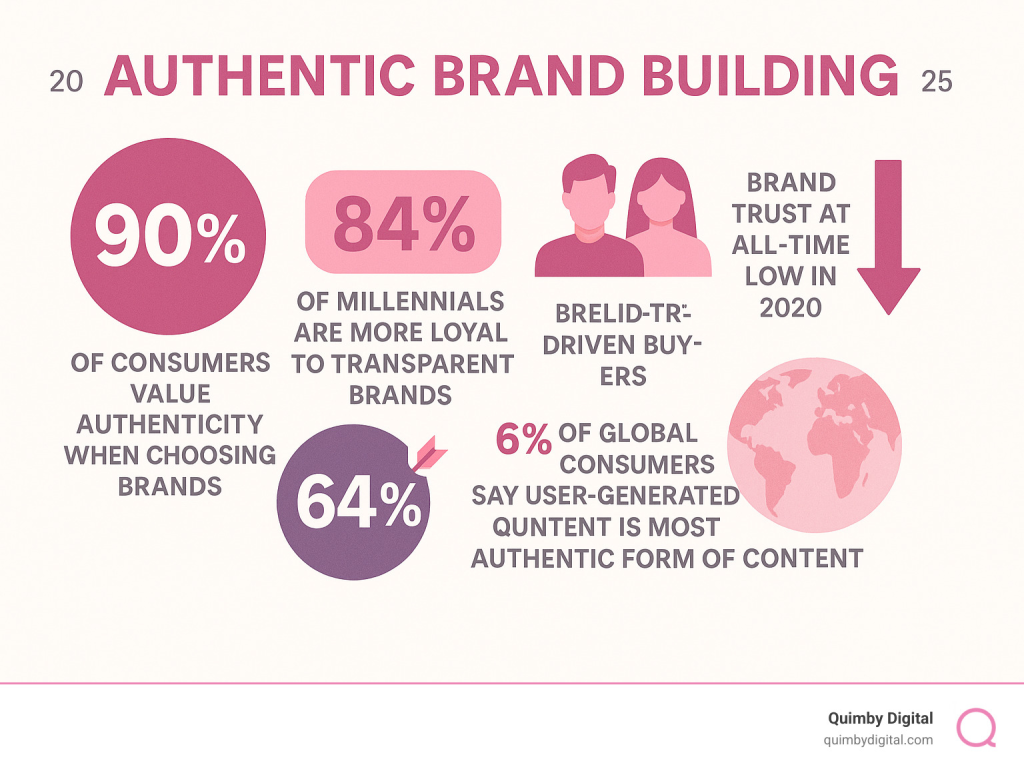
In today’s market, consumers are losing faith in brands. Research shows brand trust is at an all-time low, yet 90% of consumers say authenticity is key when deciding what brands to support. This creates both a challenge and a massive opportunity.
The numbers tell a clear story: 64% of customers are belief-driven buyers who use their wallets like votes. 83% of millennials want companies to share their values, while 60% of Gen Z women believe brands should support causes important to them.
For wellness, CPG, and tech brands struggling with social media engagement, authenticity isn’t just nice to have – it’s essential for survival. When done right, authentic brands see real results: Patagonia increased sales 30% after their “Don’t Buy This Jacket” campaign, while Nike gained $6 billion in brand value from taking a stand with Colin Kaepernick.
But authenticity requires more than good intentions. It demands consistency between what you say and what you do, transparency when things go wrong, and the courage to take stands that matter to your customers.
The Foundation: Defining Your Brand’s Authentic Core
Building an authentic brand starts with looking inward. It’s not about crafting the perfect marketing message or following the latest trends. Instead, authentic brand building begins with understanding who you truly are as a company and what you genuinely stand for.
Think of your brand like a person meeting someone new. What would they say about your values, your mission, and your character when you’re not around? That’s your authentic core – and it needs to be rock solid.

The connection between your mission, your daily actions, and how customers perceive you is everything. When there’s alignment, magic happens. When there isn’t? Well, customers can spot a fake from miles away.
Here’s the reality check: 94% of consumers believe having a purpose is important, but only 37% believe companies today have one that’s clear and definable. That gap? That’s your opportunity to stand out.
If you say you care about sustainability but your supply chain tells a different story, customers will notice. Today’s consumers are like brand detectives, researching everything before they buy. They’re not just looking at your marketing – they’re checking your practices, your partnerships, and how you handle problems.
The Core of Authentic Brand Building: Mission and Values
Defining your ‘why’ isn’t just a nice exercise – it’s the foundation everything else builds on. What problem does your brand solve? What positive change do you want to create? These questions might feel philosophical, but they’re actually very practical.
Start from the inside out. Poll your employees about what they think your company stands for. The people working with you every day often have the clearest view of your true values. They see how decisions get made, how customers get treated, and what really matters when the pressure’s on.
Once you’ve identified your core values, hire for alignment. When your team genuinely believes in your mission, authenticity becomes natural instead of forced. It shows up in customer service calls, social media interactions, and every touchpoint with your audience.
Make your purpose visible in everything you do. Don’t just tuck it away on an ‘About Us’ page. Weave it into product descriptions, social posts, and customer communications. When values are truly integrated, they become part of your brand’s DNA.
For a deeper dive into identifying what matters most, Brené Brown’s values exercise offers a powerful framework for getting clear on your authentic core.
From Words to Action: Ensuring Consistency
This is where authentic brands separate themselves from the wannabes. Walking the talk means your actions match your words, even when it’s inconvenient or expensive.
Customers don’t expect perfection, but they absolutely expect honesty. They want to see consistent alignment between what you say and what you do. Look at every part of your business: your supply chain, how you treat employees, your marketing messages. Do they all tell the same story?
Consistent messaging builds trust in ways that clever advertising never could. When customers see the same values reflected in your hiring practices, your product development, and your crisis response, they start to believe you really mean what you say.
This consistency needs to show up internally too. Are your company meetings, policies, and culture aligned with your stated values? Authenticity starts from the inside and radiates outward.
For more insights on building this kind of genuine connection, check out How to Use Social Media to Build Trust With Your Audience.
Authentic brand building isn’t a one-time project. It’s an ongoing commitment to being genuine in everything you do. When you get it right, customers don’t just buy from you – they believe in you.
Actionable Strategies for Authentic Brand Building
Here’s where things get exciting. We’ve figured out who we are as a brand and made sure our actions match our words. Now it’s time to put that authenticity to work in ways that actually connect with people.
The timing couldn’t be better. The Edelman Trust Barometer shows a global trust crisis, which means customers are hungry for brands they can actually believe in. When we accept transparency, tell our real stories, and let our customers do the talking through social proof, we’re not just being nice – we’re being smart.
The best part? Authentic brand building doesn’t require a massive budget or fancy tricks. It just requires us to be genuinely ourselves and show up consistently for our community.
Accept Radical Transparency
Let’s be honest – hiding behind perfect marketing doesn’t work anymore. People can smell fake from a mile away, and they’re not buying it (literally). Radical transparency means we share everything: our wins, our oops moments, and even the messy middle parts of running a business.
Think about when your favorite app goes down. The brands that immediately send a clear explanation from their CEO about what happened and how they’re fixing it? Those are the ones we remember fondly. Calendly nailed this approach, turning a potentially frustrating situation into a trust-building moment.
Buffer takes transparency even further by sharing their financial reports, employee salaries, and internal metrics publicly. It might sound scary, but 84% of US Millennials say they’d be more loyal to a brand if they knew it was transparent. They’re not looking for perfection – they’re looking for honesty.
When we talk about our environmental impact, for example, we can skip the vague “we’re eco-friendly” language. Instead, we get specific: “We reduced plastic waste by 20% this year by switching to compostable packaging.” Real numbers, real actions, real trust.
Leverage Storytelling and Your Unique History
Every brand has a story that’s uniquely theirs. Maybe it’s the founder who started mixing skincare products in their kitchen, or the tech team that stayed up all night solving a problem that nobody else cared about. These aren’t just nice anecdotes – they’re the emotional bridges that connect us with our customers.
People don’t fall in love with products; they fall in love with the stories behind them. When Nike stood with Colin Kaepernick, they weren’t just selling shoes anymore. They were telling a story about courage and standing up for what’s right. The result? A $6 billion brand value increase and a 31% boost in sales.
Our story should weave through everything we create. It’s not just for the “About Us” page that nobody reads. It’s in our social media captions, our email newsletters, and even how we respond to customer service inquiries. When we share the human moments – the late-night brainstorming sessions, the customer email that made us cry happy tears, the mistake that taught us something important – we become real to people.
For brands ready to dive deeper into storytelling, especially through video, 5 Ways for Brands to Create Effective Video Content offers practical strategies for bringing these stories to life.
Harness the Power of Social Proof and UGC
Here’s the thing about trust: people believe other people way more than they believe brands. When someone’s friend posts about loving a product, that carries more weight than any fancy ad we could create. That’s why user-generated content is pure gold for authentic brand building.

The numbers back this up: 60% of global consumers say that UGC is the most authentic form of content, and it’s 2.4 times more likely to be considered authentic compared to content we create ourselves. It’s like having a friend vouch for us at a party.
Aerie figured this out when they started featuring real women in their campaigns instead of heavily retouched models. The result? 28 consecutive quarters of double-digit sales growth. Real people, real stories, real results.
Getting people to create content for us doesn’t have to be complicated. We can run contests that ask customers to share photos with our products using a branded hashtag. We can request shares by simply asking satisfied customers to post about their experience. When customers tweet about loving our service, we can repurpose that content (with permission) into full testimonials on our website.
Collaborating with influencers whose audiences genuinely align with our target market can also work wonders, as long as the partnership feels natural rather than forced.
The beauty of social proof is that it does the heavy lifting for us. When potential customers see real people genuinely excited about what we offer, that’s the ultimate endorsement – and it doesn’t cost us anything but authenticity.
Engaging Your Audience Genuinely
Authentic brand building isn’t a one-way street where we shout our message into the void and hope someone’s listening. It’s more like having coffee with a friend – a real conversation where both people matter. The magic happens when we create genuine two-way communication that builds community and shows we actually care about what our audience thinks.

Think about that friend who only talks about themselves and never asks how you’re doing. Exhausting, right? That’s exactly how brands feel when they’re all talk and no listen. When we truly engage with our audience, we tap into something powerful – real insights about what they need, want, and value. This kind of authentic connection is especially crucial on platforms like Reddit and TikTok, where communities can spot a fake from miles away.
The beautiful thing about genuine engagement is that it creates a ripple effect. When customers feel heard and valued, they become our biggest advocates. They share our content, recommend us to friends, and stick with us through thick and thin.
Understanding Generational Expectations (Gen Z & Millennials)
Here’s where things get interesting – not everyone expects the same thing from brands. Millennials and Gen Z have lived through different experiences, and it shows in how they connect with brands.
Millennials have been through the wringer. They’ve weathered economic crashes, job market instability, and a whole lot of marketing BS. That’s made them incredibly savvy about what’s real and what’s not. They want brands that feel genuine and unpolished – think less Instagram-perfect, more “this is actually how our product works in real life.”
The numbers tell the story: 90% of millennials say brand authenticity is key when they’re deciding what to buy. Even more telling? 83% want companies to share their values. For this generation, shopping isn’t just about getting stuff – it’s about voting with their wallets for the kind of world they want to live in.
Gen Z takes this even further. They’re digital natives who grew up with social media, so they can spot inauthentic content faster than you can say “influencer partnership.” They don’t just want brands to have values – they want to see those values in action. 60% of Gen Z women believe brands should actively support causes that matter to them.
What’s fascinating about Gen Z is how they accept brands with personality. Look at how Duolingo’s sassy owl mascot has become a social media sensation. They’re not afraid of brands that are a little weird, a little human, a little imperfect. They actually prefer it.
Both generations share something important: 70% of US consumers think brands should take stands on political and social issues. The days of playing it safe and staying neutral are largely over. Tools like those we discuss in Mastering Twitter Polls: How to Directly Engage With Your Audience can help us understand where our audience stands on issues that matter to them.
The Art of Listening: How to Incorporate Customer Feedback
Real talk: listening is hard work. It’s not just about collecting feedback – it’s about actually doing something meaningful with what we hear. But when we get it right, the payoff is incredible.
Social listening goes beyond just monitoring mentions. We’re talking about understanding the conversations happening around our brand and industry, even when people aren’t directly talking to us. What are they excited about? What frustrates them? What trends are emerging that we should know about?
Every comment matters. We know one CEO who personally reads every piece of customer feedback that comes in. Sounds intense, but think about the insight that provides. When we respond thoughtfully to comments and DMs, we’re not just being polite – we’re showing that real humans work at our company and that every customer’s voice has value.
Surveys and polls are our direct line to understanding what our audience actually wants. Instead of guessing what features to build or what content to create, we can simply ask. Some brands even let customers vote on product development decisions right on their landing pages.
The real magic happens when we turn feedback into visible action. When customers see that their suggestions led to actual changes, that builds trust like nothing else can. Take Chewy – they send sympathy cards when customers’ pets pass away. It’s a simple gesture that came from understanding the emotional journey their customers go through.
Making feedback easy to give is crucial. If people have to jump through hoops to tell us what they think, most won’t bother. Creating a culture where customers feel comfortable reaching out – whether that’s through quick surveys, social media interactions, or just making it clear we actually want to hear from them – keeps that valuable conversation flowing.
This continuous loop of listening and responding doesn’t just improve our products and services. It creates the kind of authentic relationship that turns customers into community members. For more strategies on building these genuine connections, check out 6 Ways to Grow Your Social Media Following.
Navigating the Risks and Rewards of Authenticity
Let’s be honest – authentic brand building isn’t always a smooth ride. Taking genuine stands and admitting our mistakes can feel scary. But here’s what we’ve learned: the cost of being fake is far worse than the temporary discomfort of being real.
When brands try to pull off “greenwashing” (pretending to care about the environment without actually doing anything) or “woke-washing” (jumping on social causes just for profit), consumers see right through it. And in today’s world where trust is already at an all-time low, getting caught being inauthentic can be devastating.
The beautiful truth? Brands don’t need to be perfect. We just need to be honest about where we are right now and transparent about where we’re going. When we steer these challenges thoughtfully, the rewards are incredible – genuine brand love, fierce customer loyalty, and the power to create real change.
The Challenge of Taking a Stand
Here’s where things get interesting. In our increasingly connected world, staying neutral often feels impossible. 70% of consumers expect brands to take a stand on social and political issues, and younger generations especially want to support companies that share their values.
Yes, taking a stand means some people might not like us. But it also means the right people will love us even more. When Nike featured Colin Kaepernick in their campaign, they faced serious backlash. Some people burned their shoes. But the result? A $6 billion brand value increase and 31% boost in sales.
Patagonia’s “Don’t Buy This Jacket” campaign seemed counterintuitive – telling customers not to buy their products. Yet sales jumped 30% that year because the message aligned perfectly with their environmental values and resonated deeply with their audience.
The key is staying true to our core values, even when it gets uncomfortable. We need to communicate our position clearly and respectfully, prepare for some controversy, and remember that it’s better to be loved by the right people than liked by everyone.
When negative feedback comes (and it will), we handle it gracefully. We listen, we respond thoughtfully, and we stay consistent with who we are. The brands that do this well often find that their authentic stands become their greatest competitive advantages.
Measuring the Impact of Your Authentic Brand Building Efforts
So how do we know if all this authenticity work is actually paying off? While we can’t measure genuineness with a simple calculator, we can definitely track its impact through metrics that matter.
Brand loyalty metrics tell us if customers are choosing us again and again. When people become repeat buyers and enthusiastic advocates, that’s authenticity working. Customer retention rates show us if we’re building those deep, lasting relationships that authentic brands are known for.
Earned media value is particularly exciting – this measures all the positive mentions, shares, and features we get without paying for them. When Nike earned $163 million in earned media from their values-driven campaign, that was authenticity creating real business value.
Social sentiment analysis helps us understand how people actually talk about our brand online. Are the conversations positive? Are people defending us when others criticize? This emotional connection is what authentic brands build.
Sales growth correlation might not be a direct line, but it’s hard to ignore. When Patagonia sees that 30% sales increase after an authenticity-focused campaign, the connection becomes pretty clear.
Academic research backs this up too – perceived brand authenticity improves emotional brand attachment and word-of-mouth. This means customers don’t just buy from us; they feel connected to us and naturally want to tell others about us.
By tracking these metrics consistently, we can see how our authenticity efforts translate into real business results. For more detailed guidance on measuring social growth effectively, check out 5 Metrics to Record for Social Growth.
The bottom line? Authentic brand building has risks, but the rewards – genuine customer love, sustainable growth, and the ability to make a real difference – make it all worthwhile.
Conclusion
Authentic brand building isn’t something we check off our to-do list and forget about. It’s more like tending a garden – it requires consistent care, attention, and nurturing over time. Throughout this journey, we’ve explored how aligning our words with our actions, embracing radical transparency, sharing our unique stories, and genuinely connecting with our audience creates the foundation for lasting success.
The numbers don’t lie: consumers are craving real connections in a world full of polished facades. When 90% of consumers value authenticity but brand trust is at an all-time low, there’s a clear opportunity for brands willing to be genuine. The future of branding belongs to those brave enough to show their true colors – imperfections and all.
For wellness, CPG, and tech-forward brands struggling to cut through the digital noise, authenticity isn’t just a nice-to-have anymore. It’s the bridge that transforms skeptical browsers into loyal advocates. When we build trust through transparency, share our real stories instead of stock narratives, and listen genuinely to our communities, something magical happens. We create connections that go deeper than transactions – we build relationships that fuel sustainable growth.
At Quimby Digital, we’ve seen how powerful authentic communities can be. As a female-founded boutique agency, we specialize in organic growth strategies that prioritize genuine connection over flashy campaigns. We know that building authentic communities on platforms like Reddit and TikTok requires more than just posting content – it demands understanding, empathy, and a commitment to real engagement.
The brands that thrive tomorrow will be those that choose authenticity today. They’ll be the ones willing to admit when they mess up, celebrate their customers’ stories as much as their own, and take stands on issues that matter – even when it’s uncomfortable.
Building an authentic brand creates a lasting connection that drives growth, but more importantly, it creates something meaningful in a world that often feels anything but. That’s the kind of legacy worth building.
Real brands resonate. Discover brand voice essentials, elevate brand awareness, and master brand reputation online.
Ready to build an authentic community? Explore our social media services.