


Master brand voice development! Learn our 5-step framework to create an authentic, unique voice that resonates and builds trust.
Brand voice development is the process of defining your brand’s unique personality and communication style. It’s what makes your brand sound distinctly you across all customer touchpoints, from social media posts to customer service emails.
Quick Brand Voice Development Overview:
- Brand Voice = Your consistent personality (e.g., friendly, authoritative, playful).
- Brand Tone = Your emotional response to specific situations (e.g., celebratory vs. apologetic).
- Key Steps: Define mission → Research audience → Analyze competitors → Create voice chart → Build style guide.
- Result: An authentic connection that drives loyalty and revenue.
Think of your favorite brands—you likely recognize their “voice” instantly. That’s by design. Research shows that 88% of marketers believe brand language helps connect with customers. More importantly, 86% of consumers say authenticity is key when deciding which brands they support.
For wellness, CPG, and tech brands, a distinctive voice is essential for cutting through the noise. The challenge is that most brands either sound generic or inconsistent. This is a problem when 90% of customers say they expect consistent interactions across all channels.
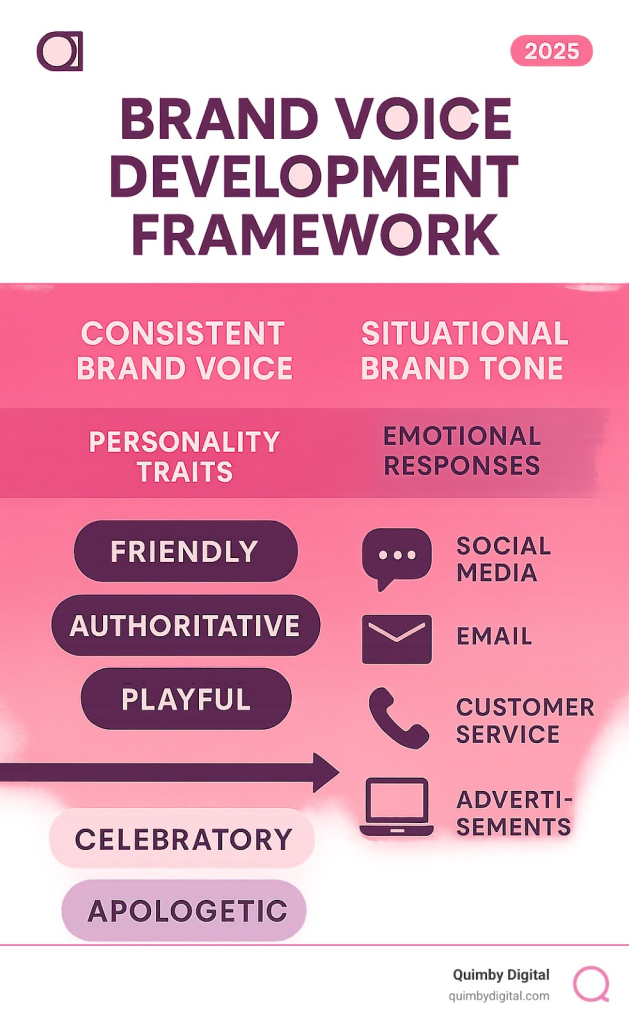
What is Brand Voice and How Does it Differ from Brand Tone?
While often used interchangeably, brand voice and brand tone are different. Think of it this way: your brand has a core personality (its voice), and that personality expresses itself with varying emotions depending on the situation (its tone).
Your brand voice is the unique, consistent personality your brand presents to the world. It’s the “who” of your communication—the character, values, and point of view that run through everything you say. For instance, a brand might be inherently “witty and helpful.” That’s its voice, and this consistency builds trust and recognition.
Brand tone, on the other hand, is the emotional inflection of your brand’s voice, which adapts to specific situations. It’s the “how” of your communication. While your voice is constant, your tone is flexible. For example, a “witty and helpful” brand might use a playful tone on social media but a serious, empathetic tone when responding to a customer complaint. The core voice remains, but the emotional delivery shifts to fit the context.
| Feature | Brand Voice | Brand Tone |
| Definition | Consistent personality of the brand | Emotional inflection or attitude of the voice |
| Nature | Stable, unwavering, inherent | Flexible, variable, situational |
| Function | Defines “who” the brand is | Defines “how” the brand expresses itself |
| Purpose | Builds long-term recognition and identity | Adapts messaging to context and audience |
| Analogy | Your personality (e.g., witty, authoritative) | Your mood or expression (e.g., playful, empathetic) |
Why a Unique Voice is Crucial for Your Business
In today’s crowded marketplace, a distinct brand voice is a necessity, not a luxury. It’s how a brand resonates and thrives.
First, a unique voice helps you stand out from the competition. When your brand sounds like everyone else, you become background noise. A well-defined voice cuts through that noise, making your brand memorable and instantly recognizable, especially in a world saturated with AI-generated content.
Second, a consistent and authentic voice is vital for building trust and fostering loyalty. Consumers crave authenticity. When you consistently communicate in a way that aligns with your values, you build credibility and trust. This trust translates directly into loyalty, a powerful driver of long-term business success.
Finally, a strong brand voice directly impacts your ability to drive revenue. When customers feel a connection to your brand, they’re more likely to engage and convert. A consistent brand presentation can increase revenue by up to 33%. This connection transforms casual browsers into loyal fans. To learn more about building this trust, check out our insights on How to Use Social Media to Build Trust With Your Audience.
The 5-Step Framework for Brand Voice Development
Developing a unique brand voice is a strategic process. At Quimby Digital, we guide our clients through a framework that ensures their voice is both authentic and effective, rooted in who they are while speaking directly to their target audience.

Step 1: Anchor Your Voice in Your Mission and Values
Before deciding how you want to sound, you must be clear on why you exist. Your mission statement and core values are the DNA of your brand voice.
Your mission statement is your “why.” If your mission is to “empower people through accessible wellness solutions,” your voice should be empowering, clear, and supportive, not filled with jargon.
Your core values act as personality traits. If transparency is a value, your voice should be open and direct. If innovation drives you, your voice might be forward-thinking and confident. Ask yourself: What kind of person would embody our mission and values? Sincerity is key; when your voice genuinely aligns with your purpose, it feels real to consumers.
Step 2: Identify and Understand Your Target Audience
Once you know who you are, you need to understand who you’re talking to. Your brand voice must resonate with your audience. This means speaking their language while staying true to yourself.
We analyze both demographics (age, location) and psychographics (interests, values, pain points). This reveals how your audience consumes information and what motivates them.
Research Methods That Actually Work:
- Surveys and interviews for direct feedback on messaging.
- Social media analytics to understand follower demographics and engagement.
- Social listening tools to track industry conversations and sentiment.
- Competitor follower analysis to identify common traits in your target market.
From this research, we create detailed buyer personas—semi-fictional representations of your ideal customers. These personas guide language and communication style choices, ensuring your audience feels understood. For more on direct engagement, see our guide on Mastering Twitter Polls: How to Directly Engage With Your Audience.
Step 3: Analyze the Competitive Landscape
Next, look outward to understand the competitive playing field. This isn’t about copying others; it’s about strategic differentiation. We analyze how competitors communicate to identify what’s working, spot gaps, and carve out your unique space.
Are most brands in your industry authoritative? Playful? Formal? Understanding these patterns reveals opportunities. If everyone sounds serious and corporate, there may be room for a more approachable or humorous voice, provided it aligns with your mission. If your industry is jargon-heavy, you can stand out by being more human and accessible.
This analysis helps you avoid the “generic brand voice” trap and strategically position your brand in your customers’ minds.
Step 4: Define Your Brand Voice Characteristics
This is where your research comes together. Distill your mission, audience insights, and competitive analysis into concrete, actionable descriptors that will guide all communication.
Start with 3-5 core adjectives that capture your brand’s personality. Crucially, pair each trait with what it’s not to create clear boundaries. For example: “playful, not childish” or “authoritative, not arrogant.”
Next, create a brand voice chart. This practical guide should include each characteristic, a clear description, and specific examples of what it sounds like (and what it doesn’t). This transforms your research into a tool anyone on your team can use to sound authentically like your brand.
Bringing Your Voice to Life: Style Guides and Consistency
Defining your brand voice is a monumental first step, but it’s only effective if it’s consistently applied. A beautifully crafted voice means nothing if it’s not heard uniformly across all channels. This is where a comprehensive brand voice style guide becomes an indispensable playbook, ensuring your brand’s personality shines through in every interaction.
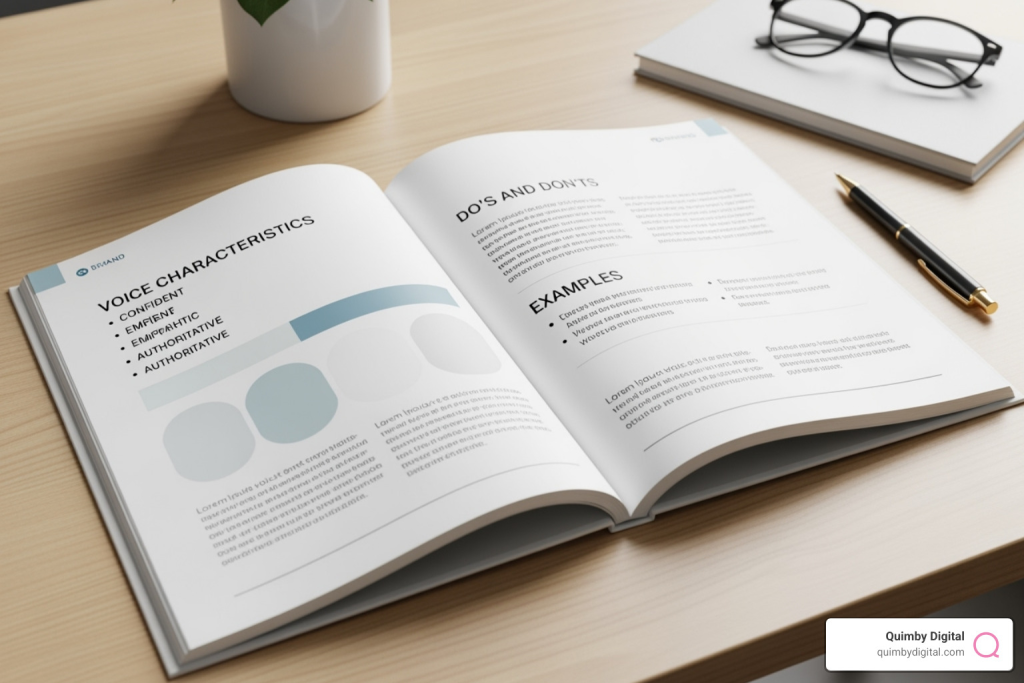
Essential Components of Your Brand Voice Development Style Guide
Your brand voice style guide is the central nervous system for all your brand’s communications. It must be accessible to everyone who communicates on behalf of your brand, from marketing to customer service.
Key components include:
- Brand Voice Statement: A concise summary of your brand’s overall voice, acting as a guiding principle.
- Voice Characteristics: Your 3-5 core adjectives, with detailed descriptions and examples using the “We Are X, Not Y” format (e.g., “We are encouraging, not condescending”).
- Tone Framework: Practical guidance on how your tone should adapt to different scenarios, such as celebrating a milestone, addressing a complaint, or sharing educational content.
- Vocabulary and Word Choice: A definitive list of words and phrases your brand uses and avoids. This can include preferred terminology and banned words (e.g., using “holistic well-being” instead of “alternative medicine”).
- Grammar and Mechanics: Rules on details like Oxford commas, contractions, and the use of exclamation points. These small choices create a distinctive writing style.
- Formatting Rules: Guidelines for headings, bullet points, and bolding to maintain visual consistency.
- Real Examples: Concrete examples of successful and unsuccessful copy to make the abstract concept of “brand voice” tangible. For insights on building a team to execute this, see our thoughts on Your SaaS Social Media Team.
Ensuring Consistency Across All Communication Channels
A well-documented brand voice is only as good as its implementation. The goal is a seamless experience where your audience recognizes you instantly, no matter the channel. As mentioned, 90% of customers say they expect their interactions with brands to be consistent across all channels. Consistency builds familiarity, which builds trust.
This consistency must extend everywhere:
- Social Media: Organic posts, comments, DMs, and community management.
- Website Copy: From your homepage and product descriptions to your privacy policy.
- Email Marketing: Newsletters, promotions, and transactional messages.
- Video Content: Scripts, voiceovers, and on-screen text must align with your verbal identity. For tips, explore our guide on 5 Ways for Brands to Create Effective Video Content.
- Customer Service: Your support team members are brand ambassadors and should embody your voice in every interaction.
Achieving this requires intentional systems like team training, accessible style guides, content review processes, and feedback loops. By actively managing your brand voice, every customer touchpoint reinforces your unique personality, fostering stronger connections and lasting loyalty.
Keeping Your Voice Authentic: Auditing, Measuring, and Evolving
Developing a strong brand voice is an ongoing journey. To ensure your voice remains authentic, effective, and relevant, you must continuously audit its application, measure its impact, and be prepared for strategic evolution. This keeps your brand from sounding stale or inconsistent.

How to Audit and Refine Your Existing Brand Voice
Regular auditing is a wellness check-up for your brand voice. The process helps maintain consistency and catch issues before they grow.
- Create a Content Inventory: Gather examples of all communications across every channel—website pages, social media, emails, ads, and customer service responses.
- Review Against Guidelines: Measure each piece of content against your brand voice style guide. Look for inconsistencies in tone, word choice, and overall personality.
- Gather Feedback: Use customer surveys or focus groups to understand how your audience perceives your brand’s communication. Check internally to see if your team finds the voice natural and easy to use.
- Analyze Top-Performing Content: Identify which content resonates most strongly with your audience (high engagement, conversions, positive sentiment). Analyze why it performed well, paying close attention to the voice and tone.
- Refine and Reinforce: Use your findings to create an action plan. This might involve updating your style guide, providing additional training, or adjusting your content strategy. Reinforce the elements of your voice that consistently perform well.
Measuring the Impact of Your Brand Voice Development Efforts
Brand voice development is an investment that should be tracked. While some aspects are qualitative, you can measure its impact on business goals with concrete metrics.
- Engagement Rates: Higher likes, comments, and shares on on-brand content suggest you’re connecting with your audience.
- Brand Sentiment Analysis: Use social listening tools to monitor brand mentions and gauge whether overall sentiment is positive.
- Share of Voice: Measure your brand’s visibility compared to competitors. A distinct voice can increase your share as people recognize and discuss your brand more.
- Conversion Rates: Track conversions on content that strongly embodies your brand voice. An increase suggests your voice is effectively building trust.
- Direct Customer Feedback: Surveys and reviews provide invaluable qualitative insights. Do customers describe your brand using the same adjectives you chose for your voice?
- Brand Recognition and Recall: Over time, a consistent voice should lead to increased brand recall, which can be measured through brand awareness surveys.
For a deeper dive into tracking social growth, our guide on 5 Metrics to Record for Social Growth offers additional insights.
Evolving Your Voice While Staying True to Your Brand
Your brand voice must be dynamic enough to evolve without losing its authentic core. It’s like updating your wardrobe while staying true to your personal style.
Adapt to trends without chasing them. Stay aware of cultural shifts and new platforms, but only adopt new styles if they align with your core values. The goal is to tweak your tone, not change your personality.
Respond to cultural shifts. Language and societal norms evolve. Your voice needs to remain inclusive, respectful, and appropriate. This might mean updating your vocabulary or adjusting your tone in certain contexts.
Avoid becoming inauthentic. If a change feels forced or misaligned with your mission, it will alienate your audience. Always ask: “Is this messaging still in line with our brand values?”
Focus on long-term brand health by being proactive in your evolution, driven by audience insights rather than reactive to declining engagement. Evolution should be iterative—a series of small, thoughtful adjustments that ensure your voice grows with you naturally.
Frequently Asked Questions about Brand Voice
We get a lot of questions about brand voice development. Here are the most common ones we hear from wellness, CPG, and tech-forward brands.
What are the essential components of a brand voice style guide?
A complete style guide is your communication rulebook. It should include your brand’s personality traits (e.g., “Playful, not Childish”), tone variations for different scenarios (celebratory vs. empathetic), a specific vocabulary list (words to use and avoid), and clear rules for grammar, punctuation, and formatting to ensure total consistency.
How can a brand’s mission statement inform its voice?
Your mission statement is your “why”—the core purpose behind your brand. This purpose should be directly reflected in your voice. For example, a mission to “make wellness accessible” would naturally lead to an encouraging, clear, and supportive voice that avoids exclusive jargon or a condescending tone.
What are common pitfalls to avoid when developing a brand voice?
The biggest pitfalls are being inconsistent across channels, trying to be everything to everyone (which leads to a bland voice), and chasing trends that don’t align with your values. Other mistakes include creating a voice that doesn’t match the actual customer experience and failing to evolve thoughtfully over time. Above all, a lack of authenticity is the quickest way to erode trust.
Conclusion: Make Your Brand’s Voice Resonate
Your brand’s voice isn’t just about sounding good—it’s about creating genuine, lasting connections. We’ve seen how brand voice development transforms businesses from part of the noise into memorable experiences that customers seek out.
When 86% of consumers say authenticity matters and 90% expect consistency, your voice becomes your competitive advantage. It’s what stops the scroll, builds trust, and turns casual browsers into loyal advocates.
The five-step framework—anchoring in your mission, understanding your audience, analyzing competitors, defining characteristics, and creating style guides—is a proven path to authentic connection. When you audit, measure, and evolve, your voice becomes a living asset that grows stronger over time.
At Quimby Digital, we’ve seen this change firsthand. As a female-founded boutique agency, we know that authentic voices aren’t just heard—they’re felt. We specialize in helping wellness, CPG, and tech-forward brands find their unique sound and build genuine communities around it.
Ready to make your brand’s voice impossible to ignore? Learn more about our approach to Femtech and Wellness marketing and find out how we can help your brand resonate with the audience that’s been waiting to hear from you.
Build your audience. Learn the art of online community building, unlock UGC strategy, and explore influencer collaborations.