

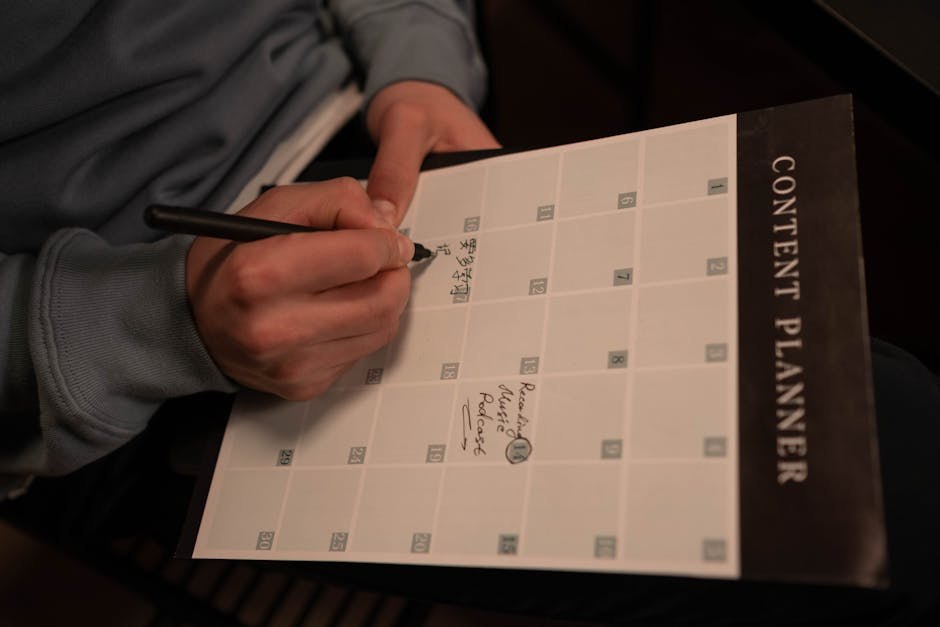
Content strategy development is the systematic process of planning, creating, and managing content to achieve specific business goals. It’s a strategic approach that aligns your messaging with audience needs and business objectives, moving beyond random content creation.
Content strategy development involves:
- Planning: Setting clear goals and understanding your target audience.
- Creation: Developing content that serves both users and business objectives.
- Distribution: Choosing the right channels to reach your audience.
- Management: Maintaining consistency and quality over time.
- Measurement: Tracking performance and optimizing based on data.
The difference between strategy and tactics is simple: Strategy is your why—the overarching plan. Tactics are your how—the specific actions like writing blog posts or creating videos.
For wellness, CPG, and tech brands, content strategy development is essential for building authentic communities and driving measurable growth. Without a solid strategy, you’re just throwing content at the wall and hoping something sticks.
Research shows that brands with documented content strategies outperform those without by 414%. Furthermore, 90% of marketers say building an active online community is crucial for social media success.
Your content strategy is the foundation for everything from SEO rankings to customer loyalty. It transforms scattered efforts into a cohesive system that moves the needle for your business.
Phase 1: Laying Your Strategic Foundation
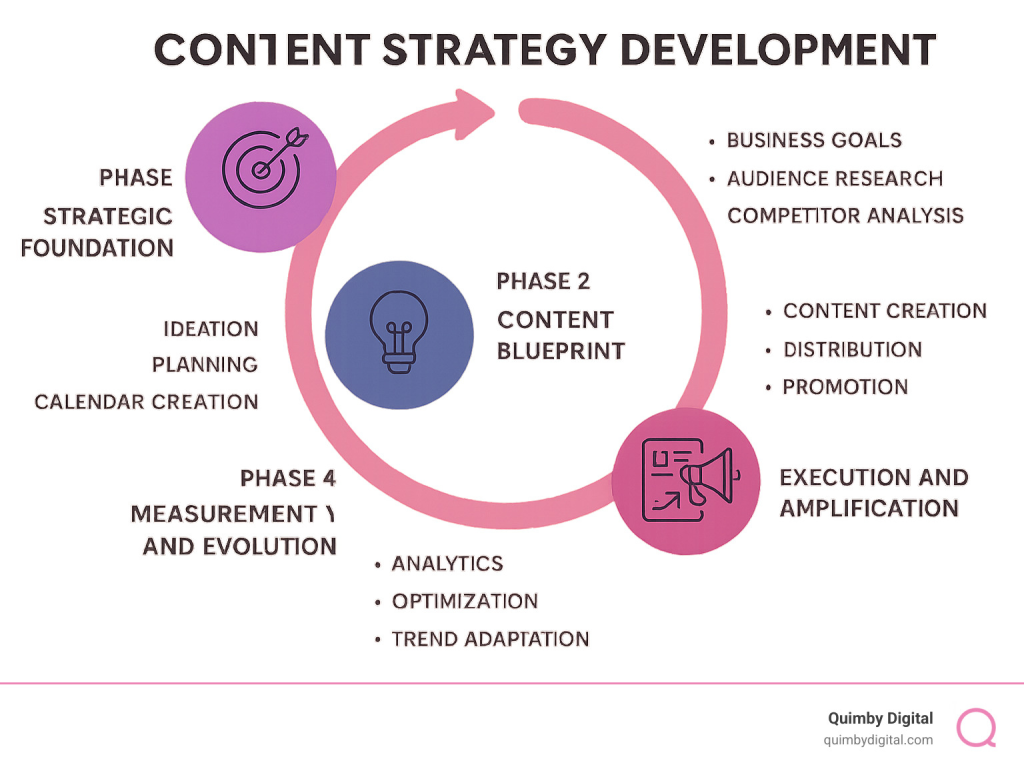
Before creating content, we must understand the “why” behind it. This foundational phase of content strategy development involves defining objectives, understanding our audience, and analyzing the competitive landscape. It’s the map for our journey.

This phase includes setting clear business goals, conducting audience research for detailed personas, auditing existing content, and analyzing competitors to find gaps. This systematic approach creates a content roadmap, ensuring every piece has a purpose and builds audience trust. For more on this, see our guide on How to Use Social Media to Build Trust With Your Audience.
The First Step in Content strategy development: Defining Your ‘Why’
Every piece of content must serve a business purpose. The first step in content strategy development is defining specific, measurable, achievable, relevant, and time-bound (SMART) goals. For example, instead of a vague goal like “grow brand awareness,” a SMART goal would be “increase our social media following by 15% in 3 months.”
Business goals translate into content objectives for each stage of the marketing funnel:
- Brand Awareness (Top of Funnel): Attracting new audiences with blog posts on industry trends, short-form videos, or infographics.
- Lead Generation/Consideration (Middle of Funnel): Nurturing prospects with gated content like e-books, webinars, or case studies.
- Customer Loyalty/Conversion (Bottom of Funnel): Encouraging conversion with testimonials, demos, user-generated content, and FAQs.
A well-defined strategy addresses the challenge of generating traffic and leads by providing relevant content at each stage. We use tools like Google Analytics for insights to track performance.
Understanding Your Audience is Non-Negotiable
Without understanding our audience, our content will miss the mark. Thorough audience research is a non-negotiable step in content strategy development.
We create detailed buyer personas—semi-fictional representations of ideal customers based on real data about their demographics, behaviors, motivations, and pain points. For a wellness brand, a persona might be “Busy Emily,” a 35-year-old working mom who needs quick, healthy meal prep solutions.
To gather this data, we use:
- Surveys and Interviews: Directly asking our audience about their needs and challenges. Using surveys to gather data provides invaluable feedback.
- Analytics Data: Analyzing website and social media data to understand who engages with our content and how.
- Social Listening: Monitoring conversations on platforms like Reddit to uncover trends, questions, and sentiment.
Different demographics use different platforms. For example, younger audiences on TikTok and Instagram prefer short-form video, while others might use Facebook and LinkedIn. Our content must reflect these preferences to be effective.
Phase 2: The Blueprint for Your Content Strategy Development
With our “why” and “who” established, it’s time to create the “what” and “when.” This phase of content strategy development translates insights into a tangible plan, like an architectural blueprint for your content.
The goal is to create a system that is consistent, coherent, and aligned with strategic goals. We focus on brainstorming compelling topics, choosing the right formats, maintaining brand voice, and building an organized content calendar.
Planning and Ideating Your Content
Using our audience personas, we brainstorm content ideas that genuinely resonate and solve our audience’s problems.
- Keyword research is the backbone, helping us understand the language our customers use.
- Topic clusters and pillar pages organize content for users and SEO. We build comprehensive pillar pages on broad topics, supported by cluster content that dives deeper into specifics.
- Competitor analysis helps us spot content gaps and opportunities.
We combine this data with audience-driven brainstorming, asking, “What problems can we solve for our customers?” The best ideas often come from customer questions. Tools like HubSpot’s blog topic generator can also spark ideas. Remember to create content for every stage of the marketing funnel.
Building Your Content Calendar
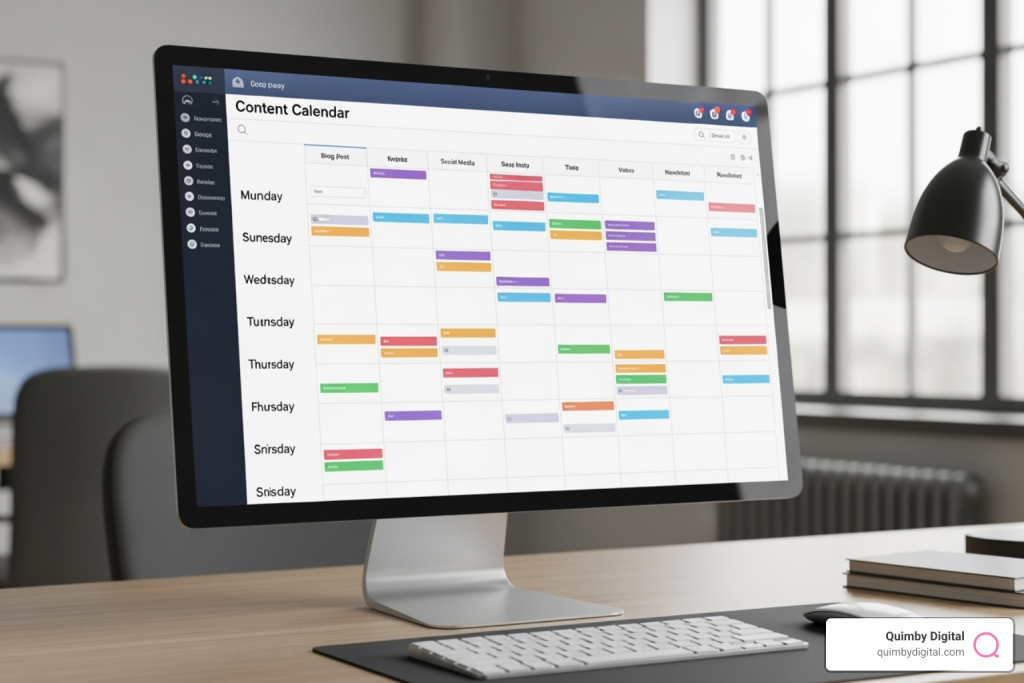
Brilliant ideas mean nothing without consistent execution. A well-structured content calendar transforms intentions into results in content strategy development.
Our calendar is a central command center detailing topics, formats, publication dates, team responsibilities, distribution channels, and key metrics. We plan at least a month ahead to allow for thoughtful creation. Project management tools like Asana help visualize the pipeline and keep the team aligned.
For wellness and CPG brands, video content is non-negotiable, with short-form video on TikTok and Instagram driving real results. To learn more, check out our guide on 5 Ways for Brands to Create Effective Video Content.
A robust calendar removes guesswork, allowing us to focus on creating the best possible content. It’s the key to strategic content development.
Phase 3: Execution and Amplification
This is where your content strategy development comes to life. Planning transforms into content your audience can see, engage with, and share. But creating great content is only half the story; you also have to ensure it reaches the right people.
This phase covers creating high-quality content that reflects your brand voice and amplifying it so it gets out into the world and does its job. Many brands create amazing content but forget that it won’t make an impact if it’s buried. We focus equally on content creation and strategic distribution across the channels where your audience spends their time.
Creating and Optimizing Your Content
Every piece of content must serve your audience while staying true to your brand.
- Writing for your audience means speaking their language. Your content should feel like a conversation, not a corporate press release.
- On-page SEO helps search engines understand your content. Use target keywords naturally, write compelling titles, and organize content with clear headings. While understanding Google’s ranking factors is useful, focus on creating helpful content first.
- Your brand voice makes your content uniquely yours. Consistency across all content builds trust and recognition.
- Include clear calls-to-action (CTAs) to guide your reader toward a next step, like subscribing to a newsletter or reading another post.
Distributing and Promoting for Maximum Reach
Getting content in front of the right people is the real challenge. Strategic distribution is crucial for your content strategy development success.
- Owned channels are your home base: your website, blog, and email list. You control these platforms completely.
- Earned channels are where community building happens. When people share your content or mention your brand, that’s earned media. 90% of social media marketers say building an active online community is crucial for success.
- Paid channels like social media ads can amplify your best content to reach new audiences.
Adapt your message for each platform. A blog post can become a series of Instagram Stories or a LinkedIn discussion. Email marketing is highly effective for reaching subscribers directly. For wellness and CPG brands, influencer marketing can dramatically expand reach and credibility, as the influencer marketing industry is booming.
The key is finding the right mix of channels for your audience and goals. Our approach focuses on organic growth strategies that build lasting relationships.
Phase 4: Measuring, Analyzing, and Evolving
The final phase of content strategy development is an ongoing cycle of measurement, learning, and improvement. Like tending a garden, you must constantly monitor performance, listen to your audience, and adapt to ensure your content remains fresh, relevant, and effective.

This is where strategy meets reality. Data tells us what’s working, what our audience values, and how we can improve, turning insights into action.
Key Metrics for Your Content strategy development
Knowing which metrics matter for your goals is key. We focus on four main categories:
- Consumption metrics: Tell us how much content is being consumed (e.g., page views, engagement time). A good bounce rate is typically 40-60%.
- Engagement rates: Show how actively the audience interacts (e.g., likes, comments, shares, email clicks).
- Lead metrics: Bridge content to business results (e.g., form submissions, newsletter signups).
- Sales metrics: Connect content directly to revenue (e.g., customer acquisition cost, ROI).
We use tools like Google Analytics for insights to track these metrics, focusing on what our audience values most. For social media specifics, see our guide on 5 Metrics to Record for Social Growth.
Adapting to Trends and Overcoming Challenges
Staying relevant requires constant adaptation. The brands that thrive accept change.
- AI is reshaping content creation. Research shows 71% of marketers expect generative AI to free up time for strategic work. AI isn’t about replacing creativity but amplifying it by helping with ideation, drafting, and analysis. This shift is transformative, as detailed in this report on how AI is freeing up marketers’ time.
- Voice search is growing. With 90% of users finding it easier and faster, we must optimize for conversational queries.
Common challenges include limited resources, which demand strategic prioritization, and maintaining consistency, which is solved with clear brand guidelines. Lack of alignment between teams can derail a strategy, so we foster clear documentation and communication.
Building flexibility into your content strategy development from the start is the secret to overcoming these challenges. This approach keeps content evergreen and grows brand authority, no matter what comes next.
Frequently Asked Questions about Content Strategy
Content strategy development can seem overwhelming. Here are answers to the most common questions we hear from brands starting their content journey.
How is a content strategy different from a content plan?
This is an important distinction. Your content strategy is the big-picture why. It’s the foundational thinking about your goals, audience, and topics—your North Star for all content decisions.
Your content plan is the tactical how and when. It’s your editorial calendar, posting schedule, and workflow. In short: strategy is your long-term vision, while the plan is your short-term schedule. You need both, but strategy must come first.
How often should I update my content strategy?
Content strategy development is not a one-and-done project. Treat your strategy as a living document.
- Quarterly reviews are ideal for most brands. This allows you to analyze performance data and make adjustments to topics or distribution while staying responsive.
- Annual overhauls are for digging deeper. This is when you might update personas, explore new platforms, or align with major business changes.
The key is to balance agility with consistency. Your audience needs to know what to expect, but you must also evolve with their needs.
How can a content strategy be adapted for different platforms?
One size doesn’t fit all. Each platform has unique audience expectations and formats, and your content strategy development must account for these differences.
For example, TikTok thrives on quick, entertaining videos, while LinkedIn audiences prefer professional insights. The magic is adapting your core message while maintaining your brand voice. A wellness brand might share a recipe hack on TikTok, discuss nutrition trends on LinkedIn, and post a detailed recipe on its website blog.
Managing So Many Platforms, So Little Time can be a challenge. Focus your efforts where your audience spends their time. You don’t need to be everywhere—you need to be where your people are, speaking their language in a way that feels native to that platform.
Conclusion
We’ve journeyed through content strategy development, from defining your “why” and audience to creating blueprints, executing your vision, and measuring what works. Every phase matters.
Creating content that lasts isn’t just about good writing or design; it’s about a thoughtful, data-driven approach that puts your audience first. The real magic happens when you treat content as a long-term investment, not a quick fix.
A strong content strategy makes your content evergreen, building genuine authority and trust. You consistently show up with helpful, authentic content that solves problems.
This approach creates a powerful cycle: quality content attracts new customers and deepens the connection with your existing community, turning followers into loyal advocates. This is organic growth at its finest.
At Quimby Digital, we help wellness, CPG, and tech-forward brands create content that resonates. Our specialty is building authentic communities on platforms like Reddit and TikTok.
Moving from random content creation to strategic content strategy development can be overwhelming, but that’s where our expertise comes in. We help you innovate and find your unique voice.
Ready to transform your content into a strategic powerhouse? We’d love to help. Connect with influencer and UGC agencies, explore social innovation trends, and build stronger community engagement.