


Authentic brand voice is your brand’s distinct personality expressed through a consistent communication style, tone, and messaging across all touchpoints. It helps customers instantly recognize your brand and builds the trust that drives purchasing decisions. Mastering brand management involves leveraging this voice effectively.
Key Elements of an Authentic Brand Voice:
- Consistent Personality – Your brand’s core character traits that never change
- Flexible Tone – How you adapt your emotional inflection for different situations
- Clear Values – What your brand stands for, woven into every message
- Audience Connection – Speaking your customers’ language authentically
- Differentiation – Standing out from competitors with a unique voice
In today’s digital landscape, where over 85% of consumers say authenticity is key when deciding which brands to support, your voice isn’t just nice to have—it’s essential for survival.
Think about your favorite brands. You probably recognize their voice instantly, whether it’s in an email, social post, or customer service chat. That’s the power of an authentic brand voice at work.
But many brands get it wrong, thinking a few adjectives are enough. Real authenticity goes deeper, translating your company’s mission and values into a voice that resonates with your audience and stands apart from competitors. As AI-generated content floods the internet, an authentic human voice is more valuable than ever for cutting through the noise and building lasting customer relationships.
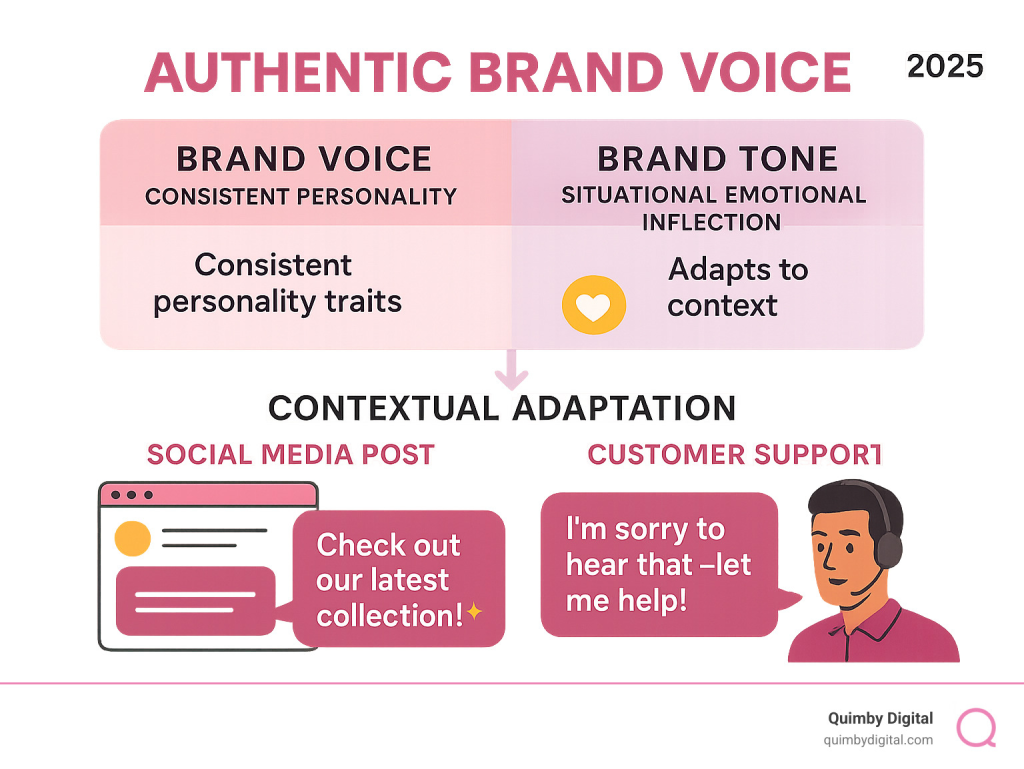
What is Brand Voice and Why Does It Matter?
Your brand voice is like a friend’s signature laugh in a crowded coffee shop—instantly recognizable. It’s the distinct personality in all your communications, from social media to customer service emails. It’s not just the words you choose, but the style, rhythm, and values that shape how you connect with your audience.
Effective brand management is crucial for thriving in a competitive market.
Where consumers are bombarded with thousands of messages daily, your voice cuts through the noise. It’s what makes people stop scrolling and actually listen to what you have to say.
Think about brands you love. You probably recognize their voice instantly, whether it’s a witty tweet or a heartfelt email. That recognition builds something precious: trust. And trust? That’s what turns casual browsers into loyal customers.
Here’s the reality check: 86% of consumers say authenticity is important when deciding which brands to support. When your voice feels genuine and consistent, you’re not just talking at people – you’re having real conversations that matter.
Your brand voice also helps you stand out in a crowded marketplace. While your competitors might offer similar products or services, none of them have your unique perspective and personality. That’s your secret weapon for differentiation.
Why an Authentic Brand Voice is Your Greatest Asset
The numbers tell a powerful story: 46 percent of customers are willing to pay more for a brand they trust. Authenticity isn’t marketing fluff; it’s about building genuine connections. When you speak with an authentic voice, you’re a real brand with real values, not a faceless company.
People buy into brands that align with their values and speak their language, making trust-building on social media essential. How to Use Social Media to Build Trust With Your Audience is crucial here.
For Gen Z and younger millennials, authenticity is a requirement. They spot inauthenticity instantly but become powerful advocates for brands that get it right. An authentic voice naturally increases engagement. People respond to human, approachable voices, leading to more comments, shares, and interactions.
The Core Components of a Captivating Voice
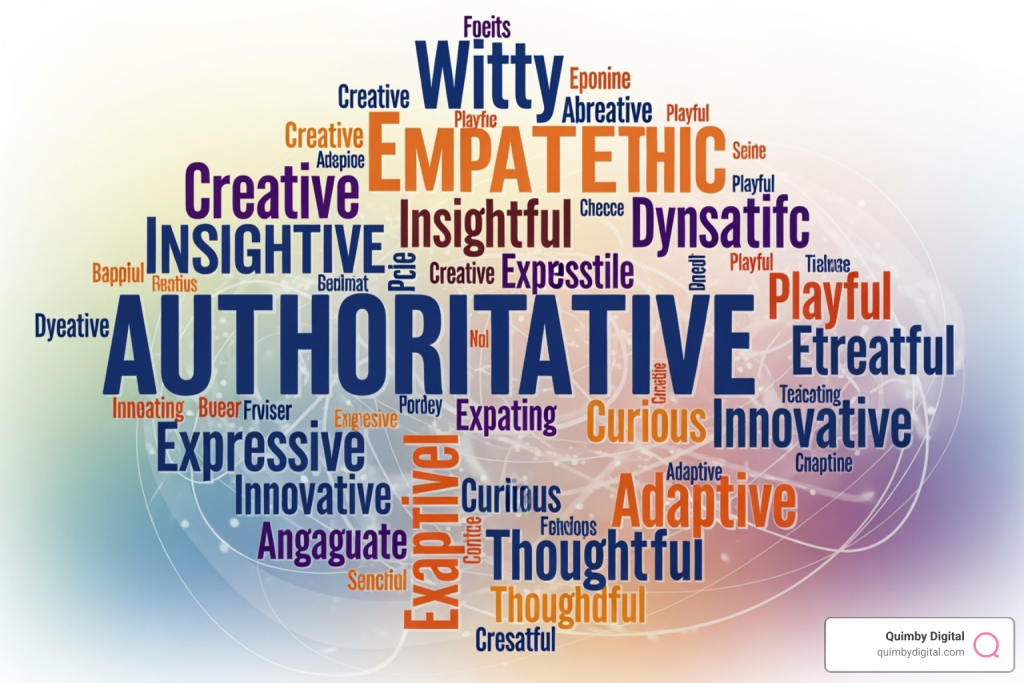
A captivating brand voice isn’t about picking random adjectives; it’s about understanding its core components.
Your personality is the foundation—the core character traits that reflect your brand values. Are you a wise mentor, an encouraging friend, or a straight-talking expert?
While personality is consistent, your tone adapts to the situation. You speak differently when celebrating good news versus comforting a friend; your brand should too.
Your brand’s rhythm creates a flow. Short, punchy sentences feel energetic, while longer passages can be more thoughtful.
Finally, your vocabulary reveals who you are and who you’re talking to. Do you use industry jargon or simple, welcoming language? Every word choice matters.
Understanding brand archetypes—like the Hero, Sage, or Caregiver—helps these components work together, allowing your authentic voice to emerge naturally.
How to Develop an Authentic Brand Voice That Resonates
Building an authentic brand voice is a thoughtful process of digging deep into your company’s identity and audience. When you get it right, the results are transformative. For example, we grew a client by 20k followers in two months using strategies rooted in authentic communication. Developing your voice means translating your company’s soul into words, creating a conversational style that feels natural and genuine.

Step 1: Start with Your “Why”
Before deciding how to speak, you must know why. Your company mission, core values, and brand purpose are the foundation of your voice. Ask yourself: What problem do we solve? What impact do we want to make? Your voice should reflect these deeper motivations.
Your mission statement says what you do; your voice shows why it matters. If you value transparency, your voice should be straightforward. If community is central, it should be inclusive.
Patagonia does this brilliantly. Their voice isn’t just about gear; it’s about activism. Their company history page and “Don’t Buy This Jacket” campaign show how a deep purpose drives bold, authentic communication. A voice rooted in purpose talks with your audience, not at them.
Step 2: Understand Your Audience and Competitive Landscape
With your “why” established, focus on your “who.” Understanding your target audience and competitive landscape ensures your voice resonates. Go beyond buyer personas: What are their pain points? How do they talk about them?
Social listening in niche communities like Reddit threads or on TikTok is key. Observe their language and tone—not to copy, but to understand how to communicate naturally.
For your competitor analysis, look for opportunities to be different. If competitors are formal, perhaps your voice should be conversational. If they’re all witty, maybe yours is straightforward and helpful. The goal is to find the sweet spot where your authentic personality meets your audience’s preferences while standing out from the competition.
Step 3: Define Your Voice with a Brand Voice Chart
Now, turn your insights into a practical brand voice chart. This tool translates abstract concepts into concrete guidelines for your team. Choose 3-5 core characteristics that capture your brand’s personality. For each, define what it means, and provide clear do’s and don’ts with examples.
This chart should cover not just word choice, but also grammar and punctuation. Do you use contractions? Favor short sentences? These details ensure consistency.
| Characteristic | Description | Do’s | Don’ts |
| Empathetic | Our voice shows understanding and compassion for our audience’s challenges and feelings. We listen more than we preach and offer solutions with warmth and support. | Use “we understand,” “we hear you,” “it’s okay to feel…” Validate emotions. Focus on benefits and solutions for the user. | Sound dismissive, judgmental, or overly clinical. Use overly technical jargon without explanation. Focus solely on product features without addressing user pain points. |
| Clear | Our communication is easy to understand, direct, and avoids unnecessary complexity. We prioritize simplicity and accessibility, ensuring our message is always straightforward. | Use plain language. Break down complex ideas into simple sentences. Get straight to the point. Use headings and bullet points. | Use industry jargon or buzzwords without context. Write long, winding sentences. Be ambiguous or vague. Over-explain simple concepts. |
| Inspiring | Our voice motivates and encourages our audience to achieve their goals and accept possibilities. We infuse optimism and a forward-looking perspective into our messaging, empowering them to take action. | Use positive, action-oriented verbs. Highlight success stories. Frame challenges as opportunities. Use aspirational language. | Sound negative, defeatist, or overly cautious. Use fear-mongering tactics. Focus on limitations rather than potential. |
| Human | We speak like real people, not robots or corporate machines. Our voice is approachable, relatable, and conversational, fostering a genuine connection. We acknowledge that we are humans, speaking to humans. | Use contractions (“we’re,” “it’s”). Address the reader directly (“you”). Use anecdotes or relatable scenarios. Show a touch of personality or wit where appropriate. | Sound overly formal, stiff, or academic. Use passive voice excessively. Rely heavily on corporate speak or marketing clichés. Avoid all humor or personality. |
You can fill out this blank Google Sheet template to start building your own brand voice chart. Think of it as your voice’s instruction manual—something that helps everyone on your team sound like the same brand, even when different people are writing the content.
Putting Your Voice Into Action: Guidelines and Consistency
You’ve defined your authentic brand voice; now it’s time to bring it to life. Consistency is key. Your entire team—from social media managers to customer service reps—must speak fluently in “your brand.” The magic happens when a customer experiences the same personality on your Instagram, website, and in a support chat. That’s true brand voice mastery.
Creating and Documenting Your Brand Voice Guidelines
Your brand voice guidelines are a living recipe book for your team. Start with the strategic foundation: your mission, values, and audience insights. This gives writers the “why” behind the “how.”
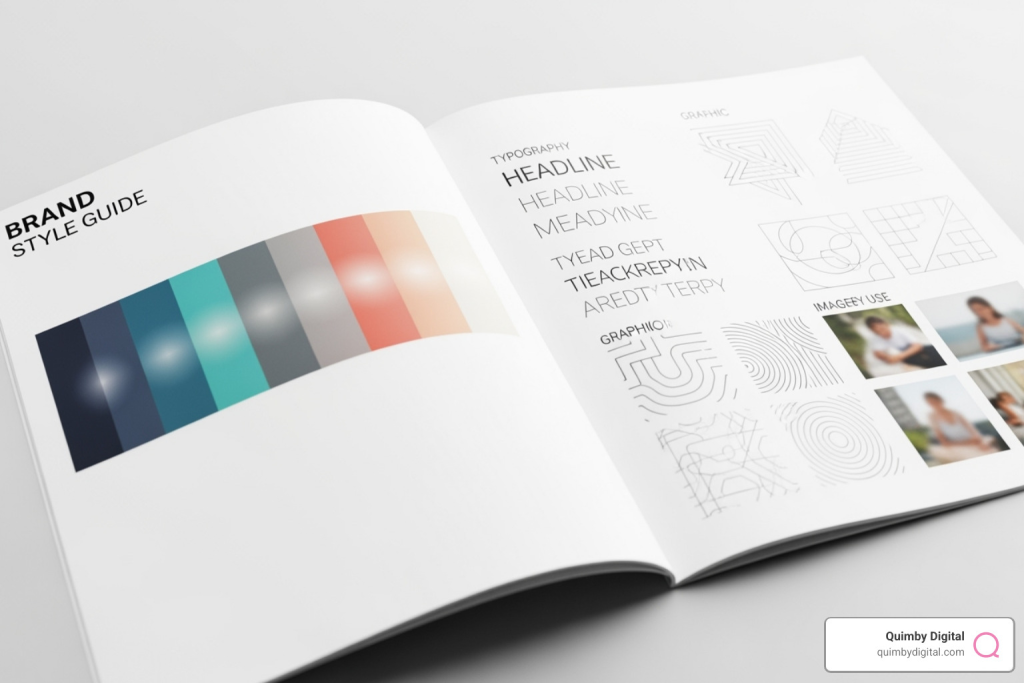
Go beyond simple adjectives for your voice characteristics. Show, don’t just tell. Provide real examples of what “friendly” looks like, including what to do and what to avoid. Document tone variations. Your personality is fixed, but your tone should flex for different situations, like celebrating a win versus handling a complaint. Sprout Social’s brand guide, Seeds, shows this well.
Include practical details like vocabulary preferences and grammar rules (e.g., use of contractions, handling of jargon). Finally, make these guidelines accessible to everyone who creates content for your brand.
Ensuring Consistency Across All Channels
Your authentic brand voice must be consistent yet adaptable across all channels.
- Social media: Adapt your tone for each platform’s culture. Your voice might be playful on TikTok but more insightful on LinkedIn, all while maintaining its core identity. Effective video content should feel native to each platform.
- Email marketing: From newsletters to confirmations, your voice should be instantly recognizable, building trust.
- Website copy: Your “About” page, product descriptions, and FAQs should all sound like they came from the same brand personality.
- Customer service: This is a critical touchpoint. Train your support team to embody your voice, reinforcing your brand’s personality even in difficult situations.
- Advertising: Ads should feel like a natural extension of your brand’s conversation, not a shift into “marketing speak.” Slack’s brand voice guidelines are a great example.
The goal is a seamless experience where your audience always knows they’re talking to you.
Auditing and Evolving Your Authentic Brand Voice
Your brand voice isn’t static; it’s a living part of your brand that needs regular care.
- Regular content audits: Quarterly, review content across all channels to spot inconsistencies and identify what’s working.
- Performance tracking: Monitor engagement, feedback, and conversion data to see which aspects of your voice resonate most.
- A/B testing: Test headlines, CTAs, and subject lines to evolve your voice based on real audience responses.
- Quarterly voice reviews: Involve team members from different departments. Customer service and social media managers have valuable insights into customer language and trends.
Brand evolution is natural. As markets and language shift, your voice must adapt intentionally, like in Uber’s brand voice evolution. An authentic voice stays true to its core values while remaining flexible and relevant, growing with your brand to maintain that crucial connection with your audience.
Frequently Asked Questions about Authentic Brand Voice
When we work with brands to develop their voice, certain questions come up time and again. These are the conversations that happen in every strategy session, and honestly, they’re some of our favorite discussions because they get to the heart of what makes communication truly authentic.
How is brand voice different from brand tone?
Think of your authentic brand voice as your core personality—it’s consistent and never changes. Your brand tone is the emotional inflection you use for a specific situation.
For example, if your voice is friendly and knowledgeable, your tone might be celebratory for a product launch but empathetic for a customer complaint. Your personality (voice) stays the same, but your emotional delivery (tone) adapts to the context. It’s the difference between who you are and how you express yourself in the moment.
How long does it take to develop a brand voice?
The initial development of your authentic brand voice—including research, workshops, and creating guidelines—can take a few focused weeks. However, a brand voice is never truly “finished.” It’s a living element that must be nurtured.
Your voice should evolve as your brand, audience, and communication styles change. We recommend quarterly check-ins to audit performance and make adjustments. It’s an ongoing process, not a one-time project.
Can a B2B brand have a fun or informal voice?
Absolutely! Many memorable B2B brands, like Slack and Mailchimp, use human, witty, or informal voices to stand out in traditionally stuffy industries.
The key is ensuring the voice is genuine to your company culture while still conveying expertise and reliability. B2B decision-makers are people who connect with authentic personalities.
A unique voice can be a competitive advantage, helping you build stronger relationships and make complex solutions feel accessible. It’s about balancing approachability with credibility to create genuine connections that lead to lasting business.
Conclusion: Make Your Voice Heard
Your authentic brand voice is the heartbeat of your brand, turning casual browsers into loyal customers. With 86% of consumers prioritizing authenticity, your voice is your most powerful asset for cutting through the noise.
Here are the key takeaways:
- Start from within: Your voice must grow from your core mission and values.
- Know your audience: Speak their language and understand what they care about.
- Document and share: Create clear guidelines and ensure consistency across all touchpoints to build trust.
- Stay flexible: Keep your personality steady but adapt your tone for different situations.
- Keep evolving: Regularly audit your voice to stay relevant and grow with your audience.
At Quimby Digital, we’ve seen how an authentic brand voice transforms businesses by building communities that care. It’s not just marketing; it’s creating connections that last. Manage reputation through intention. Strengthen brand voice consistency, boost authenticity, and scale brand awareness.
Your audience is waiting to hear what makes you different. Are you ready to let your authentic voice shine?