


Master B2C social media strategy! Learn top platforms, content tactics, and key metrics to connect with customers and boost sales.
B2C social media marketing has evolved from a nice-to-have into the backbone of customer connection and revenue generation. With over 5.24 billion social media users worldwide, your customers aren’t just on social platforms – they’re finding, researching, and buying there too.
Quick Answer: What is B2C Social Media Marketing?
- Direct consumer engagement – Brands connect with individual customers, not businesses
- Emotional-driven content – Focus on feelings, lifestyle, and personal benefits
- Shorter sales cycles – Quick decisions based on impulse and social proof
- Visual storytelling – Images and videos that inspire immediate action
- Community building – Creating loyal followers who become brand advocates
The difference between B2C and B2B social media is stark. While B2B focuses on logic, ROI, and long-term relationship building, B2C thrives on emotional appeal and instant gratification. Your wellness supplement doesn’t need a 20-slide deck – it needs a compelling before-and-after story that stops the scroll.
For brands in wellness, CPG, and tech sectors, this shift represents both opportunity and challenge. The same platforms that can drive massive growth can also drain resources if approached without strategy.
48% of Gen Z consumers prefer finding products through short-form videos like TikTok and Instagram Reels. This isn’t just changing how people shop – it’s redefining what social media marketing means for consumer brands.
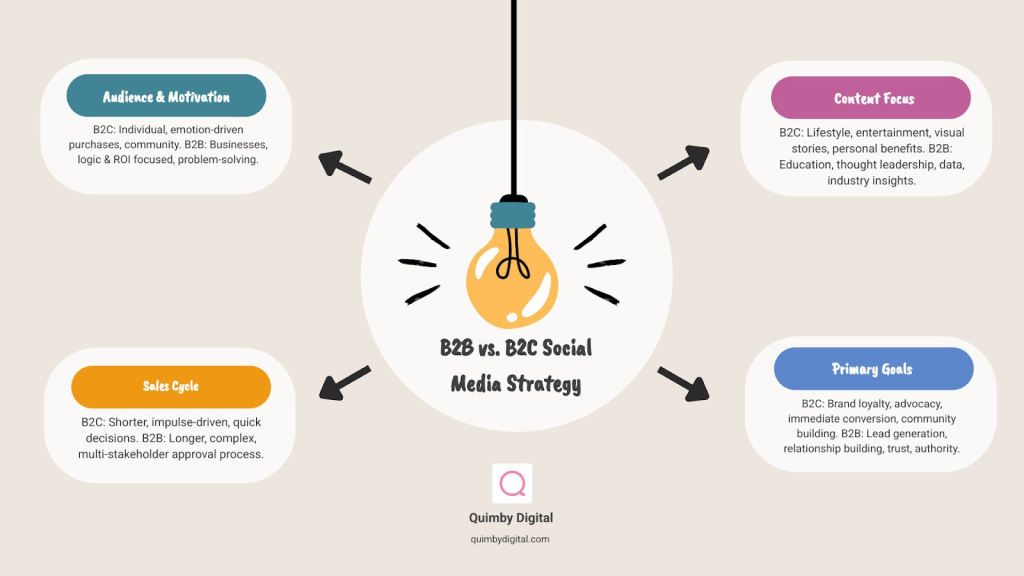
The Core Difference: B2B vs. B2C Social Media Strategy
Picture this: you’re scrolling through Instagram and see a gorgeous flat lay of skincare products with the caption “Sunday self-care vibes ✨” versus a LinkedIn post titled “How Our Enterprise Software Reduced Operating Costs by 23%.” Feel the difference? That’s the heart of B2C social media versus B2B marketing right there.
The strategies that work for businesses selling to other businesses are completely different from those connecting directly with consumers. It’s like comparing a boardroom presentation to a coffee chat with your best friend – same goal of persuasion, totally different approach.
| Aspect | B2B Social Media Marketing | B2C Social Media Marketing |
| Audience Focus | Businesses, decision-makers, industry professionals | Individual consumers, end-users |
| Decision-Making | Logic-driven, ROI-focused, extensive research, multiple stakeholders | Emotion-driven, impulse buys, personal needs, brand influence |
| Sales Cycle Length | Longer, more complex, often months or years | Shorter, more straightforward, often immediate |
| Content Tone | Professional, informative, educational, authoritative | Engaging, entertaining, relatable, casual, inspiring |
| Primary Goals | Lead generation, thought leadership, relationship building, industry authority | Brand awareness, direct sales, customer loyalty, community engagement |
Understanding the B2C Social Media Audience
When crafting B2C social media strategies, we tap into emotion. Customers aren’t analyzing spreadsheets; they’re scrolling for something that sparks joy, solves a problem, or makes them feel understood. Emotional drivers are key. A wellness brand sells confidence and energy, not just supplements. A trendy water bottle brand sells belonging to a community. We identify these emotional triggers and weave them into content that moves people.
The beauty of B2C marketing lies in its immediacy. Unlike B2B buyers who need months of research, consumers can see a TikTok video at 2 PM and order by 2:05 PM. This creates incredible opportunities for impulse purchases when your content hits just right.
But here’s what many brands miss: consumers today crave authentic community. They want to feel connected not just to your brand, but to other people who share their values. They’re seeking entertainment value from the brands they follow – if your content isn’t engaging enough to compete with their friend’s vacation photos, you’ve already lost.
Brand loyalty in the social media age is built through consistent, genuine interaction. It’s about showing up authentically, responding to comments, and making your customers feel seen. This is where our approach really shines – we don’t just post content, we build relationships. More info about our services
How B2B Differs: A Quick Comparison
While we specialize in B2C social media, understanding B2B highlights why consumer marketing requires a different mindset. B2B social media is strategic and methodical. Buyers are logic-driven, seeking data, case studies, and clear ROI. They consider efficiency, cost savings, and internal approval from multiple stakeholders.
The B2B sales cycle is longer, with relationship building occurring over months or years through thought leadership and personal connections. The stakes are higher—a poor software choice can have career implications, unlike buying the wrong face cream.
This fundamental difference is why cookie-cutter social media approaches fall flat. B2C success hinges on creating content for personal, emotional decisions – and crafting content that honors that reality.
Choosing Your Battlefield: Top Platforms for B2C Marketing
Understanding your audience is paramount, and a big part of that is knowing where they hang out online. For B2C social media, this means selecting the platforms that best align with your target demographic and your brand’s content style. It’s not about being everywhere; it’s about being effective where it counts.
Each platform has its unique flavor, audience demographics, preferred content formats, and engagement styles. We consider these nuances when crafting a strategy, leveraging each platform’s strengths to maximize reach and impact. Many platforms now also offer robust social selling features, turning them into virtual storefronts.
Facebook: The Community-Building Giant
Facebook remains a B2C powerhouse due to its vast user base and sophisticated ad targeting, making it ideal for reaching broad audiences and building loyal communities.
- Vast user base: With billions of active users, Facebook offers unparalleled reach for almost any demographic.
- Detailed ad targeting: Its advertising platform allows for incredibly precise targeting based on demographics, interests, behaviors, and even custom audiences.
- Facebook Groups: These are fantastic for community building, allowing brands to create exclusive spaces for loyal customers to interact.
- Live streaming: A powerful tool for direct, real-time engagement, Q&A sessions, and product launches.
- Shoppable posts: Facebook Shops allow users to find products and make purchases directly within the platform.
Its evolving community features remain invaluable for fostering deep connections.
Instagram: The Visual Storytelling Powerhouse
For B2C social media, Instagram is often our go-to for visually-driven brands in wellness and CPG. It’s all about aesthetics, inspiration, and aspirational content.
- Aesthetics: Instagram’s focus on high-quality images and videos makes it ideal for showcasing products beautifully.
- Reels engagement: Short-form video content, particularly Instagram Reels, pulls in significantly more engagement than standard posts (22% more engagement, to be precise!).
- Influencer marketing: Instagram is a prime platform for collaborating with influencers. Over 80% of marketers confirm influencer marketing as a highly effective strategy.
- Instagram Shops: Similar to Facebook, Instagram offers shoppable posts and a dedicated Shop tab, making it easy for users to find and purchase products directly.
Consistent visual themes and compelling storytelling are key to standing out on Instagram. How to Gain Followers on Instagram: 15 No-Bullshit Strategies
TikTok: The Hub of Virality and Trends
TikTok has rapidly become indispensable for B2C social media, especially for brands targeting younger demographics. It’s where trends are born, and authenticity reigns supreme.
- Gen Z audience: This platform dominates the attention of Gen Z, with 48% of them preferring to find products through short-form videos here and on Instagram Reels.
- Short-form video: TikTok’s format encourages quick, creative, and often humorous video content that is more about raw, relatable storytelling.
- Hashtag challenges: These are fantastic for driving user-generated content (UGC) and creating viral moments.
- Authenticity: Users on TikTok value genuine content. Overproduced, overly salesy videos tend to flop. Brands that show their human side thrive.
TikTok’s power as a direct sales channel is clear, but it’s crucial to understand its unique vibe. Navigating its complexities requires preparation. Prepare for TikTok Ban
Crafting Content That Converts: Winning B2C Social Media Strategies
Once you’ve chosen your platforms, the magic happens in creating content that doesn’t just look pretty—it drives real action. B2C social media success comes from strategic storytelling that builds trust and sparks genuine conversations with your audience.

Think of your content strategy as building a relationship, not broadcasting ads. We focus on developing content pillars that reflect your brand’s personality while meeting your audience’s needs. The secret sauce? Consistency in both your posting schedule and your brand voice, paired with engagement tactics that make people want to join the conversation.
Leveraging User-Generated Content (UGC) and Influencers
Modern consumers trust other customers more than brands, making authenticity through user-generated content (UGC) and influencer partnerships vital. Customer photos are marketing gold; UGC content influences the buying decision of 40% of people, making it a powerful B2C tool. This social proof removes guesswork and builds trust naturally.
While mega-influencers offer reach, micro-influencers provide higher engagement and deeper trust. Their recommendations feel like advice from a friend, making them ideal for amplifying your message authentically, especially for wellness and CPG brands. What is a Digital Creator?
Key Content Pillars for B2C Social Media
A diverse content strategy is key. Here are the pillars that drive B2C social media results:
- Video Content: Essential for conversions, as 89% of consumers buy after watching a brand’s video. Prioritize short-form videos, demos, and behind-the-scenes content.
- Interactive Content: Polls and quizzes boost engagement and provide valuable audience insights.
- Behind-the-Scenes: Humanize your brand by showing the people and processes behind your products.
- Educational Posts: Offer quick tips to position your brand as helpful, not just salesy.
- Contests & Giveaways: Create buzz and grow your audience.
- Storytelling: Connect emotionally with your brand’s origin or customer success stories.
- Live Streaming: Build real-time connections with Q&As and product launches.
- Values-Driven Content: Showcase social responsibility and transparency to appeal to conscious consumers.
Video storytelling is especially powerful for capturing attention and converting viewers into customers. 5 Ways for Brands to Create Effective Video Content
Building an Authentic Brand Voice
Your brand voice makes you memorable. For B2C social media, it must be human, relatable, and consistent.
- Social Customer Service: Prompt, empathetic responses to questions and concerns are expected and build loyalty.
- Engage with Comments: Turn your feed into a conversation. Answering questions and participating in discussions makes customers feel valued.
- Be Transparent: Openness about your processes, challenges, and successes builds trust like nothing else.
- Showcase Your Values: Connect with like-minded customers by sharing your stance on sustainability, community support, or even just your brand of humor.
The goal is to be real, not robotic—like a friend who happens to make amazing products. How to Use Social Media to Build Trust With Your Audience
Measuring Success: Analytics and Paid Advertising
Great content is only half the battle in B2C social media; proving it works is the other. Every post, campaign, and dollar must be tracked, measured, and optimized. Unlike traditional ads, digital marketing provides detailed insights into engagement and conversions.
We focus on Key Performance Indicators (KPIs) that truly impact your business, calculating Return on Investment (ROI) and using A/B testing to refine campaigns. The goal is to create a seamless blend of organic and paid social media that work together to convert browsers into buyers. Organic & Paid Social Media Campaigns
Key Metrics to Track for B2C Campaigns
To measure B2C social media success, focus on the metrics that matter:
- Engagement Rate: Shows if your content resonates (likes, comments, shares, saves). High engagement signals you’re providing value.
- Conversion Rate: Measures how many users complete a desired action (purchase, sign-up). This turns social activity into business results.
- Reach and Impressions: Reach is the number of unique viewers; impressions are the total number of views. Both gauge audience size and content visibility.
- Website Clicks & Referral Traffic: Tracks how effectively social media drives users to your website.
- Cost Per Acquisition (CPA): Reveals the exact cost to acquire a new customer, crucial for strategic ad spending.
- Brand Awareness & Sentiment: Monitors brand mentions and analyzes public perception (positive, negative, neutral).
- Customer Retention: Metrics like repeat purchase rate show if you’re building lasting relationships.
The key is focusing on the metrics that align with your goals to drive growth. 5 Metrics to Record for Social Growth
Best Practices for Paid Social Ads
Paid social ads act as a megaphone for your B2C social media message, scaling your efforts to reach new audiences.
- Audience Segmentation: Create laser-focused segments based on demographics, interests, and behaviors. Use “lookalike” audiences to mirror your best customers.
- Compelling Visuals: High-quality images and videos are essential to stop the scroll and grab attention, as 89% of consumers are convinced to buy by video content.
- Strong Calls to Action (CTAs): Use clear, action-oriented language like “Shop Now” or “Learn More” to guide users.
- Retargeting Campaigns: Target users who have already shown interest in your brand (e.g., visited your site) to stay top-of-mind.
- Budgeting & A/B Testing: Start with small budgets to test ad creatives, copy, and audiences. Scale what works.
- Platform-Specific Ads: Tailor ads to feel native to each platform (e.g., visual for Instagram, authentic for TikTok) for better performance.
Strategic paid social becomes a reliable customer acquisition machine that grows your business predictably.
Frequently Asked Questions about B2C Social Media
Let’s be honest – mastering B2C social media comes with its fair share of questions. After working with countless wellness, CPG, and tech brands, we’ve heard them all. Here are the ones that pop up most often, along with our honest take on each.
How often should a B2C brand post on social media?
There’s no single magic number. Focus on quality over quantity. A general guideline for B2C social media:
- Facebook: At least one quality post daily.
- Instagram: 1-2 feed posts daily, supplemented with frequent Stories and Reels.
- TikTok: 1-3 times daily to keep up with the feed.
- Pinterest: Multiple daily pins, as it functions more like a search engine.
Consistency and quality matter more than frequency. Let your analytics guide you on the best times to post and what content resonates, rather than sticking to an arbitrary schedule.
How much should a B2C brand budget for social media ads?
Your budget should align with your business goals, not an industry average.
- Start Small: Begin with a modest budget (a few hundred to a thousand dollars) to test ad creatives, audiences, and platforms.
- Scale Smart: Once you find what works (low cost per acquisition, high conversion rate), scale your spending on the winning ads.
- Know Your LTV: Your customer lifetime value (LTV) should inform your acquisition spending. A higher LTV justifies a higher ad spend per customer.
Strategic ad spending is an investment in predictable growth. 78% of social sellers outsell their peers who don’t use social platforms, so a smart budget is key.
What’s the best way to handle negative comments or feedback?
Negative comments on your B2C social media are opportunities to demonstrate great customer service.
- Respond Quickly: Aim to reply within a few hours to show you’re attentive.
- Lead with Empathy: Acknowledge the customer’s frustration (e.g., “We’re sorry to hear about your experience.”).
- Own Your Mistakes: If your brand was at fault, apologize sincerely and without excuses.
- Take It Offline: For complex issues, ask the user to DM you to resolve it privately.
- Stay Professional: Never get defensive. A calm, solution-focused response can turn a critic into a fan. View negative feedback as free market research.
Conclusion
The world of B2C social media is both exhilarating and exhausting, isn’t it? One day you’re riding high on a viral TikTok, the next you’re wondering why your carefully crafted Instagram post got three likes (and two of them were from your mom).
But here’s what we’ve learned after years of helping brands steer this beautiful chaos: success isn’t about chasing every trend or being everywhere at once. It’s about understanding that your customers are real people with real emotions, choosing the platforms where they actually spend time, and showing up authentically day after day.
The future of B2C social media is heading toward even more personalization and genuine connection. Short-form video will keep dominating our feeds, user-generated content will become even more powerful (remember, it already influences 40% of buying decisions!), and social selling features will make the line between browsing and buying practically invisible.
The brands that will thrive are the ones that remember social media is, well, social. They’ll prioritize building real relationships over vanity metrics. They’ll respond to comments like they’re talking to a friend. They’ll share behind-the-scenes moments that make people smile, not just perfectly polished product shots.
This shift toward authenticity isn’t just a trend – it’s a return to what marketing should have always been about: connecting with people as people.
At Quimby Digital, we get genuinely excited about helping wellness, CPG, and tech-forward brands find their voice in this space. As a female-founded boutique agency, we believe in building authentic communities that actually matter. We don’t just post and pray – we create strategies that resonate with real humans and drive real business results.
Whether you’re just starting your B2C social media journey or looking to revamp an existing strategy, remember this: your audience can tell when you care. They can sense authenticity from a mile away, and they’ll reward it with their attention, their engagement, and ultimately, their loyalty.
Ready to stop spinning your wheels and start building something meaningful? If you’re a FemHealth or Wellness brand looking to make a real impact, we’d love to show you what’s possible. Learn more about our specialized PPC services for FemHealth & Wellness brands
Dive deeper into social growth. Explore social media innovation, learn what makes viral content succeed, and stay ahead with brand social media innovations.