


A strong LinkedIn B2B strategy is no longer optional for businesses looking to connect with decision-makers and drive meaningful growth. With over 1 billion professionals worldwide and 97% of B2B social media leads coming from LinkedIn, this platform has become the epicenter of professional networking and business development.
Essential Components of an Effective LinkedIn B2B Strategy:
- Company Page Optimization – Complete profile with branded visuals and keyword-rich descriptions
- Content Strategy – Mix of thought leadership, industry insights, and behind-the-scenes content
- Employee Advocacy – Leveraging team members as brand ambassadors
- Community Engagement – Active participation in conversations and LinkedIn Groups
- Performance Tracking – Measuring engagement, lead generation, and ROI
LinkedIn has evolved far beyond a simple job-seeking platform. Today, it’s where 80% of LinkedIn members are in decision-making roles, making it the most valuable channel for B2B marketers. The platform’s professional environment creates unique opportunities for businesses to establish thought leadership, build authentic relationships, and generate high-quality leads.
The key to success lies in understanding that LinkedIn rewards genuine engagement over promotional content. Companies that post updates at least weekly receive 2x more engagement, while video content drives a 5x increase in interaction rates.
For wellness, CPG, and tech brands struggling with organic reach and community building, LinkedIn offers a distinct advantage. Unlike other social platforms where algorithms favor paid content, LinkedIn’s professional focus means quality content and authentic engagement can still achieve significant organic reach.
Laying the Foundation: Optimizing Your LinkedIn Presence
Picture walking into a networking event wearing a wrinkled shirt and a crooked name tag. That’s essentially what happens when your LinkedIn presence isn’t properly optimized. Your LinkedIn B2B strategy starts with creating a digital storefront that makes people want to stop, look, and engage.
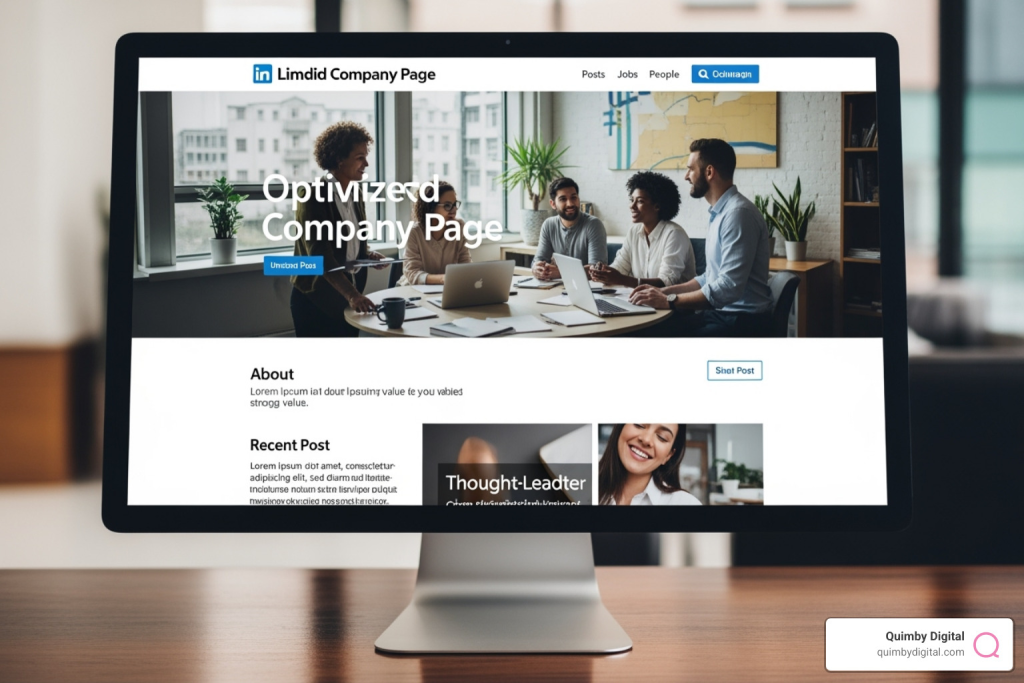
Your LinkedIn Company Page serves as your brand’s official headquarters, while personal profiles are where the real magic happens. Think of it this way: people buy from people, not logos. Even in the B2B world, relationships drive decisions.
Here’s what makes B2B different from B2C on LinkedIn: the buying process is longer and involves more people. Your potential clients aren’t impulse shopping. They’re researching, comparing, and getting buy-in from their teams. This means your LinkedIn presence needs to build trust over time, not just capture attention for a moment.
But don’t mistake “professional” for “boring.” B2B buyers are still human beings with emotions, challenges, and aspirations. They want to work with companies that understand their world and can solve real problems.
Just like your website needs SEO love, your LinkedIn presence needs strategic keyword placement. When decision-makers search for solutions in your industry, you want to show up. This means weaving relevant terms naturally into your descriptions, headlines, and content.
Showcase Pages are LinkedIn’s best-kept secret. If your business serves different audiences or offers distinct services, these specialized pages let you speak directly to each group. A wellness brand might have one Showcase Page for B2B partnerships and another for consumer products, each with custom messaging and content.
Define Your Audience and Objectives
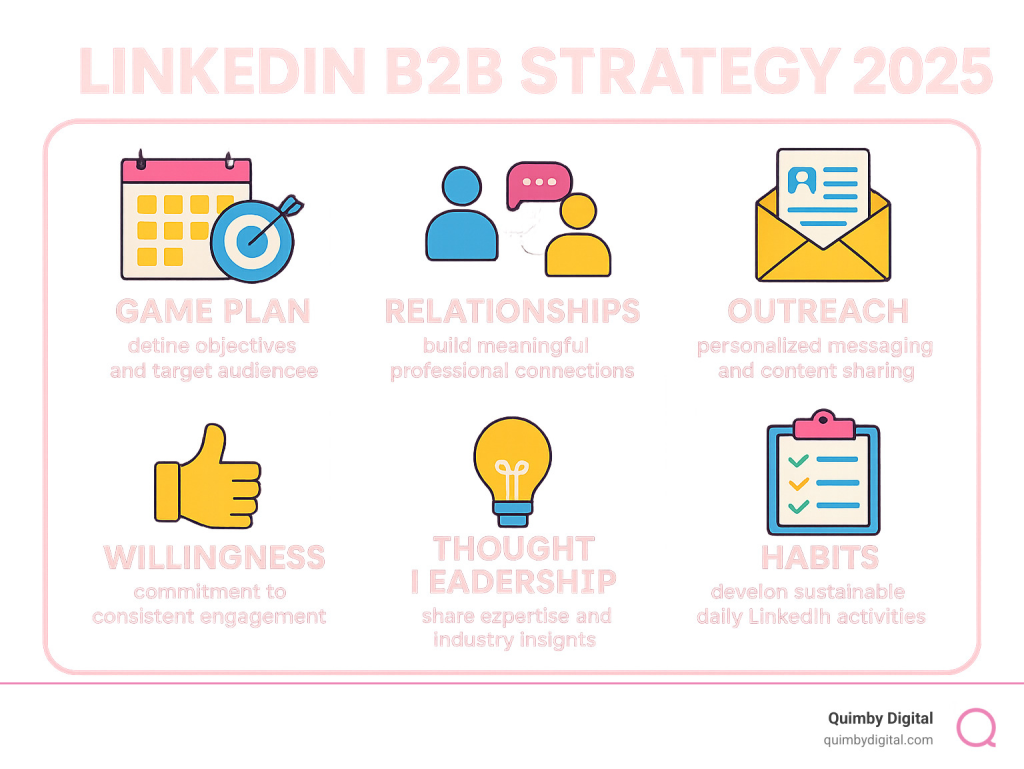
Before you write a single post or send a connection request, you need crystal-clear answers to two questions: Who are you trying to reach? and What do you want to happen when you reach them?
Your business goals on LinkedIn might include brand awareness, lead generation, thought leadership, or talent acquisition. Maybe all of the above. But trying to do everything at once usually means doing nothing particularly well. Pick your primary objective and let it guide your strategy.
Now comes the detective work: understanding your audience. B2B buying committees can include anywhere from three to ten people, each with different concerns and influence levels. The CFO cares about ROI. The end-user cares about ease of implementation. The CEO cares about competitive advantage.
Create detailed buyer personas that go beyond job titles. What keeps them up at night? What industry publications do they read? What challenges are they facing that your solution could solve? Map out their customer journey from awareness to decision, and you’ll know exactly where LinkedIn fits in.
Trust forms the foundation of every successful B2B relationship. Building that trust requires authenticity, consistency, and genuine value. For deeper insights on cultivating trust through social media, check out our guide on How to Use Social Media to Build Trust With Your Audience.
Optimize Your Company Page for Findy
Your LinkedIn Company Page isn’t a “set it and forget it” digital business card. It’s a living, breathing representation of your brand that needs to work hard for you 24/7.
Start with the basics: complete every single field. LinkedIn’s algorithm rewards complete profiles, and incomplete pages look unprofessional. Your branded banner and company logo create that crucial first impression, so invest in high-quality visuals that reflect your brand personality.
The “About Us” section is your elevator pitch on steroids. You have 2,000 characters to explain what you do, who you serve, and why it matters. This is prime real estate for keyword optimization. Include terms your ideal clients would search for, but weave them naturally into compelling copy that speaks to human needs.
Your call-to-action button deserves special attention. LinkedIn offers options like “Visit Website,” “Contact Us,” and “Learn More.” Choose the action that aligns with your primary objective and make sure it leads to a relevant, optimized landing page.
Think of optimization as an ongoing conversation with your audience. Regular updates signal that you’re active and engaged. Fresh content, company news, and industry insights keep your page dynamic and give people reasons to follow you.
The beauty of LinkedIn optimization lies in its compound effect. Each optimized element works together to improve your visibility, credibility, and appeal to your target audience. For more strategies on amplifying your brand presence across digital channels, explore our insights on Social Media Marketing & SEO Hacks to Amplify Brand Presence.
Crafting Your Winning LinkedIn B2B Strategy for 2025
With our foundation laid, it’s time to build the structure: your content and engagement strategy. This is where the magic happens, where your brand’s personality, expertise, and value proposition truly come alive. For 2025 and beyond, a successful LinkedIn B2B strategy is about more than just posting; it’s about building genuine relationships and fostering a thriving community.

Think of LinkedIn as your brand’s professional networking event that never ends. Just like at a real networking event, you wouldn’t walk up to someone and immediately pitch your services. Instead, you’d start conversations, share insights, and gradually build trust. The same principle applies here.
Consistency is your secret weapon. Pages that post updates at least weekly receive 2x more engagement, showing that LinkedIn’s algorithm rewards active, engaged brands. But consistency without strategy is just noise in an already crowded feed. We need to be thoughtful about what we share, how we share it, and who we’re trying to reach.
The beauty of LinkedIn lies in its professional context. Unlike other platforms where content can feel forced or overly promotional, LinkedIn users expect to learn something valuable from your posts. They’re here to grow professionally, solve business problems, and connect with industry peers. This creates the perfect environment for content marketing, community building, and establishing thought leadership.
Develop a Content-Centric LinkedIn B2B Strategy
Content is the fuel that powers your LinkedIn B2B strategy. It’s how you establish thought leadership, provide genuine value, and subtly guide prospects toward your solutions without feeling pushy or salesy.
Let’s talk about the 3-2-1 content rule – it’s a game-changer for maintaining balance. For every six posts, aim for three industry-related posts that share relevant news, insights, or trends from your field. These position you as a go-to source for valuable information. Then add two ‘proud’ content posts that showcase your company’s achievements, culture, or client successes. Finally, include one promotional post that directly highlights your services, but make sure it’s still value-driven and addresses a real pain point.
Your content mix should be as diverse as your audience’s preferences. Long-form articles using LinkedIn’s native article feature allow you to dive deep into topics, establishing your authority while providing substantial value. These are perfect for thought leadership pieces that showcase your expertise.
Short-form video is absolutely crushing it on LinkedIn right now. Video content drives 5x more engagement than static posts, and there’s been a 34% year-on-year growth in video consumption on the platform. The sweet spot for B2B audiences is keeping videos under two minutes.
Here are some B2B video ideas that actually work: behind-the-scenes glimpses of your team or process make your brand feel human and approachable. Client testimonials and success stories build social proof without feeling overly promotional. Expert interviews with industry leaders (whether internal team members or external guests) position you as a connector in your space. Quick how-to guides that solve common problems your audience faces are pure gold for engagement. Q&A sessions addressing frequently asked questions show you’re listening to your community. Event highlights or recaps extend the life of your offline activities.
Don’t overlook polls – they’re simple, interactive, and highly engaging. They’re fantastic for gathering audience insights while sparking meaningful conversations. Carousels work beautifully for breaking down complex information into digestible, visually appealing slides. Think of them as mini-infographics or step-by-step guides.
LinkedIn Newsletters deserve special attention. They’re a powerful tool for delivering your most valuable content directly to subscribers, bypassing the crowded main feed entirely. Use newsletters for your deepest thought leadership pieces and most exclusive insights.
Your goal is to be the helpful expert, not the pushy salesperson. According to the 2024 B2B thought leadership report, buyers are increasingly looking for brands that demonstrate genuine expertise and provide actionable insights.
Drive Genuine Engagement and Build Community
Engagement is where your LinkedIn B2B strategy comes alive. It’s not enough to just publish great content and hope for the best. You need to actively participate in conversations and build a genuine community around your brand.
Page advocacy is one of the most underused tactics we see. Company Page admins should actively like, share, and comment on posts from employees, partners, and key industry players. This isn’t just about being nice – it builds relationships, amplifies content, and encourages reciprocal engagement.
Your commenting strategy should be thoughtful and substantial. Instead of generic responses like “Great post!” or “Thanks for sharing,” add real value to the conversation. Share a related insight, ask a thoughtful follow-up question, or offer a different perspective. This approach demonstrates your expertise and increases your visibility to the original poster’s network.
Always respond to comments on your own posts. This simple act shows you value your audience’s input and encourages further interaction. It can significantly boost your engagement rates and helps build stronger relationships with your community.
LinkedIn Groups are goldmines for niche communities. Actively participate in relevant groups by sharing insights, asking thoughtful questions, and engaging with other members’ content. If it makes sense for your business, consider creating your own group centered around your area of expertise.
Interactive content is having a major moment on LinkedIn. Features like LinkedIn Audio Events allow for real-time interaction, Q&A sessions, and more personal connections with your audience. Think of them as hosting your own industry roundtable where people can drop in, listen, and participate.
Polls deserve another mention here because they’re so effective at driving engagement. They’re perfect for gathering audience insights while sparking conversations. For a deeper dive into making your polls truly engaging and valuable, check out Mastering Polls: How to Directly Engage With Your Audience.
Amplify Your Reach with Employee Advocacy
Your employees are your most authentic brand ambassadors, and leveraging employee-generated content is one of the most genuine ways to humanize your brand and significantly amplify your reach.
Here’s why this approach is so powerful: people trust people more than they trust brands. When your team members share insights, experiences, or behind-the-scenes glimpses of their work, it adds authenticity that traditional corporate messaging often lacks. This is social selling at its finest – building trust and relationships through genuine human connection.
Humanizing your brand through employee voices makes your company feel approachable and real. Instead of being just another corporate entity, you become a collection of talented, passionate individuals working toward common goals.
Encouraging employee advocacy starts with building internal advocates. Senior leaders and marketing teams should actively participate on LinkedIn, demonstrating the platform’s value. Provide guidance and resources on LinkedIn best practices, content ideas, and authentic brand representation, but avoid being too prescriptive – authenticity can’t be mandated.
Featuring employees on your Company Page creates a win-win situation. Share their posts (with permission), celebrate their achievements, and showcase their expertise. This makes team members feel valued while showing your audience the talented people behind your brand.
Integrating employee content into your broader content strategy amplifies everyone’s reach. Reshare employee-written articles, video snippets, or insightful comments. This extends their visibility while demonstrating the depth of talent within your organization.
By empowering your team to build their personal brands on LinkedIn, you’re not just expanding your reach – you’re building a stronger company culture and creating multiple touchpoints for potential clients to connect with your brand. For more insights on building a strong social media team, especially for tech-forward brands, explore Your SaaS Social Media Team.
Measuring What Matters: Analytics and KPIs for Growth
You’ve crafted compelling content, engaged authentically with your community, and watched your LinkedIn B2B strategy come to life. But here’s the million-dollar question: how do we know if all this effort is actually moving the needle for your business?
This is where analytics become your best friend. LinkedIn’s robust analytics dashboard for Company Pages is like having a crystal ball that shows you exactly what’s working and what needs a gentle nudge in the right direction. The beauty lies in the details – from content performance and follower demographics to visitor trends and competitive insights.
Think of it this way: if you’re not measuring your results, you’re essentially flying blind. And while that might sound adventurous, it’s not exactly the smartest approach when you’re trying to grow your business!
Key Metrics to Track for Success
Let’s explore the metrics that truly matter. These aren’t just vanity numbers to make you feel good – they’re the real indicators of whether your LinkedIn B2B strategy is driving meaningful results.
Impressions versus reach might seem similar, but they tell different stories. Impressions show how many times your content appeared on screens, while reach tells you how many unique people actually saw it. Both matter because they help you understand your content’s visibility and potential impact.
Engagement rate is where the magic happens. This measures the percentage of your audience that actually interacts with your content through likes, comments, shares, or clicks. High engagement rates mean your content is striking a chord with your audience – and LinkedIn’s algorithm loves that too.
Click-through rate reveals how compelling your call-to-action really is. When people see your post and actually click through to learn more, that’s a strong signal that your content is doing its job. Website clicks from LinkedIn can be particularly valuable since they represent people actively seeking more information about your business.
Lead generation form submissions are gold mines for B2B companies. These forms automatically pre-populate with user data, making it incredibly easy for prospects to connect with you. The quality of these leads tends to be exceptionally high.
Don’t overlook follower demographics either. Understanding who your followers are – their job titles, industries, company sizes, and locations – helps you create content that truly resonates with your target audience.
While likes feel good, comments and shares are the real indicators of deep engagement. Comments spark meaningful conversations, and shares extend your reach organically to new audiences. These interactions often lead to genuine business relationships.
For more insights on tracking growth across all your social channels, check out 5 Metrics to Record for Social Growth.
Measuring the ROI of Your LinkedIn B2B Strategy
Here’s where we get serious about connecting your LinkedIn efforts to actual business results. Measuring social media ROI doesn’t have to feel like solving a complex math problem – it just requires the right approach.
Connecting your social activities to business goals is the foundation of meaningful measurement. Every LinkedIn post, comment, and connection should tie back to a specific business objective. Whether that’s brand awareness, lead generation, or establishing thought leadership, clarity on your goals makes measurement much more straightforward.
Lead tracking becomes crucial when you’re serious about ROI. Using UTM parameters on all your LinkedIn links helps you accurately attribute website traffic and conversions back to the platform. Integrating this data with your CRM system allows you to follow leads from that first LinkedIn interaction all the way through to closed deals.
Cost per lead calculations help you understand LinkedIn’s efficiency compared to other marketing channels. This is especially important if you’re running paid campaigns alongside your organic efforts.
Customer lifetime value adds another layer of insight. Over time, you can connect LinkedIn-generated leads to their long-term value to your business, demonstrating the platform’s sustained impact on your bottom line.
Regular reporting keeps everyone aligned and demonstrates the value of your LinkedIn investment. These reports should highlight key metrics, progress toward objectives, and actionable insights for future improvement.
LinkedIn isn’t just a marketing channel – it’s a powerful sales enablement tool. The combination of organic relationship building and strategic paid campaigns can create remarkable results when executed thoughtfully. For more on balancing organic and paid strategies effectively, explore Organic & Paid Social Media Campaigns.
Frequently Asked Questions about LinkedIn for B2B
How often should a B2B company post on LinkedIn?
Here’s the thing about posting frequency: consistency beats everything. We’ve seen too many brands burn out trying to post daily, only to disappear for weeks when they can’t keep up the pace.
Our sweet spot? At least weekly. Companies that post updates weekly get 2x more engagement than those who post sporadically. That’s not a coincidence – LinkedIn’s algorithm loves consistent creators, and your audience appreciates knowing when to expect valuable content from you.
If you can sustainably create high-quality content more often, fantastic! But never sacrifice content quality for the sake of hitting a daily quota. Your audience would rather see one thoughtful post per week than seven mediocre ones.
Timing matters too. Mid-week posts during business hours tend to perform best – think Tuesday through Thursday between 10 a.m. and 12 p.m. But here’s our advice: test what works for your specific audience. Every community has its own rhythm, and part of building an authentic connection is understanding when your people are most engaged.
Is a personal profile or a Company Page more important for B2B marketing?
This question comes up constantly, and honestly? It’s like asking whether you need a heart or lungs – you need both working together.
Your Company Page is your brand’s official home base. It’s where potential clients go to understand what you do, see your credibility, and get a feel for your company culture. Think of it as your digital storefront – essential for legitimacy and showcasing your expertise.
But here’s where the magic happens: personal profiles drive the real connections. People buy from people, not faceless corporations. When your CEO shares industry insights, your sales team builds relationships, or your employees become genuine advocates for your brand, that’s when trust gets built.
The most successful LinkedIn B2B strategies leverage employee advocacy. Your team members become authentic brand ambassadors, sharing company content while building their own professional brands. This humanizes your business in ways a Company Page alone never could.
It’s a beautiful partnership – strong personal brands reflect positively on your company, while a solid company reputation supports your employees’ professional growth. Don’t choose one over the other; make them work together.
Do I need to use LinkedIn Ads for a B2B strategy?
The honest answer? It depends on your goals and budget. LinkedIn’s organic reach is still strong, especially when you’re creating genuinely valuable content and building real community connections.
That said, LinkedIn Ads can be incredible accelerators. The targeting capabilities are best – you can reach decision-makers by exact job title, company size, industry, even specific companies. It’s like having a direct line to your ideal prospects.
We typically recommend starting organic-first, then adding strategic paid elements. Boosting your top-performing posts is often the smartest first step – if content is already resonating organically, a small ad budget can amplify it to a much wider, targeted audience.
Retargeting website visitors through LinkedIn is another powerful move. Use LinkedIn’s Insight Tag to stay connected with people who’ve already shown interest in your business.
LinkedIn ads can be pricier than other platforms, but the quality is typically worth it. According to the B2B Marketing Benchmark report, 84% of B2B marketers say LinkedIn provides the best value among social media platforms.
Think of paid advertising as the turbo boost for an already solid organic strategy, not a replacement for authentic community building.
Conclusion
Building a successful LinkedIn B2B strategy for 2025 isn’t about following a rigid playbook—it’s about embracing authenticity while staying committed to long-term relationship building. Throughout this guide, we’ve explored how the platform’s professional environment creates unique opportunities for meaningful connections that actually convert into business growth.
The foundation we’ve built together—from optimizing your company presence to crafting diverse content that resonates—sets you up for sustainable success. But here’s what really matters: authenticity always wins over polish, and community focus beats promotional content every single time.
Your employees are your secret weapon in this journey. When they share their genuine experiences and insights, they’re not just extending your reach—they’re humanizing your brand in ways that traditional marketing simply can’t achieve. This human-to-human connection is what makes LinkedIn so powerful for B2B relationships.
Adapting to platform changes will always be part of the game. LinkedIn continues evolving, introducing new features and adjusting algorithms. The brands that thrive are those that stay curious, test new approaches, and remain flexible while maintaining their core values and voice.
Remember the key takeaways that will serve you well: consistency builds momentum, engagement creates community, and measuring the right metrics guides smart decisions. When you combine these elements with genuine value creation, you’re not just participating in LinkedIn—you’re leveraging it as a growth engine.
At Quimby Digital, we’ve seen how wellness, CPG, and tech-forward brands transform their LinkedIn presence from static company pages into thriving community hubs. Our expertise in organic growth strategies means we understand the nuances of building authentic connections that drive real business results.
Ready to turn your LinkedIn presence into a powerful catalyst for B2B success? Let’s create a strategy that feels authentically you while delivering the growth you’re after.
Explore our Social Media Services