

Introduction: Why Digital Marketing Matters in 2025
In 2025, business growth depends on visibility, adaptability, and measurable impact. With over 5.6 billion people online and more than 65% of the global population active on social media, the internet is now the primary marketplace for discovery and decision-making. Traditional marketing methods can’t keep pace with how consumers search, shop, and engage.
Digital advertising spend has surpassed $740 billion, and more than half of all web traffic now comes from mobile devices. The importance of digital marketing lies in meeting audiences where they spend their time, capturing intent in real time, and converting interactions into measurable ROI.
According to recent industry data, 97% of consumers research a business online before visiting or purchasing. Brands with integrated digital strategies see higher engagement, better analytics, and consistent long-term growth. Ignoring digital marketing today doesn’t just slow your reach—it makes you invisible.

What Is Digital Marketing and How Has It Evolved?
Digital marketing includes every online effort used to promote, attract, and retain customers. It covers SEO, paid media, content marketing, social media, email automation, influencer partnerships, and analytics. What began as static websites and email newsletters has evolved into a dynamic ecosystem driven by personalization, AI, and data integration.
The role of digital marketing now extends far beyond promotion. It’s about connecting strategy, storytelling, and analytics to build long-term relationships and brand equity. With tools like automation, audience segmentation, and attribution modeling, marketers can target precisely, measure accurately, and improve continuously.
Modern marketing plans are no longer isolated from technology—they’re powered by it.
Why Digital Marketing Is Important for Businesses Today
Digital marketing is the foundation of growth in every modern business. Whether you’re a startup founder, an eCommerce operator, or a B2B marketer, your ability to connect with your audience depends on your digital presence.
Here’s why digital marketing is important for businesses in 2025:
- Visibility and Reach: 97% of users research products and services online before making a purchase decision.
- Data-Driven Decisions: Real-time insights allow marketers to measure ROI, test new strategies, and optimize performance continuously.
- Cost Efficiency: Digital channels often outperform traditional advertising in return on ad spend.
- Precision Targeting: Advanced tools allow marketers to reach audiences by location, intent, and behavior.
- Brand Credibility: A consistent, professional digital footprint builds trust faster than any offline campaign.
For businesses today, the need for digital marketing isn’t about being modern—it’s about staying competitive.
Benefits of Having a Digital Marketing Strategy
Having a documented strategy transforms digital marketing from a set of tactics into a growth engine. A digital marketing plan aligns every channel toward shared objectives and ensures accountability across campaigns.
Key benefits include:
- Clear Direction: Defined goals and KPIs ensure every effort supports measurable business outcomes.
- Higher ROI: Integrated strategies generate stronger conversions and customer lifetime value.
- Better Insights: Analytics provide a real-time view of what’s driving engagement and sales.
- Increased Visibility: Consistent SEO, paid media, and content execution keep your brand top-of-mind.
- Cross-Channel Integration: Combining social, search, and email ensures a seamless customer experience.
For example, brands applying structured strategies—like those outlined in Quimby Digital’s CRO guide 2025—outperform those running ad-hoc campaigns by as much as 40% in lead quality and revenue growth.
Core Components of a Strong Digital Marketing Plan
A successful digital marketing strategy is built on several interconnected pillars.
1. Search Engine Optimization (SEO)
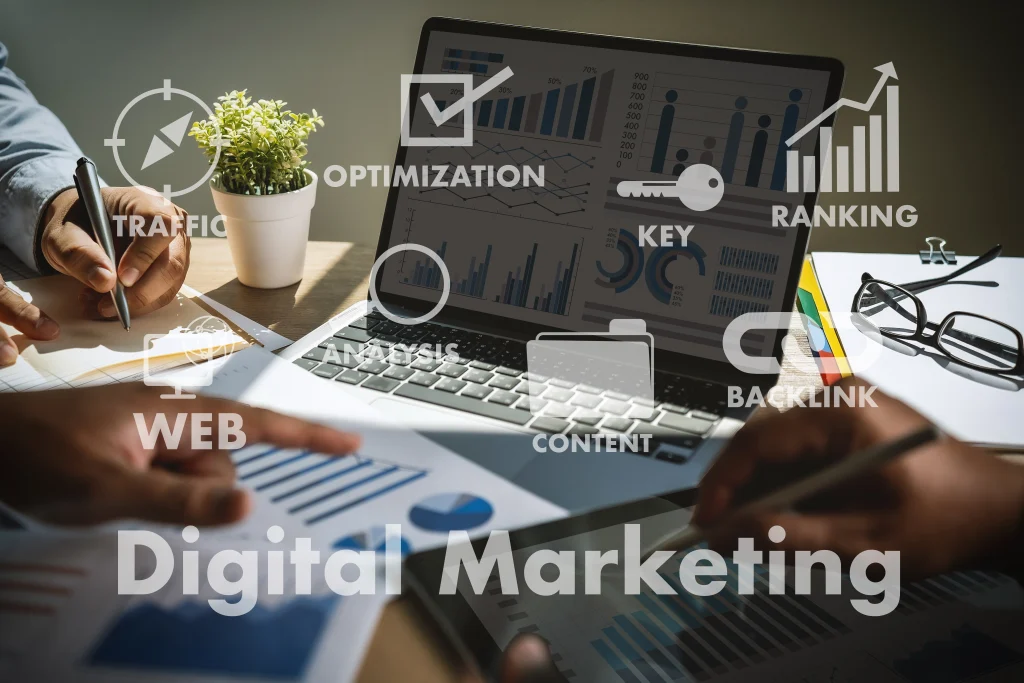
SEO remains one of the most effective digital tactics for long-term visibility. Optimizing content for relevant keywords, improving site speed, and earning backlinks elevate your ranking and bring consistent organic traffic.
2. Paid Media (PPC, Display, and Social Ads)
Paid campaigns deliver instant visibility to targeted audiences. Platforms like Google Ads and Meta allow brands to adjust budgets dynamically and focus on high-intent prospects.
3. Content Marketing
Educational and valuable content drives discovery and trust. Blog articles, videos, guides, and whitepapers position brands as industry authorities while boosting SEO.
4. Social Media Marketing
Social media builds connection and credibility. It’s where brands express personality, foster community, and turn followers into advocates. For guidance on how to optimize your approach, see Quimby’s Social Media Strategy Guide.
5. Email and CRM Automation
Email campaigns and automation workflows nurture leads and re-engage existing customers. Segmented, personalized campaigns can increase revenue per email by up to 50%.
6. Data and Analytics
Analytics turn data into insight. Platforms like Google Analytics 4, CRM dashboards, and AI-powered attribution models reveal what’s working and where to invest next.
Each of these components feeds into one another—when integrated, they create a self-sustaining system that attracts, converts, and retains customers.
How Digital Marketing Drives Business Growth
Digital marketing impacts every stage of the customer journey—from awareness to advocacy.
- Acquisition: Search and social campaigns capture attention and attract first-time visitors.
- Engagement: Content, social media, and email deepen trust and encourage interaction.
- Conversion: Conversion Rate Optimization (CRO) and remarketing move prospects toward purchase.
- Retention: Automated messages, loyalty programs, and community engagement increase repeat business.
A DTC wellness brand, for example, combined SEO, influencer partnerships, and retargeting ads to lower customer acquisition cost by 25% and double repeat purchase rates within six months.
Digital marketing doesn’t just fill the funnel—it strengthens every part of it.
Common Mistakes Brands Make with Digital Marketing
Even well-intentioned marketing teams can lose traction if they lack strategy or consistency. Common pitfalls include:
- No documented digital marketing strategy: Nearly half of all businesses still operate without one.
- Undefined goals or KPIs: Without benchmarks, teams can’t measure impact or justify spend.
- Ignoring mobile optimization: More than half of all eCommerce sales happen via mobile.
- Neglecting quality content: Generic, keyword-stuffed content damages brand credibility.
- Underusing analytics: Data without action leads to wasted ad budgets.
- Channel silos: Disconnected systems cause fragmented customer experiences.
The importance of having a unified, data-driven plan cannot be overstated—successful brands invest in integration, not improvisation.
The Future of Digital Marketing: AI, Data, and Personalization
Digital marketing continues to evolve rapidly, driven by technology and user expectations.
AI and Automation
Artificial intelligence streamlines ad targeting, copy generation, and predictive analytics. By 2025, 75% of marketers are expected to rely on AI tools to optimize campaigns in real time.
Privacy and Data Ownership
The shift toward a cookieless web underscores the need for first-party data. According to Think with Google, brands leveraging first-party data achieve up to 30% higher ROI.
Personalization at Scale
Consumers now expect individualized experiences across every channel. Personalization driven by analytics and machine learning increases engagement and retention.
Omnichannel Consistency
Marketing success depends on unifying online and offline touchpoints. Whether on social media, mobile apps, or physical stores, customers expect a seamless journey.
Analytics and Measurement
Next-generation analytics platforms combine attribution, behavioral data, and predictive modeling. They help marketers visualize customer pathways, forecast performance, and optimize ROI.

Digital Marketing as a Growth Engine
The role of digital marketing has shifted from support function to central growth driver. It aligns technology, creativity, and analytics to create scalable success.
In 2025 and beyond, brands that embrace digital transformation will outperform those that rely solely on traditional outreach. It’s no longer enough to “be online”—businesses must leverage digital strategy to drive visibility, efficiency, and measurable outcomes.
For founders and marketing teams, the question isn’t why digital marketing?—it’s how fast can you integrate it across your business model?
Conclusion: Building Sustainable Growth with Digital Strategy
The importance of digital marketing in 2025 cannot be overstated. It empowers brands to connect directly with their audiences, measure impact precisely, and grow predictably.
At Quimby Digital, our senior-led team helps companies build and execute strategic digital marketing systems that drive measurable ROI across every channel. Whether you’re launching a new venture or scaling an established brand, we’ll help you turn strategy into sustained performance.
Ready to build your growth engine?
Partner with Quimby Digital to transform your digital strategy into measurable business success.