

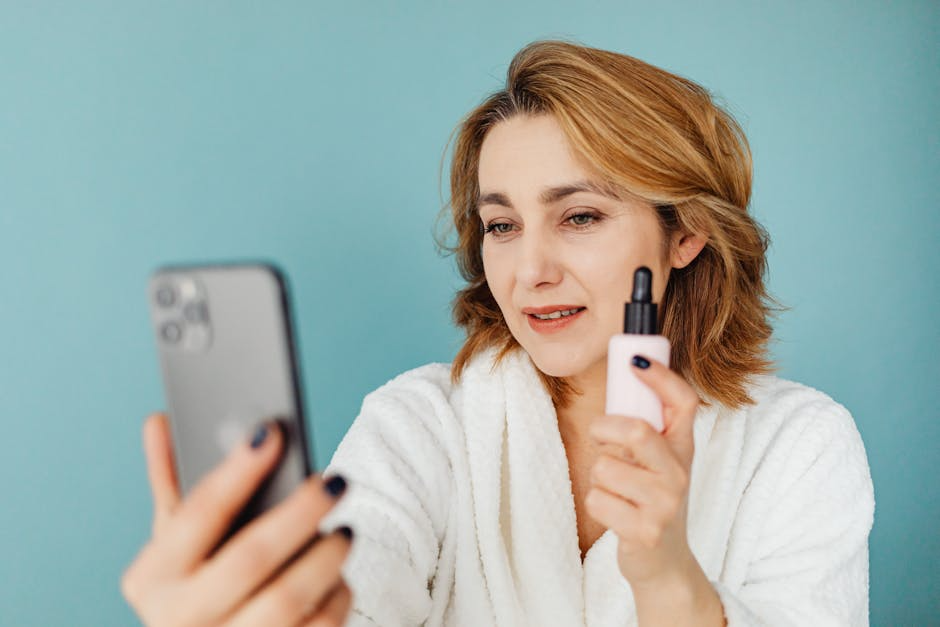
CPG influencer marketing is the strategic partnership between consumer packaged goods brands and content creators to promote everyday products across social platforms. By pairing the right CPG brands with creators their audiences already trust, these collaborations turn casual scrolls into real sales.
In the world of CPG marketing, influencers now play a critical role across the entire funnel—from top-of-funnel awareness to in-aisle decision making. Instead of relying solely on traditional ads, CPG brands use creator-led content, UGC libraries, and always-on campaigns to build trust, generate trial, and drive repeat purchases.
If you’re new to Quimby Digital, you can learn more about who we are and how we help modern brands on the homepage. For a broader view of category-level strategy, explore CPG Marketing 2025: Digital Strategy & Growth and our deeper dive on CPG Marketing in 2025.
What Does CPG Mean in Marketing?
Before we go deeper into influencer marketing for CPG, it helps to clarify the basics.
In marketing, CPG stands for consumer packaged goods—everyday items like snacks, beverages, skincare, cleaning products, toiletries, pet food, and over-the-counter wellness products. CPG brands move quickly, compete on shelf and in feed, and rely heavily on repeat purchases.
So when we talk about CPG influencer marketing, we mean using creators to promote these fast-moving products in ways that feel native to TikTok, Instagram, YouTube, and emerging platforms. A strong CPG marketing strategy integrates influencer content with paid social, shopper marketing, retail media, and brand building.
If you’re looking for inspiration from category leaders, check out our round-up of the best CPG social media agencies in North America and our location-based hub for CPG social media in New York City.
Key Elements of a Strong CPG Influencer Program
High-performing CPG campaigns aren’t just about sending free product and hoping for the best. They’re designed like a system.
Core building blocks include:
- Partnership focus: Mix nano, micro, and macro creators to balance depth and reach
- Product integration: Let creators naturally show how your product fits into their daily lives
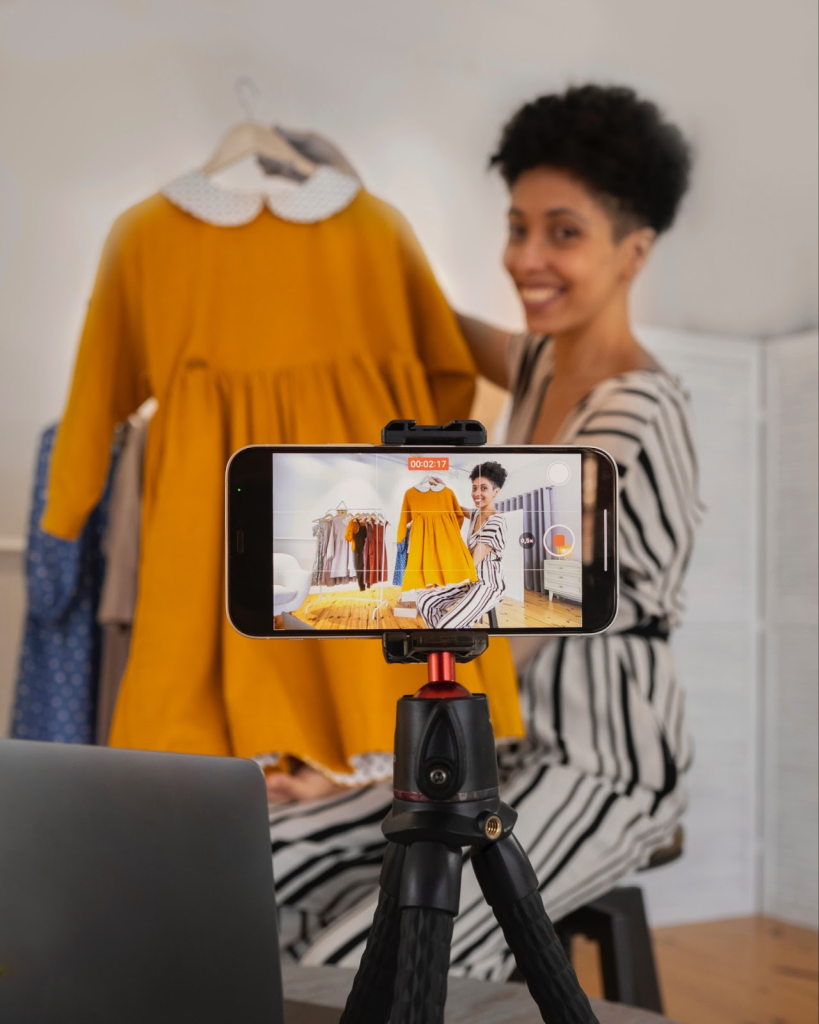
- Content formats: Unboxings, recipes, routines, GRWMs, hauls, before/after, and lifestyle storytelling
- Primary platforms: TikTok, Instagram, YouTube, and increasingly Reddit for honest conversation
- Core goals: Build trust, drive awareness, expand distribution, and lift sales online and in store
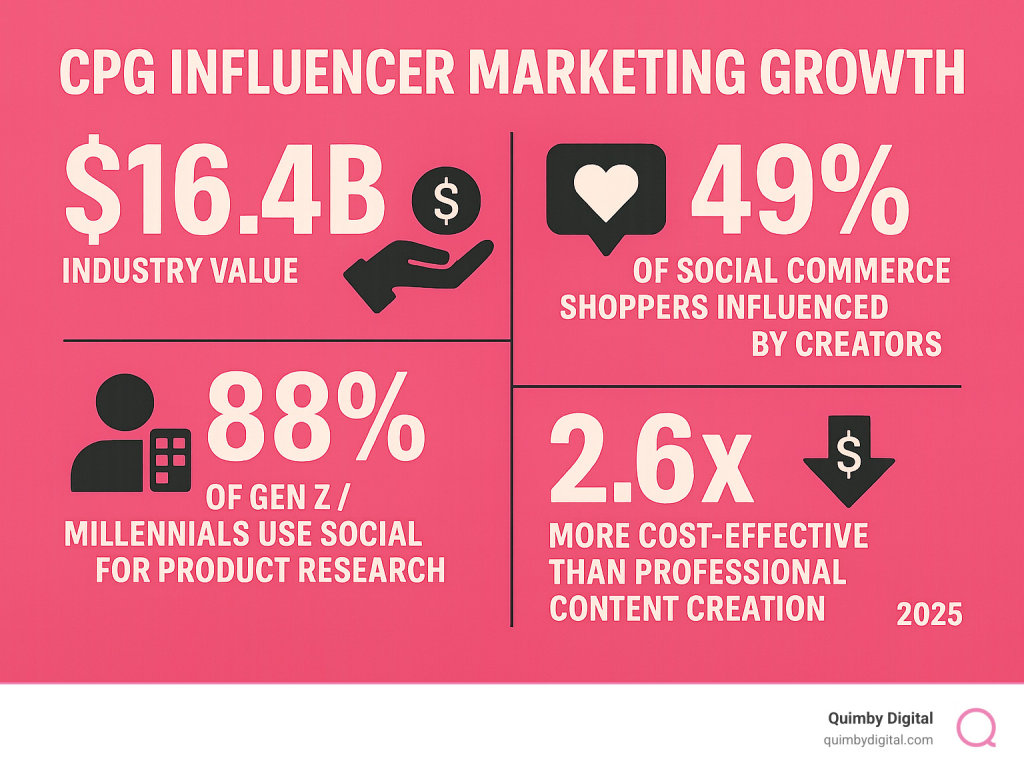
49% of social commerce shoppers are influenced by creator recommendations, while 88% of Gen Z and Millennials use social media to research products before they buy. In a category where branded search and in-aisle decisions still matter, influencer content shortens the path to trial.
If you want to see how social drives retail revenue more broadly, explore our guide to scroll-to-sale social for retail brands.
The Unstoppable Rise of CPG Influencer Marketing
The way people shop for consumer packaged goods has transformed. Consumers no longer passively absorb brand campaigns; they actively seek recommendations from people they trust. That’s where influencer marketing for CPG thrives.
Instead of one-way “brand to shopper” communication, CPG brands now operate in a creator-led ecosystem:
- Consumers want recommendations from real people, not just polished ads
- Creators test, review, and normalize products in everyday routines
- Social proof spreads through comments, duets, stitches, and DMs
That’s one reason creator-led performance often beats traditional production. Influencer content:
- Costs less than big-budget studio shoots
- Feels native to each platform
- Is faster to test, learn, and scale through paid social
If you’re thinking beyond awareness and want to connect this to performance, read Marketing ROI in 2025 and Clicks That Count: How to Master PPC.

The Core Benefits for Your CPG Brand
Done right, CPG influencer marketing goes far beyond vanity metrics. It becomes a consistent engine for:
- Authentic connections: Everyday routines, pantry tours, bathroom shelfies, and “day in the life” content show your CPG brand in real context
- User-generated content at scale: UGC fills your content library, powering paid social, email, and PDPs
- Higher conversions: Trusted creator recommendations turn interest into trial and repeat purchase
- Social proof: Real people validate your product for new buyers on social and in reviews
- Brand trust and loyalty: Long-term partnerships build familiarity and credibility
- Competitive edge: Early mover brands lock in key creators and own their category story
For CPG teams focused on long-term brand health, it’s worth pairing influencer programs with rigorous measurement. Our guide on Brand Health Metrics and Your Guide to Brand Awareness and Loyalty shows how to track more than just impressions.

Why Traditional Ads Are Losing Their Punch
Ad fatigue is real. In feeds saturated with polished campaigns, younger audiences scroll past anything that feels overly produced or “too salesy.” They engage with content that feels like it comes from a peer, not a marketer.
Gen Z and Millennials:
- Trust unfiltered, honest reviews
- Ignore traditional interruptive ad formats
- Expect brands to show up in the creators and communities they follow
That’s why we’re seeing a shift from big TV spots and generic display campaigns toward creator-led social programs, performance UGC, and always-on social. To explore those broader shifts in digital, check out The Importance of Digital Marketing in 2025 and Why Digital Marketing Matters for Businesses in 2025.
Building Your Winning CPG Influencer Strategy
A high-performing CPG influencer marketing strategy doesn’t start with “which influencers should we work with?” It starts with strategy and structure:
- Set SMART goals: Are you targeting awareness, store sell-through, DTC growth, or a UGC library?
- Define KPIs: Engagement rate, CTR, conversion rate, CAC, ROAS, and repeat purchase
- Know your audience: Who they are, how they shop, and where they scroll
- Craft a brief: Clear objectives, non-negotiables, and room for creator personality
- Choose platforms intentionally: TikTok for discovery and viral CPG campaigns, Instagram for aesthetic lifestyle content, YouTube for deeper education
To connect this influencer work with your broader social efforts, explore Master Your Social Media Strategy and Your Ultimate Social Media Marketing Playbook.
Finding and Vetting the Right Creators
The best CPG campaigns focus on fit, not fame. Follower count alone doesn’t predict outcomes. Instead, look at:
- Influencer tiers: Nano (<10k), micro (10k–100k), macro (100k+), and the right mix for your goals
- Engagement quality: Comments, saves, and shares say more than likes
- Audience alignment: Does the creator’s follower base match your buyer?
- Authenticity: Have they genuinely used your product or adjacent CPG brands?
- Value and tone alignment: Are their safety, wellness, or lifestyle values aligned with your brand?
For CPG brands that want a structured way to evaluate partners, our guide to Navigating the Best Digital Influencer and UGC Agencies and UGC Agency Uncovered is a helpful complement.
If you’d rather have a partner manage this, Quimby’s own Influencer and UGC Campaign Management service is built specifically for CPG and wellness brands.
Crafting Content That Converts for CPG Influencer Marketing
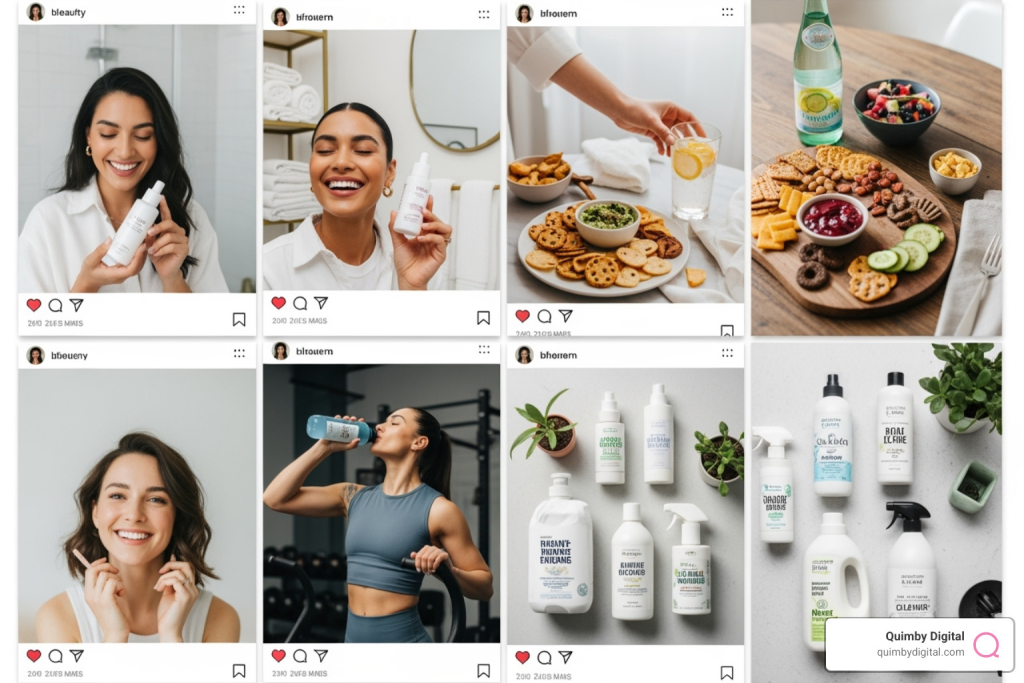
The highest-converting CPG content rarely looks like an ad. It looks like a trusted friend recommending something they actually use. For CPG brands, formats that tend to perform well include:
- Recipes and meal prep: Especially in food and beverage
- Shelf tours and “restock with me”: For pantry, fridge, bathroom, or cleaning products
- GRWM and routines: Skincare, wellness, supplements, and personal care CPG
- Unboxing experiences: Packaging that feels elevated and “worth sharing”
- Behind-the-scenes production stories: Sourcing, sustainability, founder stories
- Giveaways and contests: To drive engagement and trial
- Short-form video with clear CTAs: TikTok and Reels with hooks in the first 3 seconds
If your CPG brand also sells in retail, you can blend this with retail-specific plays from our guide on Retail Digital Marketing 2025 and Scroll to Sale.
Budgeting and Negotiating Like a Pro
Smart budgeting keeps influencer campaigns profitable while maintaining creator trust.
Common pricing models include:
- Flat fees per deliverable
- Commission or performance-based payouts
- Product gifting for nano creators or test campaigns
Best practices for CPG brands:
- Be transparent about budget, timelines, and expectations
- Define payment terms (Net 15–30) and scope (rounds of revisions, usage rights)
- Always include usage rights and duration in contracts
- Require FTC-compliant disclosure (#ad / #sponsored)
Because influencers are sometimes paid to promote products, it’s a best practice to ensure compliance with FTC guidelines, maintain clear disclosure, and avoid misleading claims. For paid social amplification of creator content, our Paid Social Media Advertising Playbook and Facebook Advertising Agency guide are useful references.
From Clicks to Conversions: Measuring Campaign Success
If you’re not measuring your CPG influencer marketing efforts, you can’t improve them. Winning brands obsess over the numbers that drive real business results, moving beyond vanity metrics like follower counts.
The key is tracking metrics that connect directly to your bottom line. When you can show that a specific influencer generated significant sales from a small investment, the value becomes undeniable.
| Metric Category | KPI | Definition | Why It Matters for CPG |
| Awareness | Reach & Impressions | Unique people who saw content vs. total views | Shows brand exposure potential |
| Engagement | Engagement Rate | Percentage of audience that likes, comments, shares | Higher engagement = stronger connection to your product |
| Conversion | Click-Through Rate (CTR) | People who clicked links in influencer content | Measures content’s ability to drive action |
| Sales | Conversion Rate | Visitors who actually made purchases | The ultimate measure of campaign success |
| Profitability | Customer Acquisition Cost (CAC) | Cost to acquire each new customer | Helps determine sustainable spending levels |
| ROI | Return on Ad Spend (ROAS) | Revenue generated per dollar spent | Shows if campaigns are actually profitab |
Key CPG KPIs You Must Track
Focus on KPIs that tell a complete story across awareness, engagement, and revenue:
- Engagement rate above ~3% typically indicates strong creator–audience fit
- Micro-influencers often deliver 2–3x higher conversion rates than macro-influencers
- A 4:1 ROAS is a healthy benchmark in many CPG categories, with top campaigns exceeding that
To understand how these influencer metrics fit into your broader marketing stack, explore Marketing ROI in 2025 and our practical Brand Building Guide.
Integrating CPG Influencer Marketing Into Your Overall Strategy
CPG influencer marketing performs best when it’s woven into your entire ecosystem, not run as a side experiment.
Smart brands:
- Repurpose creator content across paid social, DPA, RMNs, email, and PDPs
- Align campaigns with product launches, seasonal pushes, and retailer resets
- Support store distribution by having local influencers announce in-aisle availability
- Use influencer content to boost SEO and site engagement
For a full-funnel perspective, see Your Guide to a Powerful Community Engagement Strategy and Cultivating Authentic Community Engagement.
Real-World Wins and Future-Forward Trends
Patterns we see across the best CPG campaigns:
- Long-term partnerships outperform sporadic one-off posts
- Micro-creator networks often outperform a single big-name placement
- Authentic, lo-fi content beats overly produced video in social feeds
Emerging trends shaping CPG influencer marketing in 2025:
- Authenticity and values-first partnerships
- Short-form video dominance across TikTok and Reels
- Social commerce with native checkout flows
- AI-assisted creator matching and predictive performance
- Sustainability, wellness, and values-based positioning
If you’re experimenting with AI and workflows, our piece on AI in Social Media is a helpful read.
FAQs: CPG Influencer Marketing
You already have clear, strong answers here—so we’ll keep them, with a slight optimization lens:
How much should a CPG brand budget for influencer marketing?
Budgets depend on your goals, category, and whether you’re focused on retail lift, DTC sales, or both. Start with a test budget big enough to measure statistically significant results, then scale creators, content, and channels that prove profitable.
How long does it take to see results?
You’ll see early signals in reach and engagement quickly, but sustainable sales impact typically appears over 60–90 days of consistent, structured campaigns.
What’s the difference between micro- and macro-influencers for CPG?
Micro-influencers build depth and trust in niche communities. Macro-influencers build splashy awareness. Most strong CPG strategies blend both, then double down on the tiers that produce the best ROAS.
Conclusion
The writing is on the wall: CPG influencer marketing isn’t just another trend that’ll fade away. It’s become the backbone of how successful brands connect with today’s consumers.
We’ve walked through the entire journey together—from understanding why traditional ads are losing their grip to building authentic partnerships that actually convert. The numbers speak for themselves: 49% of shoppers trust influencer recommendations, and brands are seeing 2.6x better cost-effectiveness compared to traditional content creation.
But here’s what really matters: authenticity wins every time. Consumers can spot fake partnerships from a mile away, and they’re choosing to support brands that feel genuine. When you partner with creators who truly love your products, that authenticity shines through in every piece of content they create.
The future isn’t just influenced by creators—it’s completely creator-led. Your customers are already scrolling through TikTok and Instagram, looking for their next favorite product. They’re asking their favorite influencers for recommendations instead of searching Google ads. If your brand isn’t part of these conversations, you’re missing out on where the real connections happen.
This shift might feel overwhelming, but you don’t have to figure it out alone. At Quimby Digital, we’ve built our entire approach around creating these authentic connections. As a female-founded boutique agency, we understand that CPG influencer marketing isn’t about flashy campaigns—it’s about building real communities around your brand.
We specialize in the platforms where your audience actually lives: Reddit, TikTok, and beyond. We don’t just execute campaigns; we innovate and create strategies that feel natural and drive genuine engagement. Because at the end of the day, that’s what turns followers into loyal customers.
Connect with influencer and UGC agencies, explore social innovation trends, and build stronger community engagement.
Quimby Digital also offers social media marketing services for companies across the United States and Canada, tailoring strategy, content, and paid social to your market, time zone, and growth goals—including expert programs in: