

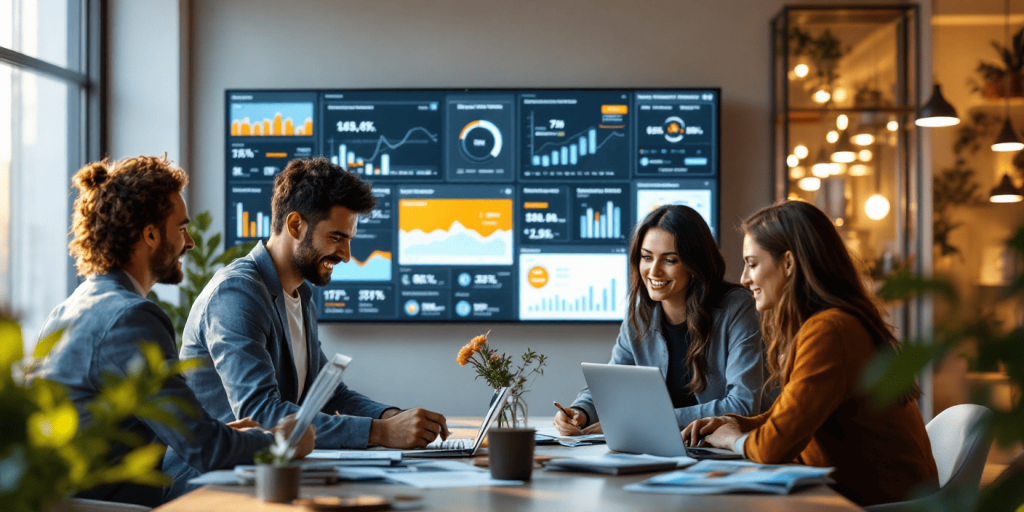
Retail digital marketing in 2025 has fundamentally shifted. Shoppers now begin their discovery on TikTok, search on Google Shopping, evaluate user-generated content on Instagram, browse reviews on retailer sites, and then choose between mobile checkout or walking into a store. The modern journey is not linear—it weaves between digital and physical touchpoints seamlessly.
If you’re new to Quimby Digital, you can explore our approach to omnichannel growth on the homepage.
This guide outlines the top retail digital marketing strategies for 2025, covering omnichannel content, social commerce, retail media networks, lifecycle marketing, analytics, and creative systems that retailers must nail to grow both online and in-store revenue. For broader context on omnichannel advertising foundations, see Mastering Digital Advertising Strategies.

Introduction — Why Retail Digital Marketing Is Now “Omni by Default”
Retail in 2025 is fully omnichannel. A customer might see a TikTok review, save an Instagram post, search for alternatives on Google, then complete their purchase through Instagram Shops or a physical store. Retailers optimizing digital marketing for retail understand that the journey moves across platforms constantly.
This shift is driven by:
- Social discovery is dominating early-stage demand
- Mobile-first shopping
- Retail media networks (RMNs) are reshaping high-intent advertising
- Short-form video influencing product consideration
For more on how retail and CPG overlap, explore CPG Marketing in 2025.
What Is Retail Digital Marketing? (Definition & Scope)
Retail digital marketing includes the full suite of digital tactics and channels that influence store sales, online transactions, loyalty, and retention. It covers:
- paid social, paid search, and RMNs
- UGC content and creative systems
- in-store digital marketing elements (LIAs, maps optimization)
- lifecycle programs (email, SMS)
- analytics, attribution, and footfall measurement
- online retail marketing strategy
- content and merchandising that supports digital retail strategy
Retailers using modern digital systems outperform because they align creative, paid media, merchandising, and store operations into one system.
To learn why content quality matters, explore Unleash the Power of Your Audience: A Guide to User-Generated Content.
The 2025 Retail Landscape (What Changed & Why It Matters)
Three shifts define 2025:
1. Mobile is now the primary storefront
Over 60% of e-commerce traffic is mobile. PDPs, PLPs, and checkout flows must be built for mobile-first.
2. Social commerce is a revenue channel—not just discovery
TikTok Shops, Instagram Shops, and Pinterest shopping flows convert at high rates when paired with UGC.
See how platform dynamics influence ROI in Tiktok Ads vs Instagram Ads.
3. RMNs democratized advanced targeting
Walmart Connect, Amazon Ads, and Target Roundel provide first-party audience access once exclusive to mega brands.
To understand category behavior influences, explore Marketing to Baby Boomers.
UX innovations—AR try-ons, creator reviews, short-form demos, livestream shopping—also shape the 2025 retail environment.
Retail Digital Marketing Strategy (Omnichannel Foundations)
An effective retail digital marketing strategy begins with mapping audience and demand by lifecycle. This includes prospecting, retargeting, and loyalty segments split by product category. Each channel plays a role: connected TV and upper-funnel video drive awareness. Meanwhile, social, search, and email shepherd mid-funnel. Paid search and RMNs close conversions, while Google Maps, local inventory ads, and DOOH pull in-store demand.
Offers are orchestrated seasonally and tactically. Category promos, bundle pricing, new arrival highlights, and loyalty perks stave off commoditization. The creative system is the engine. Micro-demo videos, UGC product reviews, side-by-side comparison cards, and price/benefit content keep feeds fresh and PDPs conversion-focused.
7 Retail Digital Marketing Plays (Step-by-Step)
1. Build Cross-Channel Reach With CTV + Short-Form Video
Short-form storytelling drives both online and in-store demand. High-performing content includes micro-demos, UGC reviews, comparison clips, and creator walk-throughs.
Learn how to scale video quality in 5 Ways for Brands to Create Effective Video Content.
2. Turn Social Commerce Into a Sales Channel
Social commerce thrives through:
- creator-led storytelling
- pinned FAQs
- size guide content
- in-app checkout flows
Learn how retailers excel with IG through How to Run Instagram Ads Without Wasting Budget.
3. Leverage Retail Media Networks for High Intent
RMNs power profitable, conversion-heavy paid media.
For budget planning guidance, visit Instagram Advertising Costs in 2025.
4. Implement Dynamic Retargeting
Segment retargeting by:
- PDP viewers
- cart abandoners
- high-LTV lookalikes
- category explorers
Learn how retailers interpret costs in What Businesses Really Pay CPC.
5. Drive Store Traffic With Local Digital Marketing
Retailers grow in-store footfall using:
- Google Maps optimization
- LIAs
- geo-lift tests
- local social ads
See an omnichannel application in Performance TV Advertising in 2025.
6. Lifecycle Marketing to Increase Repeat Purchases
SMS and email now drive replenishment and loyalty loops.
See loyalty insights in Beyond the First Purchase.
7. Continuous Creative Testing
Retailers evaluate content every 14 days to avoid creative fatigue.
Learn more in Quimby Digital Creative Fatigue.
Content & Merchandising for Digital Retail
Strong retail content includes:
- creator UGC
- mobile-first videos
- trust badges
- star reviews
- “ship today” messaging
- benefit-led comparison charts
For inspiration, explore Top Fashion Marketing Agencies 2025.
Budgeting & Media Mix (Fast Iteration Model)
The industry-standard model still performs best:
70% → proven channels (Google Shopping, RMNs, evergreen paid social)
20% → controlled tests
10% → high-risk experimental bets
For platform-level cost context, see TikTok Ad Costs 2025 and Social Media Marketing Cost in 2025
Measurement & Attribution (Online + In-Store)
Modern retail attribution tracks:
- PDP view depth
- add-to-cart rate
- store visit rate
- MER
- ROAS
- creative fatigue thresholds
- conversion velocity
Learn how to evaluate blended performance using Decoding Search Ads Analytics.
For CTR performance insights, see Understanding Click-Through Rate Benchmarks.
Governance, Accessibility & Compliance
Retailers must maintain:
- UGC rights documentation
- compliance with retailer RMN specs
- brand guidelines
- accessibility (alt text, captions)
- price accuracy workflows
Learn more about brand systems in Why Branding Still Drives Business Growth.
Case Snapshot: Apparel Brand’s 60-Day Digital Turnaround
A mid-market apparel brand experienced slipping conversion and a decline in in-store traffic.
After implementing:
- CTV discovery
- TikTok creator demos
- RMN off-site modeling
- dynamic retargeting
- LIAs
- PDP UGC refresh
They saw:
- +42% add-to-cart
- +24% conversion increase
- +18% foot traffic increase
- +20% new-to-brand lift
Explore more examples on our Our Work page.
Tools Stack (Vendor-Neutral)
Retailers rely on:
- PIM systems
- GA4 + Looker
- GMC feed tools
- SMS platforms
- RMN buying systems
- creative ops tools
Learn why retail digital infrastructure matters in Why Digital Marketing Matters in 2025.
Conclusion — Build the Omnichannel Loop
Retail digital marketing in 2025 thrives when every touchpoint—TikTok videos, PDPs, in-store displays, email flows, ads—feeds into the next. The winning formula:
- unify channels
- maintain a 90-day roadmap
- refresh creative regularly
- track both online and store sales impact
- prioritize LTV over one-time ROAS
If you’re ready to build or scale your retail digital strategy, start with the Quimby Digital Services page or explore regional support via our location hub.
To launch your omnichannel growth program, contact the team at Quimby Digital.