


Strategies to attract target audience members are the key to profitable growth, turning marketing from inefficient guesswork into a precise, effective strategy. Without knowing who you’re trying to reach, you’re wasting time and money.
Quick ways to attract your target audience:
- Research first – Use analytics and surveys to understand who already engages with your brand.
- Create detailed personas – Build fictional profiles based on real data about demographics, pain points, and behaviors.
- Choose the right channels – Focus on platforms where your audience actually spends their time.
- Deliver value consistently – Share content that solves problems or entertains your specific audience.
- Measure and adapt – Track engagement and adjust your approach based on what works.
The stakes are high. Today’s consumers connect with brands on a deeper level. More than 40% of consumers will unfollow brands whose values don’t align with their beliefs, while 91 percent of participants would switch to a brand associated with a cause they support. This means understanding your audience’s motivations and values is non-negotiable.
Businesses that get this right see incredible results. Personalization increases marketing spend efficiency by 10% to 30% and can boost revenue by 5% to 15%. Furthermore, companies using 3 or more channels see a 90% higher retention rate than those using a single channel.
Whether you’re a wellness brand, a CPG company, or a tech startup, these principles are universal. You must know who you’re talking to before you can create messages that resonate and build a loyal following.
First Things First: What is a Target Audience and Why Does It Matter?
Your target audience is the specific group of people you want to reach with your products or services—those most likely to become loyal customers. This differs from your target market, which is the broad category your business serves (e.g., “fitness enthusiasts”). Your target audience is a more specific segment within that market, such as “working moms aged 28-42 who struggle to find time for self-care.”
To bring this group to life, you create buyer personas—detailed, fictional profiles representing real segments of your audience. These personas help you understand your customers’ motivations, challenges, and decision-making processes. Trying to appeal to everyone appeals to no one. When you attract target audience members who truly connect with your brand, you see real results. Personalization increases revenue by 5% to 15%, making this a crucial step for business survival.
The Core Benefits of Knowing Your Audience
Understanding your audience deeply transforms your business approach, leading to:
- Improved customer acquisition: Your marketing becomes a magnet, drawing in people who feel your brand truly “gets” them.
- Improved customer satisfaction: You solve real problems for real people by understanding their pain points and desires.
- Brand loyalty: Customers become advocates for brands that they feel understand and value them. This loyalty is incredibly valuable for long-term growth.
- Efficient ad spend: You stop wasting money on uninterested audiences and focus your budget where it will have the most impact.
- Competitive advantage: Deeper audience knowledge helps you spot opportunities and create experiences that differentiate your brand.
Types of Target Audiences to Consider
To effectively attract target audience members, you need to look beyond the basics and combine multiple layers of insight.

- Demographics: The foundation—age, gender, location, income, and education.
- Psychographics: The ‘why’ behind their actions—beliefs, values, attitudes, and personality traits.
- Purchase intention: Where they are in the buying journey, from problem-aware to ready-to-buy.
- Subcultures: Communities united by shared interests, experiences, or values, often with their own influencers and language.
- Lifestyle: How people spend their time, what they care about, and how they see themselves.
The real power comes from combining these perspectives to create a rich, three-dimensional understanding of your audience. This depth enables you to craft messages that don’t just grab attention—they create genuine connections.
The Foundation: How to Precisely Identify Your Audience
Building a successful marketing strategy requires solid research, real data, and genuine insights into what makes your customers tick. The process involves combining market research, competitor analysis, and customer feedback to create buyer personas that feel like real people. The more you know about your audience, the better you can serve them.
Step 1: Use Data and Research to Attract Your Target Audience
Data tells the story of your customers’ needs, preferences, and behaviors. When 44% of top executives say data is key to strategic decision-making, they’re highlighting its importance in understanding the people behind the numbers.

- Google Analytics: Reveals how people use your website, showing which pages are engaging, where visitors come from, and what content holds their attention.
- Social media analytics: Shows when your audience is most active, what content makes them stop scrolling, and who is genuinely interested in your brand.
- CRM data: Helps you see patterns in customer behavior, track which messages resonate, and identify opportunities for personalization.
- Voice of Customer (VoC) data: Reviews, comments, and surveys provide unfiltered truths about what your customers really think.
- Social listening: Lets you monitor conversations about your brand and industry. Tools like Ahrefs can help you understand what people are saying when they think you’re not listening.
Step 2: Create Detailed Buyer Personas
Once you’ve gathered data, it’s time to bring your ideal customer to life by creating buyer personas. A good persona goes beyond demographics to include their pain points, goals and motivations, and media consumption habits.
Think about their buying triggers—what makes them finally decide to purchase? Is it a recommendation, a limited-time offer, or reaching a breaking point with their current solution?
For example, a wellness brand might create “Stressed Sarah,” a 32-year-old marketing manager who works long hours, values natural solutions, finds new products on Instagram, and buys when she feels overwhelmed.
When your team can visualize who they’re creating for, everything from email subject lines to product features becomes more focused and effective. For more info about social media marketing SEO hacks that can help you reach these personas, our team has insights that can make a real difference.
Proven Strategies to Attract Your Target Audience and Keep Them Engaged
Now that you know who you’re talking to, it’s time to connect. The best strategies to attract target audience members feel valuable, not salesy. The key is consistency and authenticity, building relationships over time with every piece of content, social post, and email.
Strategy 1: Create Value-Driven Content
Content marketing builds trust by positioning your brand as a helpful resource. The best content educates, engages, empowers, or entertains. It could be a blog post solving a problem, a poll that starts a conversation, a useful template, or a video that makes someone smile. Storytelling can better sell a product than simply listing features.

Remember to use SEO so your audience can find you when searching for solutions. Video content is also critical; short-form videos currently offer the highest ROI. For more on this, check out our guide on 5 Ways for Brands to Create Effective Video Content.
Strategy 2: Leverage Social Media Authentically
Each social platform has its own personality. To attract target audience members, you must speak their language on their preferred channels. Social media demographics vary by channel, so choose wisely. It’s better to excel on a few relevant platforms than be mediocre on many.
- User-generated content (UGC): When customers share photos or stories featuring your brand, it’s authentic marketing gold. Celebrate and share it to build community.
- Influencer collaborations: Partner with creators who genuinely love your brand and whose followers align with your audience. Their endorsement builds trust.
- Social listening: Stay tuned into conversations about your industry and brand to find what content to create next.
- Authentic engagement: Respond to comments, ask questions, and share valuable content. As we explore in How to Use Social Media to Build Trust With Your Audience, genuine interaction is key.
Strategy 3: Build a Community with Email Marketing
Email marketing delivers powerful results because it’s personal and direct. In fact, 40 percent of B2B marketers say email newsletters are most critical to their success. Start by offering something valuable—like an exclusive guide or early access—in exchange for an email address.
Keep subscribers engaged by delivering value, not just sales pitches. Use personalization and segmentation to send relevant content; 68% of consumers are likely to spend more with brands that treat them like individuals. When you do send promotions and updates, they’ll be more effective because you’ve already built a relationship. Campaigns using 3 or more channels have a 90% higher retention rate, and email is the perfect thread to tie your efforts together.
Measure, Adapt, and Grow: Turning Engagement into Loyalty
The journey to attract target audience members continues long after the first interaction. Changing initial interest into lasting loyalty requires continuous measurement, adaptation, and strategic growth. Businesses that thrive view audience engagement as a relationship, not a transaction, and understand that consumer preferences are always evolving.
Continuously Analyze and Adapt Your Approach
Your audience provides constant feedback through their clicks, shares, and purchases. The key is to listen to this data and act on it.
- Website traffic patterns: Use Google Analytics to see what content resonates most. If a blog topic is popular, create more like it.
- Social media engagement rates: Focus on interactions like comments and shares over follower counts. A smaller, highly engaged audience is more valuable. Our guide on 5 Metrics to Record for Social Growth details what to track.
- Conversion rates: See if your content is driving business goals, like newsletter sign-ups or inquiries. This connects content to real results.
- Email performance metrics: Monitor open and click-through rates to ensure your direct line of communication remains strong.
Adopt a “test and learn” mentality, and remember that over 85% of consumers crave a blend of digital and non-digital experiences. Your measurement strategy must account for how channels work together. Our success story of growing a client by 20k followers in two months shows the power of this adaptive, data-driven approach.
The Importance of Brand Values
Your audience cares as much about what you stand for as what you sell. Brand values are a make-or-break factor for long-term loyalty.

The data is clear: more than 40% of consumers will unfollow brands whose values don’t align with their beliefs, and 91 percent of participants would switch to a brand associated with a cause they support. Authenticity is crucial; your audience can spot a brand that’s just jumping on a trend.
When your brand’s values align with your audience’s beliefs, you create a connection that transcends transactions. Use storytelling to share the “why” behind your business and show the human side of your brand. Social responsibility isn’t optional anymore. Find the sweet spot where your authentic values intersect with your audience’s concerns to build loyalty that lasts.
Frequently Asked Questions about Attracting a Target Audience
Figuring out how to attract target audience members can be overwhelming. Here are our answers to the three most common questions we receive.
How do I find my target audience if I’m a new business?
Start with the problem your product or service solves. Who is this problem most critical for? Next, become a market detective. Look at adjacent businesses and see who engages with them. Join online communities like Reddit or Facebook groups where your potential audience hangs out and listen to their conversations. Finally, test your assumptions with initial content and see who responds. This real-world feedback is invaluable. Stay curious and be prepared to adjust your strategy based on what you learn.
What’s the difference between a target audience and a buyer persona?
This is a common point of confusion. Think of it this way: your target audience is a broad group with shared traits, like “health-conscious women in their 30s living in urban areas.” A buyer persona is a detailed, fictional character representing someone from that group, like “Sarah, a 34-year-old marketing manager who loves fitness classes but is stressed for time.” The target audience is the ‘who’ in general terms; the persona is the specific individual you write for, which makes your messaging more personal and relatable.
How often should I re-evaluate my target audience?
Your audience is not static. People’s needs and media habits change, so your understanding of them must evolve too. We recommend a quick check-in with your analytics and customer feedback quarterly to spot any emerging trends. Conduct a more thorough deep dive annually to update your personas and align your strategy with your business goals. Finally, stay alert for major industry or cultural shifts (like the rise of a new platform) that require a more immediate re-evaluation. Staying current keeps your marketing relevant and effective.
Conclusion: Build Authentic Connections That Last
To attract target audience members effectively, you must move beyond marketing buzzwords and build genuine relationships. This means truly understanding who you’re talking to—their motivations, values, and challenges—and consistently delivering value that matters to them. This isn’t a one-time project; it’s an ongoing commitment to staying curious about the people you serve.
Long-term relationships are built on the trust that comes from consistency. When you show up authentically, you don’t just attract customers; you create loyal advocates who champion your brand. This approach drives sustainable growth because it’s built on a genuine value exchange, not short-term tactics.
At Quimby Digital, we’ve seen this change countless times. As a female-founded, boutique social media agency, we specialize in helping wellness, CPG, and tech-forward brands build these authentic connections. We innovate beyond simple execution to create thriving communities on platforms like Reddit and TikTok, where real conversations happen.
Our approach is rooted in the belief that authentic connections are the most powerful growth engine. This is especially crucial for brands in the femtech space, where the audience demands genuine understanding.
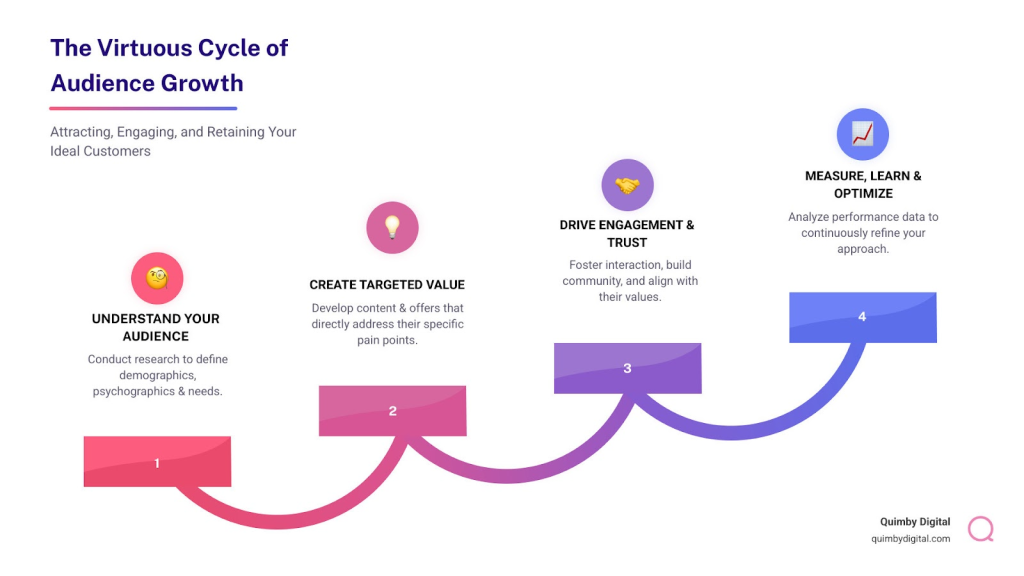
The process creates a positive feedback loop: the better you understand your audience, the more loyal they become, and the more they help you grow. Continuous improvement is key. You’re not trying to be everything to everyone; you’re trying to be exactly what your ideal audience needs. That’s how you build a brand that thrives.
Build connection that lasts. Discover growth without spend, strengthen brand visibility, and learn to handle hashtags strategically.