


Cultivate a thriving online space! Learn to build online community, foster engagement, set goals, and monetize your digital hub.
Build online community efforts have become essential for modern businesses, with research showing that websites with online communities generate 2x more traffic and 3x more revenue than those without. Whether you’re in wellness, CPG, or tech, creating a space where your customers connect isn’t just nice to have—it’s a competitive advantage.
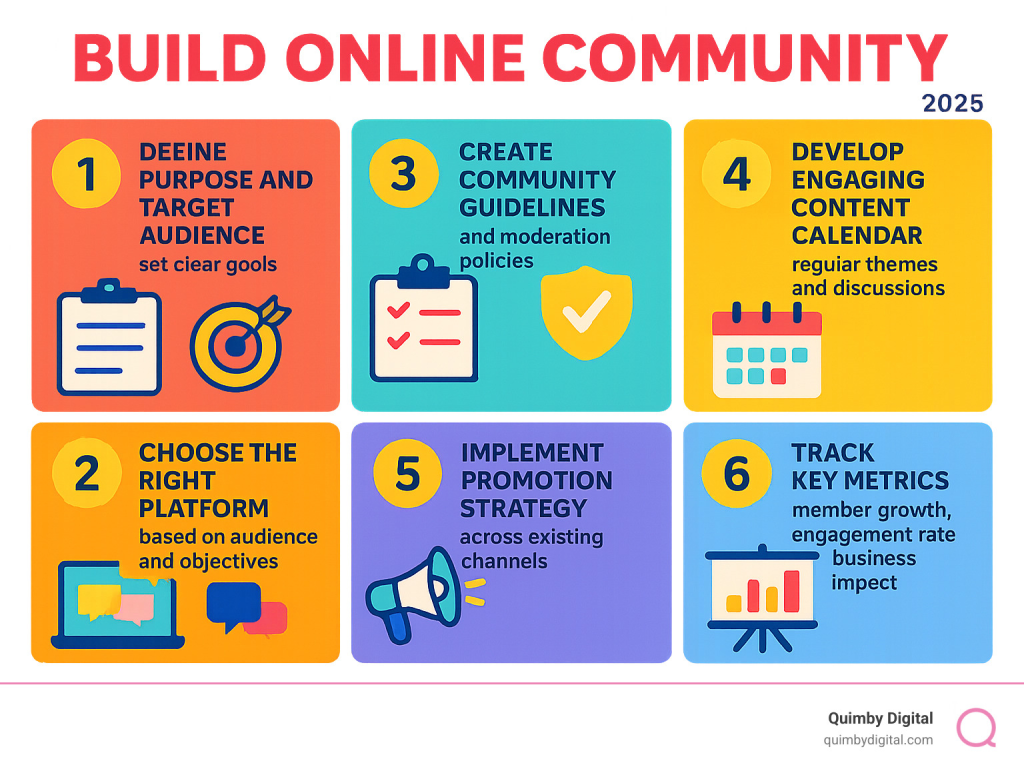
Quick Start Guide to Building Your Online Community:
- Define your purpose – Identify what change you want for members
- Choose your platform – Select between social media, forums, or dedicated platforms
- Set clear guidelines – Establish rules for behavior and engagement
- Create valuable content – Seed discussions and provide exclusive insights
- Foster engagement – Use daily themes, ask questions, respond actively
- Measure success – Track member growth, engagement rates, and business impact
An online community is more than just a group of followers. It’s a space where people with shared interests or challenges come together to learn, support each other, and grow. As one community expert puts it: “Community is not the cult of celebrity. It’s a reciprocal thing. It is about building connections, true connections, and developing those connections into relationships.”
The foundation of any thriving community lies in shared emotional connection. This connection stems from quality interactions where members feel they truly belong together, united by common goals and mutual support.
For businesses, communities serve multiple purposes. They reduce support costs (one software company saw a 28% drop in support tickets after launching their community), provide valuable customer feedback, and create authentic word-of-mouth marketing that money can’t buy.
But building a community that actually thrives requires more than just setting up a social media group and hoping people show up. It demands strategy, consistent effort, and understanding what your specific audience needs.
The Foundation: Strategy Before Structure
Here’s the truth about community building: Most people get this backwards. They jump straight into choosing platforms and creating content without understanding the deeper “why” behind their community. It’s like building a house without a foundation—it might look good at first, but it won’t last.
The magic happens when we start with strategy. When you deeply understand your purpose and your people, every decision becomes clearer. Should you use a forum or a social media group? What content will resonate? How do you measure success? These questions practically answer themselves when you have a solid strategic foundation.
Think of strategy as your community’s North Star. It guides every choice you make and helps you stay focused when things get overwhelming (and they will). Without it, you’ll find yourself constantly second-guessing decisions and wondering why your community isn’t thriving.
Building a successful online community also means getting buy-in from your team. When you can clearly articulate how your community will solve real business problems—like reducing customer support tickets or increasing brand loyalty—suddenly everyone from management to customer service becomes your ally. This kind of strategic thinking creates authentic connections.
Step 1: Define Your Purpose and Audience to Build an Online Community
Let’s get specific about who you’re serving and why they should care. This isn’t about casting a wide net—it’s about going deep with the right people.
Start with your niche. Instead of “fitness,” think “strength training for women over 40” or “plant-based nutrition for busy families.” The more specific you get, the stronger your community becomes. Why? Because people don’t just want information—they want to belong somewhere that truly gets their unique situation.
Your mission statement should make someone stop scrolling and think, “This is exactly what I need.” Ask yourself: What change do we help people achieve? What bridge are we building between where they are now and where they want to be?
For example, instead of “A community for entrepreneurs,” try “Helping first-time business owners go from overwhelmed to organized in their first year.” That specificity creates instant connection.
Understanding your members goes way beyond age and location. What keeps them up at 2 AM? What would make their day easier? What topics make them lean forward in their chair? The best way to learn this is by spending time in existing communities where your ideal members hang out. Listen to their language, their frustrations, their celebrations.
A Founder of Distance Education Weighs In On Its Educational Benefits emphasizes how understanding learner needs creates more effective online spaces. The same principle applies to any community.
Your value proposition should be crystal clear. Are you offering expert access that they can’t get anywhere else? A judgment-free space to ask “stupid” questions? Weekly challenges that keep them accountable? Whatever it is, make sure it solves a real problem they’re facing.
Step 2: Set Measurable Goals and Success Metrics
Here’s where we separate the dreamers from the doers. Setting measurable goals isn’t just about proving ROI (though that’s important)—it’s about knowing whether you’re actually helping people.
Your business objectives should connect directly to your company’s bigger goals. If you’re focused on customer retention, track how community members stick around longer than non-members. If it’s brand awareness, measure how community conversations translate to broader reach. One software company saw their support tickets drop by 28% after launching their community—that’s a number that makes executives pay attention.
Engagement metrics tell you if people actually care about what you’re creating. Look at total interactions like comments and reactions, but also dig deeper. Are members talking to each other, or just responding to your posts? Member-to-member conversations are gold—they show your community is becoming self-sustaining.
Growth metrics matter, but not in the way you might think. Track new members and total users, but also watch who’s leaving and why. Sometimes slower, more intentional growth creates a stronger community than rapid expansion.
The key is SMART goals—Specific, Measurable, Achievable, Relevant, and Time-bound. Instead of “grow the community,” try “increase weekly active members by 20% over the next three months by launching Tuesday discussion threads.” That gives you something concrete to work toward and measure against.
Diving deeper into tracking progress effectively is key. The best metrics are the ones that help you make better decisions for your members.
How to Build an Online Community From Scratch
With a solid strategy in place, it’s time to turn your vision into reality. Think of this phase as laying the foundation for your digital home—you need the right location, clear house rules, and that first spark of conversation to bring everything to life.

Building from scratch means making smart choices about where your community will live and how it will operate. The platform you choose becomes your community’s personality—formal like a conference room or casual like your favorite coffee shop. Your guidelines become the invisible hand that keeps conversations flowing smoothly.
Step 3: Choose the Right Platform Type
Choosing where to build online community is like picking the perfect venue for a gathering. A book club needs something different than a fitness group, and your audience’s habits matter more than the latest trendy platform.
Public social channels offer the comfort of familiarity. Your members are already there, scrolling through their feeds, making it easy for them to pop into your community. Some platforms shine for niche interests—if you’re building around ultra-specific topics, their specialized communities can be goldmines for engagement.
Forum-style platforms create deeper, more thoughtful conversations. These work beautifully when your community centers around complex topics that need more than quick comments. Members can dive deep into discussions without the noise of social media distractions.
Chat-based servers bring real-time energy. They’re perfect for communities that thrive on immediate interaction—think gaming groups, creative collaborations, or any space where members want to feel like they’re hanging out together.
All-in-one platforms give you complete control over the experience. You own the data, control the features, and can customize everything to match your brand. However, they require more effort to drive traffic since members need to visit a separate destination.
Consider your audience’s digital habits. Where do they already spend time? A wellness brand might find their audience active in social media groups, while a tech startup’s community might gravitate toward chat servers or specialized forums.
Your community objectives should guide the choice too. If you’re focused on customer support, a forum structure works well. For real-time collaboration, chat-based platforms excel. For broad engagement and findy, public social channels offer the most reach.
Step 4: Best Practices for Creating Community Guidelines to Build an Online Community
Clear guidelines aren’t about being strict—they’re about creating a safe, welcoming space where meaningful conversations can flourish. Think of them as your community’s North Star, guiding behavior without stifling authentic connection.
Define member behavior expectations in positive language. Instead of a long list of “don’ts,” focus on what good participation looks like. It’s best to lead with your community’s values rather than restrictions.
Establish clear moderator roles from day one. Who handles disputes? Who approves new content? When members understand the structure, they feel more secure participating. Your moderators become the friendly hosts who keep conversations flowing and step in when needed.
Maintain topical focus without being rigid. Your wellness community might center on nutrition but welcome related discussions about mental health or fitness. Clear boundaries help members understand what belongs while allowing natural conversation evolution.
Create zero-tolerance policies for behavior that threatens your community’s safety. Harassment, spam, and hate speech should have clear consequences. When members know these boundaries exist, the vast majority will respect them, creating a protective environment for everyone.
Build your safe space by addressing the specific challenges your audience faces. A community for new entrepreneurs might need guidelines about self-promotion, while a support group requires stricter privacy protections. Tailor your approach to your members’ unique needs and vulnerabilities.
Guidelines work best when they feel like natural extensions of your community’s purpose rather than external rules imposed from above. When members understand why guidelines exist, they become partners in maintaining the positive culture you’re building together.