

A strong social media strategy for women’s health brands has to do more than create attention.
It has to build trust.
That trust is earned through clear education, careful claims, human content, privacy awareness, and thoughtful replies. It also depends on how well the brand understands the buyer’s real questions.
Women’s health social media often touches sensitive topics. Fertility, postpartum care, hormones, periods, pelvic health, menopause, contraception, sexual wellness, and reproductive health can all carry fear, confusion, or past frustration.
Because of that, the content needs a different level of care. The best strategy helps people feel informed before it asks them to act. That makes the brand easier to trust, and it gives each post a clear job.
Why women’s health social media needs a specialist approach
Women’s health brands often speak to people who have already felt dismissed, confused, or underserved.
That changes the tone.
A brand cannot rely only on trends, product shots, or clever captions. Instead, it needs content that explains, reassures, and respects the buyer’s context.
The strategy should answer:
- What does the audience need to understand?
- What makes them skeptical?
- Which claims need proof?
- What questions feel private?
- Which topics need expert review?
- What can creators say safely?
- When should the brand move a reply to DM?
- What should become a FAQ?
For that reason, the plan should be built around clarity and trust, not just reach.
Start with audience questions
The best content plan starts with real questions.
Look for questions in:
- Comments.
- DMs.
- Reddit threads.
- Reviews.
- Sales calls.
- Customer support.
- Creator feedback.
- Search queries.
- Paid ad comments.
Then group the questions by theme.
For example:
- Safety.
- Fit.
- Privacy.
- Timing.
- Symptoms.
- Product use.
- Side effects.
- Cost.
- Evidence.
- Comparison.
Once those themes are clear, the content becomes easier to plan.
Each theme can become a post, Reel, TikTok, FAQ, creator brief, paid ad test, or landing page section.
Use clear claims and careful proof
Women’s health brands need to be careful with claims.
If a post mentions symptoms, outcomes, safety, pain, hormones, fertility, or medical conditions, the claim needs support.
The FTC’s Health Products Compliance Guidance explains that health-related advertising claims need competent and reliable scientific evidence. In practice, the proof should match the claim.
Before publishing, ask:
- Is this claim specific?
- Can we prove it?
- Does this sound like medical advice?
- Are we overpromising?
- Should this be reviewed?
- Is the wording easy to understand?
However, careful does not mean cold.
The brand can still sound warm, direct, and human.
Build content pillars around trust
Content pillars help the brand stay focused.
For a women’s health brand, useful pillars may include:
- Product education.
- Myth-busting.
- Customer questions.
- Founder perspective.
- Expert-reviewed guidance.
- UGC and routines.
- Sensitive topic explainers.
- Privacy and safety.
- Community replies.
- Product comparisons.
- Launch education.
Each pillar should have a purpose.
For example, product education can reduce confusion. UGC can show real use. Founder content can build credibility. Community replies can turn private questions into helpful public answers.
Together, these pillars create a stronger social system.
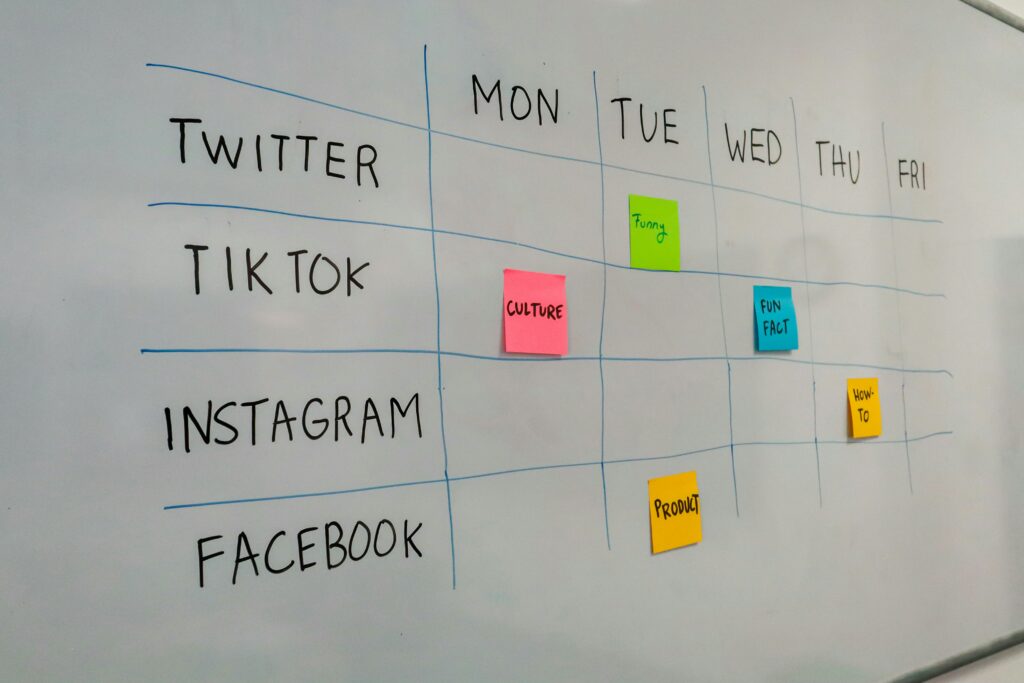
Make platform roles clear
Every platform should have a job.
TikTok can help with discovery, storytelling, creator-led education, and comment replies.
Instagram can build trust through Reels, carousels, Stories, proof, and community.
Reddit can show how people talk when they are comparing options or looking for honest answers.
Meta ads can test paid creative, claims, objections, and landing page fit.
LinkedIn can support founder credibility, partnerships, hiring, fundraising, and B2B health relationships.
Because each platform works differently, the same post should not be copied everywhere.
The message can stay aligned, but the format should fit the channel.
Use creators and UGC with care
Creators can make women’s health content feel more human.
Creators can explain a product in plain language. They may show how it fits into a routine. In addition, they can answer questions the brand may struggle to answer in a natural voice.
Still, creator work needs strong briefs.
A useful brief should include:
- The target buyer.
- The buyer’s concern.
- Product use details.
- Claims to avoid.
- Required proof.
- Disclosure rules.
- Usage rights.
- Tone notes.
- Sensitive words to avoid.
- CTA.
If the creator is paid or has a material connection to the brand, that relationship should be clear. The FTC’s Disclosures 101 for Social Media Influencers explains that sponsored relationships should be easy to notice and understand.
As a result, UGC becomes safer and more useful.
It can support organic posts, paid ads, product pages, and launch campaigns.
Treat comments as research
Comments are not just engagement.
They are also insight.
A strong comment section can show what people understand, doubt, fear, or want next. It can also reveal where the brand needs better education.
Track:
- Repeat questions.
- Confusing claims.
- Privacy concerns.
- Product objections.
- Price concerns.
- Safety questions.
- Praise.
- Complaints.
- Language people repeat.
- Topics that need a deeper answer.
Then turn those signals into action.
A repeated question can become a carousel. If a claim creates confusion, turn it into a founder video. When privacy concerns appear, add a FAQ. For product objections, test a paid ad angle.
Avoid fear-based messaging
Fear can get clicks.
However, it can also weaken trust.
Women’s health brands should avoid content that makes people feel broken, late, ashamed, or scared into buying.
Instead, use language that gives people more agency.
Weak message:
“You are probably tracking your cycle wrong.”
Stronger message:
“Here are three things to check before choosing a cycle tracking tool.”
The second version is still useful. It is also more respectful.
Make privacy easy to understand
Privacy matters in women’s health.
This is especially true for reproductive health, fertility, sexual wellness, apps, subscriptions, and any product tied to sensitive data.
Brands should make privacy answers clear.
For example:
- What data is collected?
- How is it used?
- Can users delete it?
- How are orders packaged?
- What appears on billing?
- Where is the privacy policy?
Do not make people search for these answers.
If privacy is part of the buying decision, it should be part of the content strategy.
Watch health information quality
Social media is full of health information.
Some of it is helpful. Some of it is incomplete or wrong.
A recent research paper, RELIANCE: Curating and Evaluating Reproductive Health Information on Social Media, studied pregnancy and postpartum information on TikTok and found that accuracy can vary. That is a useful reminder for brands.
Women’s health brands should avoid adding noise.
Instead, content should be reviewed when needed, clear about limits, and careful about what it asks the viewer to believe.
Connect organic and paid social
Organic content can show what people care about.
Paid social can show which messages scale.
Both should work together.
Organic posts can reveal strong hooks, common questions, and useful language. Paid ads can test which angles move people toward action. Meanwhile, comments can show what still needs a better answer.
This loop can improve:
- UGC briefs.
- Paid ad hooks.
- Landing pages.
- Product FAQs.
- Email flows.
- Launch messaging.
- Social reporting.
When social teams share insights, the strategy gets stronger.
Measure more than engagement
Likes are not enough.
Women’s health brands should measure trust and clarity too.
Useful metrics include:
- Saves.
- Shares.
- Comment quality.
- DM questions.
- Profile visits.
- Clicks.
- Landing page behavior.
- FAQ clicks.
- Repeat objections.
- Sentiment.
- Creator performance.
- Paid ad comments.
Google’s SEO Starter Guide explains that helpful content should be easy to understand. Social metrics can support that same goal by showing where people are clear and where they still feel unsure.
How Quimby Femtech builds social strategy
Quimby Femtech helps women’s health, wellness, baby, parenting, and family-focused brands build social systems that are clear, careful, and built for growth.
That can include organic social, UGC, creator campaigns, paid social creative, community management, Reddit listening, launch strategy, and analytics.
The goal is to create content that helps people feel seen and informed.
It should not feel vague.
It should not rely on fear.
Most of all, it should not feel generic.
Instead, the strategy connects education, trust, creators, paid testing, and community insight.
You can explore Quimby’s services to see how women’s health social media fits into broader growth work. You can also review case studies for examples of social and campaign growth.
If your brand needs a stronger women’s health social strategy, book a call with Quimby.
Quick strategy checklist
Use this before planning your next month of content.
- Map buyer questions.
- Check every claim.
- Use plain language.
- Avoid fear.
- Build clear content pillars.
- Brief creators carefully.
- Review privacy concerns.
- Watch the comments.
- Connect paid and organic.
- Measure trust signals.
FAQs
What does a strong women’s health social plan include?
It is a plan for using social platforms to educate buyers, build trust, manage sensitive conversations, test content, support paid ads, and turn audience questions into stronger marketing.
What should women’s health brands post on social media?
Women’s health brands should post education, UGC, creator content, founder videos, myth-busting posts, customer questions, privacy answers, product explainers, and thoughtful comment replies.
How can women’s health brands build trust online?
Brands can build trust with clear claims, proof, plain language, privacy clarity, honest creators, useful replies, and content that avoids fear-based pressure.
Should women’s health brands use creators and UGC?
Yes, but the briefs need care. Creators should understand the buyer, the claim limits, the tone, the disclosure rules, and how the content may be used in paid or organic channels.
How should women’s health brands measure social media?
Measure saves, shares, comment quality, DMs, profile visits, clicks, sentiment, repeat objections, creator performance, landing page behavior, and paid creative learnings.