


Wellness and femtech brands sit at the intersection of booming demand and high complexity. From fertility apps to mindfulness platforms, consumers want products they can trust — but trust takes time to earn, measure, and scale. Marketing leaders in these industries often wrestle with two competing realities: the pressure for growth and the responsibility to stay compliant and credible.
The solution isn’t just more dashboards. It’s a KPI playbook — a clear framework that identifies which numbers drive sustainable ROI and which distract. For CMOs, founders, and growth leads, KPIs are more than metrics; they are strategic levers that unify teams, guide budgets, and keep brands focused on real outcomes.
This playbook outlines the KPIs that matter most for wellness and femtech brands, highlights common pitfalls, and explains why a senior-led, boutique approach delivers clarity where generic models fail.
The Challenges of KPI Tracking in Wellness & Femtech
In theory, modern platforms generate thousands of data points. In practice, most are noise. For wellness and femtech brands, measurement comes with added hurdles:
Vanity Metrics Dominate
Follower counts, impressions, and likes often overshadow harder-to-achieve metrics like retention or LTV. They look good in a deck but rarely correlate with revenue growth.
Regulation and Privacy
Femtech brands, in particular, operate under stricter compliance requirements around sensitive health data. Opt-in rates, consent tracking, and disclosure compliance are just as important as engagement numbers.
Fragmented Journeys
Wellness consumers research across apps, podcasts, retail, social, and email before making decisions. This creates gaps in attribution that simple dashboards can’t explain.
Longer Consideration Cycles
Purchasing a wellness subscription or adopting a femtech app often requires months of trust-building. KPIs must map gradual progress, not just immediate conversion.

Vanity Metrics vs. Strategic Growth KPIs
Too many brands confuse activity with progress. To build clarity, here’s a quick side-by-side comparison:
| Vanity Metrics | Strategic Growth KPIs | Why It Matters |
| Total impressions | Branded search volume | Reflects brand demand, not passive views |
| Raw follower count | Engagement rate (saves, shares, comments) | Engagement signals intent and trust |
| Clicks on ads | Cost-per-acquisition (CAC) | Ties spend directly to ROI |
| Email subscribers | Retention & repeat purchase ratio | Retention drives profitability |
| Likes on content | Net Promoter Score (NPS) | Measures advocacy and referral potential |
Wellness and femtech brands succeed by shifting attention away from vanity toward KPIs that reflect long-term relationships: acquisition quality, retention, and advocacy.
The KPI Playbook Framework: Funnel Stages in Wellness & Femtech
The most effective KPI frameworks mirror the buyer journey. Below is a stage-by-stage breakdown tailored for wellness and femtech brands.
Awareness KPIs
- Branded search volume
- Unique qualified reach
- Press mentions and share of voice
- Top-of-funnel site visits
These metrics capture whether the market is aware and curious — but focus on quality reach, not raw exposure.
Engagement KPIs
- Engagement rate (comments, saves, shares)
- In-app interaction frequency
- Scroll depth on key blog or content pages
- Average session duration
Engagement proves resonance. As Quimby Digital notes in How to Increase Brand Awareness: Top Strategies for Growth, deeper interactions beat passive impressions.
Acquisition KPIs
- Cost-per-acquisition (CAC)
- CTR on intent-driven ads
- Email/newsletter signups
- App downloads or activations
For femtech apps, acquisitions should be tracked alongside consent compliance — measuring whether users provide correct opt-ins and permissions.
Conversion KPIs
- Conversion rate by channel
- Trial-to-paid ratio
- Checkout completions
- Revenue per acquisition (RPA)
Effective dashboards combine both paid and organic conversions, with qualitative insights layered in to explain drop-off points.
Retention KPIs
- Monthly churn rate
- Subscription renewal ratio
- Repeat purchases
- Push/email re-engagement rates
As 6 Ways to Grow Your Social Media Following points out, loyalty is the ultimate growth driver. Retention KPIs reveal whether your product actually fits into daily life.
Advocacy KPIs
- Net Promoter Score (NPS)
- Referral and affiliate participation
- Volume of authentic UGC
- Influencer partnership longevity
True growth happens when users sell your brand for you. Advocacy KPIs measure the strength of your community’s voice.

Common KPI Mistakes in Wellness & Femtech
Chasing Vanity Over Value
Many brands still celebrate impressions and follower spikes without asking if those users ever convert or stay. A femtech startup, for instance, once reported a 300% Instagram growth — but churned 70% of users after a free trial because engagement KPIs were ignored.
Overlooking Compliance Metrics
Health-related apps must track opt-in rates and disclosures. Ignoring these not only skews dashboards but risks regulatory penalties.
Simplistic Attribution
Last-click models rarely capture the full journey. A wellness retreat may first be discovered on Instagram, nurtured by an email, validated by a podcast review, and only then converted by Google search.
Confusing Awareness with Acquisition
Brands sometimes mistake reach for growth. Press mentions are valuable, but without correlating signups or downloads, awareness alone won’t sustain ROI.
Neglecting Qualitative Data
Numbers can hide underlying issues. Reviews, support tickets, and open-text surveys often reveal early churn triggers or emerging opportunities.
Case Example: Femtech App KPI Transformation
A femtech startup launched with heavy investment in influencer partnerships. Their dashboards tracked reach, clicks, and follower growth. However, trial-to-paid conversion was stagnating at 3%.
After an audit, the KPI framework was reset:
- Vanity metrics removed. Focus shifted from reach to trial-to-paid and retention.
- Engagement depth measured. App session frequency and push notification opt-ins became core KPIs.
- Advocacy KPIs added. UGC posts and referral program participation were tracked.
Six months later, retention improved by 18%, trial-to-paid doubled to 6%, and CAC dropped 22%. By aligning metrics with actual growth drivers, the brand found sustainable momentum.
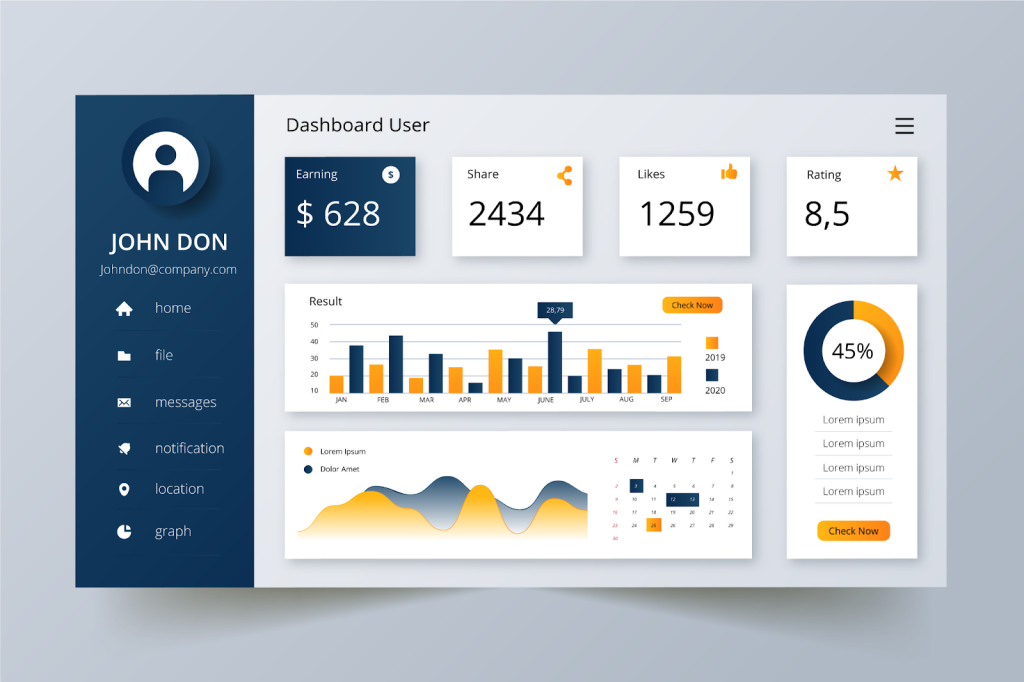
Building a KPI Dashboard That Drives ROI
A world-class KPI dashboard blends quantitative performance with qualitative insights:
GA4
Event-driven tracking across devices, with funnel visualization for drop-offs and repeat behaviors.
CRM Integration
Tie acquisition and retention to customer lifetime value (LTV). This is especially powerful for subscription-based wellness and femtech products.
Social Media Analytics
Measure not just likes, but UGC production, influencer engagement, and sentiment trends.
Qualitative Feedback
Layer surveys, NPS, and user interviews to explain “why” metrics move.
For advanced frameworks, see HubSpot’s KPI measurement resources and McKinsey’s marketing analytics insights.
Weekly reviews keep campaigns agile; monthly reviews reveal long-term trends. This discipline transforms dashboards from static reports into ROI engines.
Quimby Digital POV: Why Senior-Led KPI Frameworks Win
Generic dashboards don’t cut it for wellness and femtech. Quimby Digital’s senior-led team designs KPI frameworks that are:
- Customized, not templated. Every KPI system reflects client goals, compliance realities, and growth stage.
- Cross-channel. Organic, paid, influencer, and UGC inputs are unified to reveal total impact.
- Holistic. Retention and advocacy KPIs weigh as heavily as acquisition metrics.
- Compliance-first. No shortcuts — data privacy, disclosures, and health regulations are baked in.
- Agile. KPIs are reviewed continuously, with creative and targeting optimized against real outcomes.
This boutique approach gives wellness and femtech leaders confidence in the boardroom and clarity in the field. Big agencies may deliver more reports — but Quimby delivers frameworks that drive actual ROI.
See more at our Homepage, Influencer & UGC Campaigns, and Creative Fatigue: How to Spot It Before It Kills ROI.
FAQ Section
What KPIs matter most for femtech startups?
CAC, LTV, trial-to-paid conversion, retention, and compliance (opt-in rates, disclosures). UGC and advocacy matter as scale increases.
How do I measure ROI in wellness marketing?
Track conversions, revenue per acquisition, retention, and NPS together. Use GA4 + CRM integration to close the loop.
What engagement KPIs are best for wellness apps?
Session frequency, active days per month, re-engagement via push/email, and qualitative ratings.
Should I prioritize awareness or acquisition KPIs?
Both matter, but acquisition KPIs (CAC, trial-to-paid, downloads) must follow awareness to prove actual growth.
How can influencer UGC fit into KPI frameworks?
Measure influencer-driven referrals, UGC volume, and amplification rates. See Influencer & UGC Campaigns That Actually Convert for best practices.
Conclusion + CTA: Work With Quimby Digital
For wellness and femtech brands, KPIs are more than numbers — they are the difference between vanity and real growth. By systematizing dashboards, avoiding common pitfalls, and aligning metrics with long-term outcomes, brands can scale trust, engagement, and ROI.
Quimby Digital, the senior-led boutique agency, specializes in building KPI frameworks that integrate compliance, creativity, and performance.
Ready for a KPI system that actually drives growth?
Partner with Quimby Digital — your strategic ally in wellness and femtech marketing.