


Unlock better ROI with niche audience targeting. Learn to find, engage, & convert your ideal customers for higher sales.
Niche audience targeting is a marketing strategy that focuses on reaching specific, well-defined groups of consumers who share common characteristics, interests, or needs, rather than casting a wide net to the general public. Understanding your Target audience is crucial for effective engagement.
Quick Guide to Niche Audience Targeting:
- What it is: Marketing to specific segments with shared traits instead of everyone
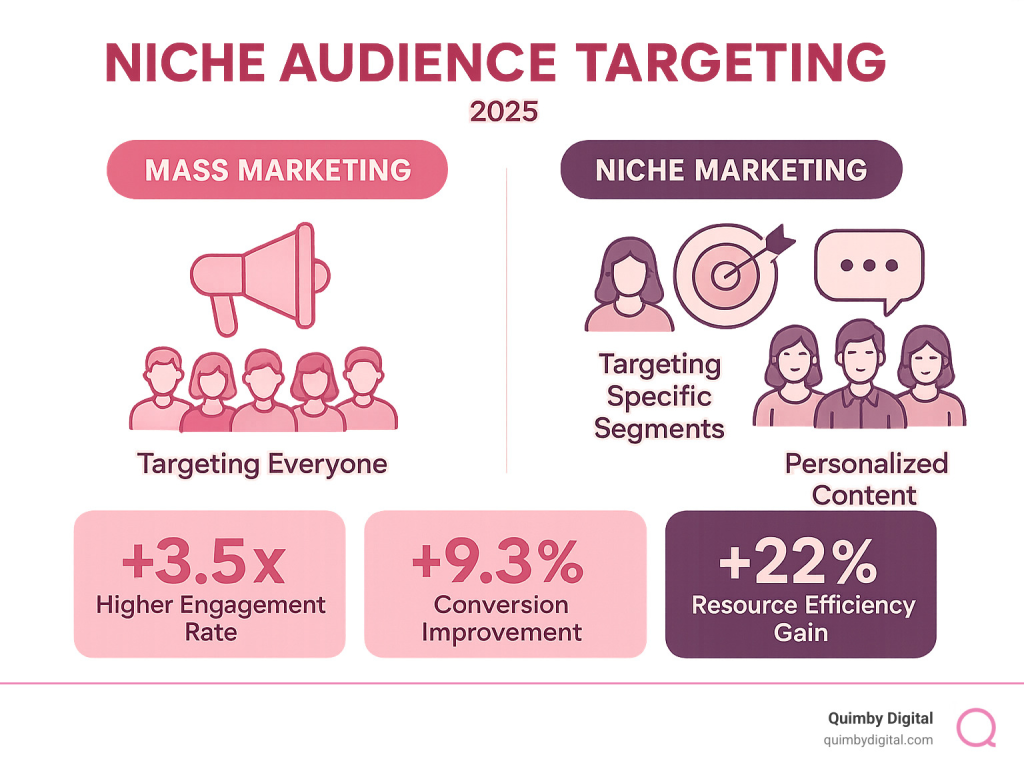
- Key benefit: Higher engagement and conversion rates than mass marketing
- Best for: Brands wanting deeper customer connections and better ROI
- Main steps: Research audience needs → Create targeted content → Choose right channels → Measure results
In 1950, the U.S. Air Force tried to design cockpits for the “average pilot.” After measuring 4,063 pilots, they found something shocking: not a single pilot fit the average measurements across all dimensions. This “fallacy of averages” perfectly shows why broad marketing often fails.
Today’s consumers aren’t average either. They’re collections of individual tastes, needs, and preferences that can be grouped into passionate niche communities. When brands try to speak to everyone, they often connect with no one, losing sight of their Target audience.
The numbers tell the story:
- Niche marketing helps businesses allocate resources more efficiently
- Targeted audiences show higher engagement because they’re passionate about specific interests
- Brands face less competition when targeting specific niches versus broad markets
- Companies like Procter & Gamble shifted from generic targeting to over 350 precise “smart audiences”
The plus-size apparel market demonstrates this perfectly. Despite being an estimated $288 billion market, it functions as a niche because traditional retailers largely ignore it. Sales revenue for women’s plus-size apparel grew 18% in 2021 – three times faster than the broader women’s market.
This isn’t about limiting your reach. It’s about finding your people and speaking their language.
Ultimately, understanding and defining your target audience can revolutionize your marketing efforts and lead to significant growth.
How to Identify Your Perfect Niche Audience
Finding your perfect niche audience targeting group isn’t about throwing darts at a board and hoping something sticks. It’s more like being a detective, piecing together clues from market research, customer behavior patterns, smart segmentation, and a healthy dose of competitor analysis. Think of it as treasure hunting – except the treasure is a group of people who absolutely love what you’re offering.

Key Steps for Effective Niche Audience Targeting
The magic happens when you follow a clear roadmap to find those special groups who will genuinely connect with your brand. Here’s how we approach it:
Start with comprehensive market research to uncover those hidden gaps and unmet needs in your industry. We’re talking both hard numbers from surveys and analytics, plus the juicy qualitative stuff from interviews and focus groups. You want to know not just what people are doing, but why they’re doing it.
Next, get crystal clear on your unique value proposition. What makes you different? What problems do you solve that nobody else can touch? This isn’t just marketing fluff – it’s the foundation that helps you attract the right people and stand out from the crowd.
Then comes the fun part: market segmentation. We slice and dice your broader audience into smaller, more manageable pieces. But here’s where it gets interesting – we go way beyond the basics like age and location. We dig into psychographics (what they value, what gets them excited) and behaviors (how they shop, where they hang out online). This precision matters because personalization is key.
Once you have your segments, analyze their pain points and needs like you’re their best friend trying to help them solve a problem. What keeps them up at night? What are they desperately trying to fix? Understanding these frustrations helps you craft messages that feel like you’re reading their minds.
Finally, study your competitive landscape to find those golden opportunities everyone else is missing. Where are they falling short? What audiences are they ignoring? These gaps are where your brand can shine.
Don’t forget to use keyword research tools to understand how your niche actually searches for solutions. Sometimes the most natural, conversational search terms work better than industry jargon – your audience talks like real people, not marketing textbooks.
Creating Detailed Buyer Personas
Here’s where the real magic happens. We’re not creating cartoon characters or writing fiction – we’re building detailed profiles that capture the heart and soul of your ideal customers.
Our personas dive deep into motivations (what really drives their decisions), goals (what they’re trying to achieve in life), and frustrations (those everyday obstacles that make them want to scream into a pillow).
We use empathy mapping to truly get inside their heads and understand their emotional world. Journey mapping helps us see exactly how they interact with brands like yours at every single touchpoint. This isn’t just nice-to-know information – it directly shapes which platforms you should focus on and what kind of content will actually resonate.
Take Procter & Gamble’s approach. They ditched the old-school “women aged 18 to 35” targeting and created over 350 precise “smart audiences.” Instead of generic groups, they now speak directly to “first-time mums” or “busy professionals juggling everything.” That level of specificity transforms how you connect with people.
The best part? These personas aren’t set in stone. We recommend refreshing them every six months because people change, trends shift, and new needs emerge. Keeping your personas current means your marketing stays relevant and effective.
Building this level of understanding takes time, but it’s worth it. When you truly know your audience, everything else – from content creation to channel selection – becomes so much clearer. For more insights on building authentic connections, check out how to build trust with your audience on social media.
The Art of Niche Audience Targeting: Crafting Your Strategy
Once you’ve identified your perfect niche audience targeting opportunity, it’s time for the exciting part: creating a strategy that genuinely connects with these people. Think of it like planning a conversation with your best friend – you know exactly what they care about, how they talk, and where they spend their time.
The magic happens when you move beyond generic marketing speak and start creating custom messaging that feels like it was written specifically for them. Because, well, it was. Your content strategy becomes laser-focused, and your channel selection gets strategic rather than scattered.
Crafting Messages That Resonate
Here’s where many brands stumble: they find their niche but then talk to them like everyone else. Your authentic voice needs to match your audience’s values and communication style. When 83% of millennials prefer buying from brands that align with their values, this alignment isn’t just nice to have – it’s essential.
Niche-specific language is your secret weapon. Every community has its own way of communicating, from inside jokes to technical terms to cultural references. The sustainability crowd talks differently than gaming enthusiasts, and both are worlds apart from the parenting community. When you speak their language naturally, you’re instantly “one of them.”
The most powerful messages address pain points directly rather than dancing around them. Instead of saying “our product helps with organization,” you might say “finally, a planner that actually fits your chaotic mom life.” See the difference? One feels generic; the other feels like someone truly gets it.
Your value proposition should feel custom-made for your niche. This might mean highlighting features that matter most to them, sharing stories they relate to, or offering solutions in ways that resonate with their lifestyle. We love experimenting with different formats – sometimes a quick video hits differently than a detailed blog post, and the only way to know is to try.
For brands looking to create more engaging visual content, more on creating effective video content offers practical strategies that work especially well for niche audiences.
Leveraging Social Media and Online Communities
Social media isn’t just where your audience hangs out – it’s where they form communities, share experiences, and find new things. The key is knowing which platforms matter most to your specific group.
Reddit has become our go-to research goldmine. With thousands of subreddits dedicated to incredibly specific interests, you can find communities for everything from vintage fountain pens to urban beekeeping. We don’t just lurk – we listen to conversations and identify unmet needs. The Scented Waters Discord community, for example, shows how passionate fragrance enthusiasts create their own spaces when mainstream options don’t serve them.
TikTok moves fast, but it’s where trends are born and niche aesthetics explode overnight. The platform rewards authenticity over polish, which makes it perfect for niche brands willing to show their personality. Success here means understanding the platform’s unique content style and joining conversations rather than interrupting them.
Facebook Groups might feel old-school, but private communities often foster the strongest bonds. These spaces are perfect for deeper engagement and getting direct feedback from your most passionate customers.
The beauty of focusing on specific platforms is efficiency. Instead of spreading your efforts thin across every social network, you can compete by getting “uber-specific” and showing up where your people actually are. This targeted approach typically delivers much better return on ad spend than broad campaigns. For more comprehensive social media growth strategies, check out strategies for growing your social media following.
Using Influencers and User-Generated Content (UGC)
In niche audience targeting, trust trumps reach every single time. This is where micro-influencers and nano-influencers become incredibly valuable. They might have smaller followings, but their audience engagement runs deep. These creators have built genuine relationships within their specific niches, making their recommendations feel like advice from a trusted friend.
User-generated content creates powerful social proof because it doesn’t feel like marketing – it feels like real people sharing real experiences. An impressive 84% of consumers trust UGC more than traditional advertising, and honestly, that makes perfect sense. When someone in your niche community raves about a product, it carries way more weight than a polished ad.
Saltair’s UGC strategy on TikTok perfectly demonstrates this approach. By encouraging customers to share their authentic experiences, they built genuine trust and awareness that eventually led to a wholesale deal with Target. The content felt natural and connected because it came from real users, not a marketing team.
The fragrance brand that collaborated with a TikTok influencer to create a scent specifically for her audience shows how powerful this can be – the product sold out on launch day because the audience felt truly seen and heard.
Building social proof through UGC also reduces your content creation burden while creating deeper connections. When your customers become your content creators, you get authentic material that resonates with others just like them.
For those interested in the broader world of digital content creation and its marketing implications, how to become a digital creator provides valuable insights into this evolving landscape.
Measuring Success and Avoiding Common Pitfalls
Even with the most precise niche audience targeting, continuous measurement and adaptation are crucial. Think of it like tending a garden – you need to watch what’s growing, what’s not, and adjust your approach accordingly. The beauty of niche marketing is that you can track meaningful changes more easily than with broad campaigns.

Measuring the Impact of Your Niche Audience Targeting
When we’re working with niche audiences, the metrics tell a much clearer story than they do with mass marketing. It’s like the difference between having a conversation in a quiet coffee shop versus shouting across a busy street.
Engagement rate becomes your best friend here. When you’re speaking directly to people who genuinely care about what you’re offering, they respond. They comment with thoughtful questions, share your content with friends who “need to see this,” and tag people in your posts. High engagement isn’t just vanity metrics – it’s proof that your messaging hits home.
Conversion rate is where niche marketing really shines. These aren’t random strangers stumbling across your content; they’re people who’ve been looking for exactly what you offer. When a skincare brand targets people specifically struggling with sensitive skin, those visitors are much more likely to make a purchase than someone who just happened to see a generic “great skincare” ad.
Customer Acquisition Cost (CAC) often drops significantly with targeted approaches. Instead of paying to reach thousands of people who might not care, you’re investing in connecting with hundreds who definitely do. It’s like the difference between buying a billboard on a highway versus placing a targeted ad in a specialized magazine.
Customer Lifetime Value (CLV) tends to soar with niche audiences. When people feel truly understood by a brand, they stick around. They become repeat customers, brand advocates, and the kind of loyal fans who defend you in comment sections. This passion translates directly into long-term revenue.
We use A/B testing to continuously refine our messaging and creative elements. With smaller, more focused audiences, you can test different approaches and see results faster. Maybe your eco-conscious audience responds better to scientific data, while your wellness community prefers personal stories. For a deeper dive into tracking your progress, check out 5 key metrics for social growth.
Potential Challenges to Avoid
Niche audience targeting isn’t foolproof, and we’ve seen brands stumble in predictable ways. The good news? These pitfalls are totally avoidable when you know what to watch for.
Being too narrow is probably the most common mistake. Yes, you want to be specific, but if your niche is “left-handed vegetarian cat owners in Portland,” you might have painted yourself into a corner. The sweet spot is finding a group that’s passionate and specific enough to connect deeply, but large enough to sustain your business goals.
Overlooking market evolution can catch you off guard. Niche communities change, grow, and sometimes move in unexpected directions. What worked for wellness audiences in 2020 might feel tone-deaf today. Regular check-ins with your community and staying plugged into their conversations helps you evolve alongside them.
Alienating the broader market becomes tricky if you serve multiple audiences. Your messaging for fitness enthusiasts shouldn’t accidentally turn off your general wellness customers. It’s about creating targeted content, not exclusive content that makes others feel left out.
Over-marketing to your niche is easier than you’d think. Since these audiences are smaller, they’ll notice if you’re constantly in their feeds. Nobody likes feeling bombarded, especially by brands they initially loved. Quality interactions matter more than quantity – think valuable conversations, not constant sales pitches.
Resource allocation often gets underestimated. You’re reaching fewer people, but serving niche audiences well requires dedicated research, personalized content creation, and ongoing community management. It’s an investment in depth rather than breadth, and both require proper planning and resources.
The key is staying flexible and responsive. Niche audience targeting works best when you’re genuinely committed to serving your community, not just selling to them.
Frequently Asked Questions about Niche Audience Targeting
When it comes to niche audience targeting, we hear the same questions from brands over and over. Let’s tackle the big ones that keep marketers up at night.
What are the first steps to finding my niche?
The best place to start? Look in your own backyard. Analyze your current customers to spot patterns – who’s already buying from you and why? What makes them tick? Sometimes your perfect niche is already there, just waiting to be recognized.
Next, take a hard look at your unique product strengths. What do you do better than anyone else? What problems do you solve that others can’t? This becomes your compass for finding audiences who desperately need what you offer.
Competitor research is your secret weapon here. See what audiences they’re serving and, more importantly, spot the gaps. Where are potential customers feeling ignored or underserved? Those gaps are goldmines.
Don’t forget to dive into online communities. Reddit and Facebook groups are treasure troves of passionate people discussing their problems and interests. Use Google Trends to identify rising interests and hobbies that could signal viable niches. The key is finding groups with real engagement and unmet needs.
Finally, make sure any niche you consider aligns with your business values. Authenticity matters, and you can’t fake genuine connection with an audience whose values clash with yours.
How do I know if a niche is profitable?
A profitable niche isn’t just passionate – it’s passionate and has purchasing power. You’re looking for audiences that are willing and able to spend money to solve specific problems they face.
Start by assessing three key factors: the niche’s size, engagement level, and purchasing power. A tiny group of highly engaged people with disposable income often beats a massive audience of window shoppers.
Here’s a counterintuitive tip: look for some competition. If other businesses are successfully targeting your potential niche, that validates the market exists. No competition might mean no demand, not opportunity.
The golden question is this: Do customers in this niche know they have a need and are they willing to pay to satisfy it? If people are already spending money on solutions (even imperfect ones), you’ve found a profitable niche.
Can a business have more than one niche audience?
Absolutely! Many successful businesses serve multiple niches, especially if they have diverse product lines. Think of it like speaking different languages – you can be fluent in several, but you need to switch between them thoughtfully.
The critical piece is creating separate, custom marketing strategies for each niche. Your messaging for busy working moms should feel completely different from your content for college students, even if you’re selling the same product.
This means custom campaigns for each specific niche audience to maximize effectiveness. Yes, it’s more work upfront, but the payoff in engagement and conversions makes it worthwhile. Each niche gets content that feels like it was made just for them – because it was.
The key is staying organized and ensuring your team understands which message goes to which audience. Mix them up, and you’ll confuse everyone.
Conclusion
Niche audience targeting transforms how brands connect with their customers. Instead of shouting into the void, you’re having intimate conversations with people who genuinely care about what you offer.
Throughout this guide, we’ve seen how the “fallacy of averages” applies perfectly to marketing. Just like those Air Force pilots, your customers aren’t average either. They’re collections of unique interests, values, and needs that form passionate communities waiting for brands that truly understand them.
The beauty of this approach lies in its authenticity. When you focus on specific audiences, you naturally create more genuine connections. Your messaging becomes more relevant, your content more engaging, and your brand more memorable. The plus-size apparel market growing three times faster than the broader market isn’t an accident – it’s what happens when brands finally speak to underserved communities.
Building these authentic connections takes patience and genuine care. It’s about listening to conversations in Reddit communities, understanding the language your audience uses, and addressing their real pain points. It’s about working with micro-influencers who’ve already earned trust within your niche, and encouraging user-generated content that feels like recommendations from friends.
The power of this strategy extends far beyond immediate sales. Niche audience targeting builds the foundation for long-term community growth. These engaged customers become brand advocates, spreading authentic word-of-mouth that money can’t buy. They provide valuable feedback that helps you improve your products and services. Most importantly, they stick around.
At Quimby Digital, we’ve seen how this approach transforms businesses. As a female-founded boutique agency, we specialize in helping wellness, CPG, and tech-forward brands find their people and build genuine communities. We believe in the power of authentic connections and the sustainable growth that comes from truly understanding your audience.
Whether you’re exploring Reddit communities, creating TikTok content that resonates, or developing detailed buyer personas, success comes from genuinely caring about the people you serve. When you focus on building relationships rather than just making sales, everything else falls into place.
Ready to find your brand’s perfect community? Open up your brand’s potential with targeted PPC strategies that amplify your authentic connections and drive meaningful growth.