


Advertising in 2025 is not just about being seen—it’s about connecting an offer, creative, and media ecosystem that aligns message, market, and moment for real business impact. In an era where every click and impression is measured, the most effective ads succeed by fusing rigorous offer strategy, thumb-stopping creative, smart channel picking, and action-oriented measurement. This guide is an operator’s playbook: frameworks, templates, and examples designed to be deployed by growth-minded brands who want CTR, CVR, and ROI that finance teams celebrate. For a snapshot of how our team structures end-to-end growth systems, explore the Quimby Digital homepage.
What Makes Advertising Effective (the core framework)
Advertising effectiveness is anchored in the classic “message–market–moment” fit. The hierarchy starts with the offer: what’s promised and why it’s worth it now. Creative (the story and design) is next, followed by audience quality, then placement and frequency. Memorable creative should work in seconds—driving recall and response with an irresistible hook, a clear message, and the right incentive for the right person at the right time. Align this with long-term brand value so campaigns compound—see Why Branding Still Drives Business Growth in 2025 for how brand principles lift performance metrics over time.
Build an Offer That Converts (before you write the ad)
An offer is more than price. It’s the bundle of value, urgency, risk reversal, and proof that makes action irresistible. Frame the value proposition against the customer’s need, set price wisely (anchored to gain or savings), and add guarantees or trials for risk reversal. Scarcity or time-based urgency moves those on the fence. Always show social proof—strong reviews, third-party ratings, or certifications boost believability. This is how you go from “click to see more” to a click that converts.
Creative That Wins Attention and Action
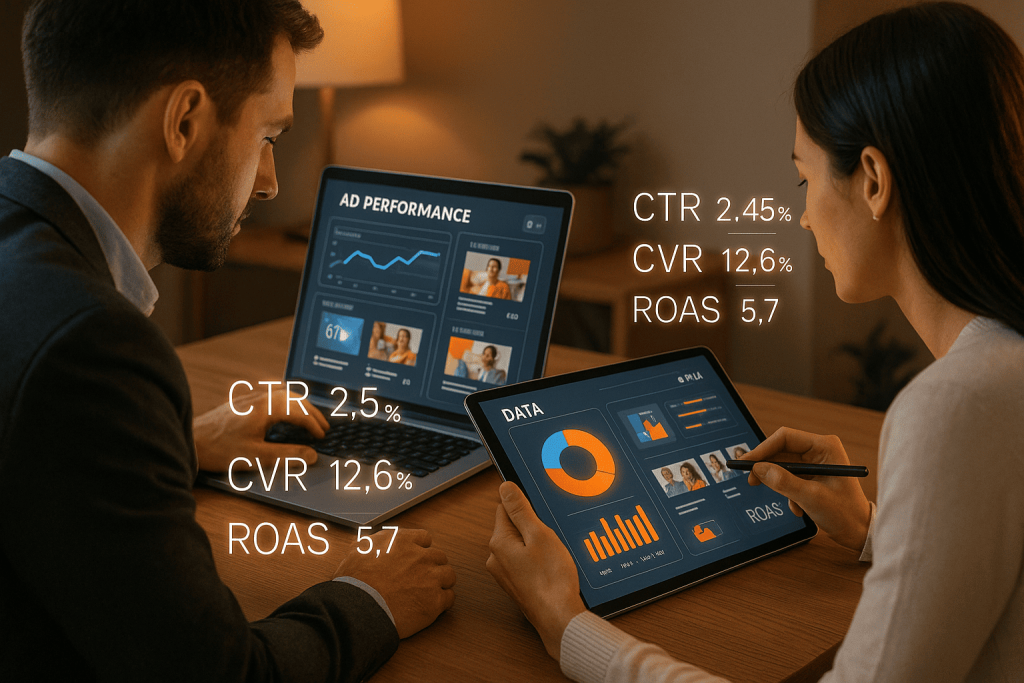
With digital feeds scrolling faster each year, the first three seconds (“hook zone”) make or break an ad. The strongest ads lead with a benefit-driven headline, a visual tied to the product, and proof that the claim is real. Hierarchy matters: don’t let slick design obscure CTA or benefit. Side-by-side, weak ads bury their offer in generic language (“Check out our new collection”) or unrelatable visuals. Strong effective ads use specific hooks (“Save 10 hours this week—three workflows that give you your time back”), prominent CTAs, and proof—like demo videos or real user testimonials—that prompt action.
Channel Strategy: Pick the Right Medium for the Job
High-performing advertisers align message and channel before launching campaigns. Search is best for intent capture (“I need this now”), social is for demand creation, YouTube/CTV is for story and reach, retail media closes sales at the PDP, and email/SMS harvests owned audiences. Each has peak moments: social and CTV for new launches, search for limited-time offers or high-intent queries. The best form of advertising depends on your goal, product complexity, and your audience’s digital behavior. Mixing media multiplies reach and effectiveness; single-channel campaigns often stale fast.
Frequency, Sequencing, and Consistency
No matter the channel, frequency and creative refresh cycles matter. Overdelivering the same ad breeds blindness—and underdelivering means forgettable branding. Use frequency caps and lightweight creative rotations. Map sequences—awareness to consideration to conversion to nurture—with message and offer variations to drive home value while minimizing audience fatigue. Brand assets should connect the journey: logo, tagline, and value proposition consistent—but adapted to platform norms and audience state.
Landing Pages and Post-Click Experience
The most effective advertising always matches ad promise to landing page reality. Load times under two seconds, clarity-first over cleverness, trust elements (seals, ratings, phone numbers) above the fold, and one primary CTA are the difference between clicks and conversions. Audit your LP using a micro-checklist: does headline match ad copy, is the offer clear, are trust cues visible, is the form simple, can mobile users buy with two taps?
Measurement That Finance Buys
Ditch vanity metrics for KPIs that change business. Define clear goals for each ad set: awareness (impressions, video views), consideration (CTR, save/share), conversion (CVR, CAC, ROAS, contribution margin). Track multiple KPIs together—click-through tells nothing without conversion rate; CAC without LTV is a dead end. Use incrementality testing, geo-lift, or marketing mix modeling (MMM) whenever possible to prove real business impact. Tie creative and offer tests to dashboards visible to both marketers and finance. For a category-specific view of tying creative to commercial outcomes, review CPG Marketing 2025: Digital Strategy & Growth.

Test Plans: From Guessing to Knowing
The best advertisers don’t just launch and hope—they schedule deliberate tests. A 12-week plan covers: offer variants and hooks (weeks 1–4); creative (formats and copy, weeks 5–8); audience and placement calibration (weeks 9–12). Log every hypothesis and result, and decide weekly—stop, scale, or revise. Test plans include a matrix of offers, creatives, audiences, and clear “go/no-go” decision rules.
Examples of Effective Ads (deconstructed)
Service: A local HVAC service runs “Get a tune-up, stay cool this summer—$39 risk-free” with a clear value, trust signals, and a 24-hour booking guarantee. Hook: “Beat the first heatwave risk-free.” Proof: 4.9-star rating, 1,000+ reviews.
Ecommerce: A DTC skincare brand’s carousel shows real user before/afters, anchors a “30-day money-back” guarantee, and links straight to a PDP with a single CTA.
Local: A restaurant’s post uses a countdown (“3 days left—$15 off any group of four, lunch only”), geo-targeted, with an in-restaurant photo and reviews to prompt bookings.
Low-Cost and No-Cost Tactics That Still Work
Combine organic social (posts with clear conversion paths), Google Business Profile optimization, email reactivation campaigns, and simple referral offers. These move the needle on a low budget and, paired with even small paid budgets, build consistent return and repeat business.
FAQs (Effective Advertising)
What is the most effective form of advertising for small businesses?
Local search and Google Business Profile for intent capture, plus social with strong offers and referral/loyalty programs.
How many ads do I need before scaling budget?
Test at least three offers and two formats before increasing spend. Only scale what is proven by CVR and acceptable CAC.
What makes an ad message effective vs forgettable?
Clarity and specificity—concrete benefits, clear next step, and social proof win every time. Avoid generic “check us out” phrasing.
Do I start with search or social?
Start with search for high-intent or urgent-volume buyers; use social for broader discovery and storytelling.
How do I know if my creative is the problem or the offer?
Run A/B tests swapping creative/message while holding the offer steady. If both fail, return to offer framing/price/proof.
How often should I refresh ads?
Review weekly. Replace creatives or hooks every 1–3 weeks for high-frequency audiences, less often for retargeting.
Work With Quimby Digital
Keep the brand, grow the numbers. Quimby turns scattered ads into an effectiveness system—offer design, creative engines, channel mix, and measurement finance actually buys.
90-Day Plan: audit → offer + creative sprints → channel test plan → dashboards + decisions.
What you get: clear offers, better creative, and confident scaling.
Book your 30-minute advertising effectiveness audit → https://qstaging2.uniqcli.com/contact/