

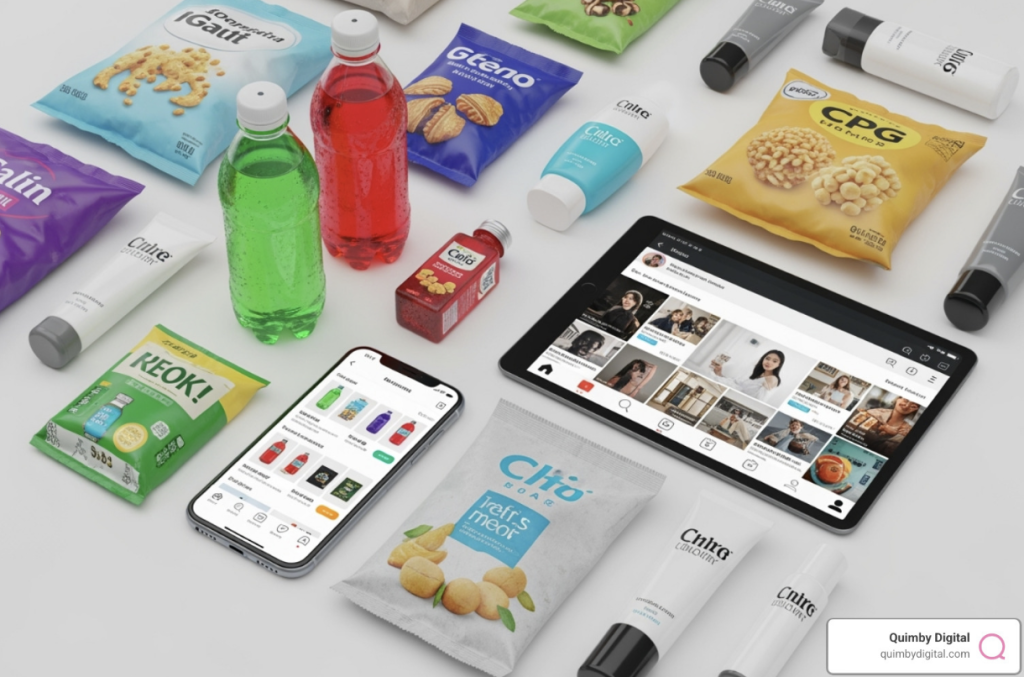
Master CPG digital strategy for dominance. Evolve, leverage data & AI, and build loyalty. Your blueprint for future success.
A CPG digital strategy is the comprehensive blueprint that consumer packaged goods companies use to connect with customers across digital channels, from social media and e-commerce platforms to retail media networks and direct-to-consumer experiences.
Key components of an effective CPG digital strategy include:
- Omnichannel presence – Consistent brand messaging across all digital touchpoints
- Data-driven personalization – Using consumer insights to tailor experiences
- Retail media optimization – Maximizing visibility on Amazon, Walmart, and other platforms
- Social commerce integration – Leveraging influencers and shoppable content
- Supply chain digitization – Using technology to improve efficiency and transparency
- AI and analytics – Automating decisions and predicting consumer behavior
After decades of relying on traditional retail and mass media, CPG companies are racing to adapt to the digital arena. The numbers are stark: CPG companies invested $23.8 billion in digital change in 2023, yet many still lag retailers in digital maturity.
Consumer behavior has fundamentally shifted. Today, 93% of people buy household staples online, and 95% consult reviews before any purchase. The path to purchase now winds through social media, search results, and digital marketplaces.
With CPG ad spend nearing $50 billion in 2024 (a 16.6% increase), brands are pouring money into digital channels. But spending more doesn’t guarantee success. Thriving companies will be those that build authentic connections with consumers in a crowded digital landscape.
As one expert noted, “The biggest contributor to brand growth wasn’t brand equity, it was penetration.” This shift toward customer acquisition requires a new playbook centered on digital strategy.
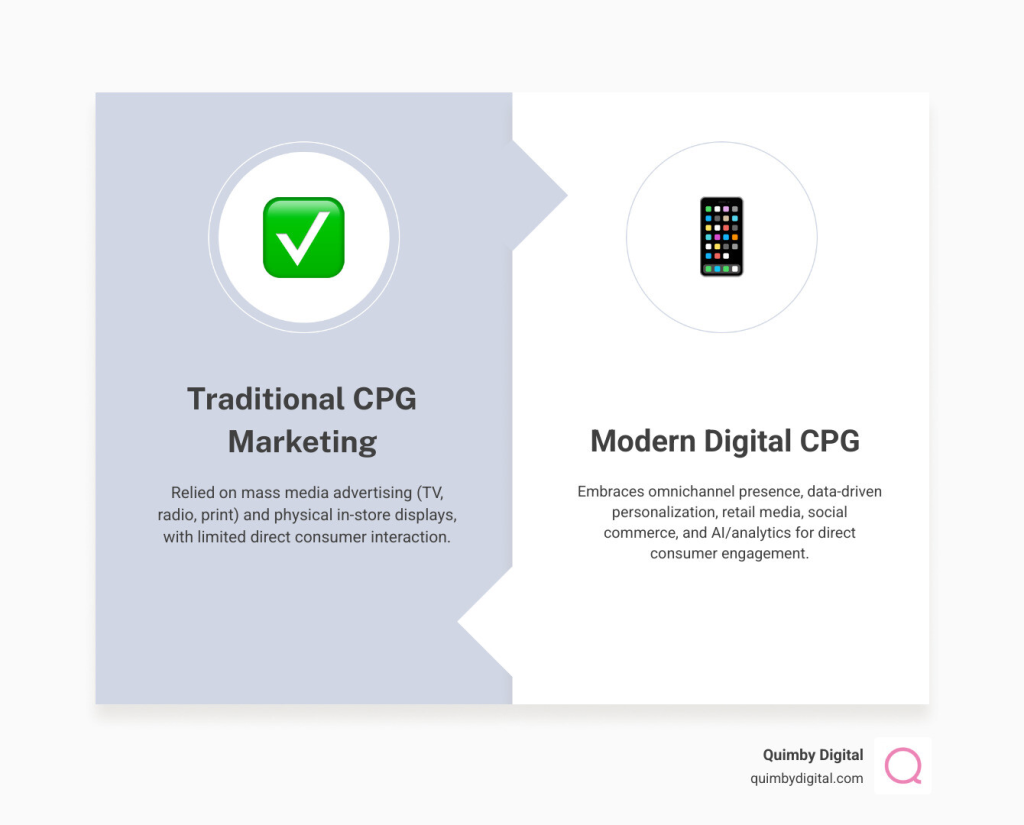
The Digital Shift: Why CPG Brands Must Evolve or Be Left Behind
CPG brands face a simple choice: accept digital change or lose market share. Massive disruptions are reshaping how consumers find, evaluate, and purchase products.
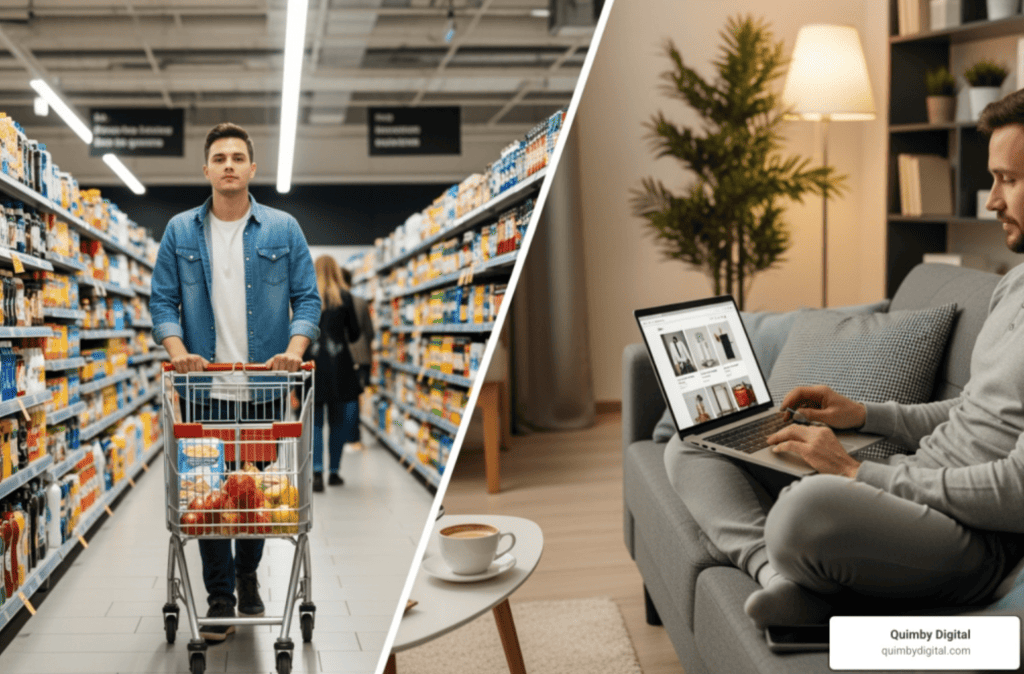
E-commerce acceleration has rewritten the rulebook. The pandemic compressed a decade of change into months. Today, 93% of consumers purchase household staples online—a mainstream reality, not a niche behavior.
Consumer expectations have evolved. Shoppers demand seamless experiences, personalized recommendations, and instant information. They control the conversation across all channels, from social media to voice search.
The health consciousness movement adds another layer. Consumers seek brands that align with their values, prioritizing organic and sustainable products. Your CPG digital strategy must communicate what your brand stands for, not just what your product does.
Market saturation is the final pressure point. On the infinite digital shelf, attention is scarce and penetration trumps brand equity. Success now depends on acquiring new customers through precise, data-driven approaches.
The contrast is stark. Traditional marketing pushed messages via TV and in-store displays. Modern digital strategy pulls consumers in with engaging content and personalized experiences. Understanding individual online behaviors is key to developing an agile and responsive CPG Digital Strategy: How to Grow Your Brand.
Adapting to the Omnichannel Consumer
Today’s consumers move seamlessly between physical stores, e-commerce sites, and social media. Omnichannel commerce is the new reality.
Consistent brand messaging across all touchpoints is non-negotiable. A cohesive experience on Amazon, social media, or in-store builds trust and reinforces brand identity.
Retail media networks are powerful tools for reaching consumers throughout their buying journey. Leveraging them ensures your products appear where consumers are already looking to buy.
Statistics highlight key digital touchpoints: 68% of consumers use subscription services (a 48% YoY growth), and 90% believe at least one product category is perfect for auto-replenishment. This shows a clear demand for convenience.
Understanding what an omnichannel strategy means requires detailed customer journey mapping to ensure you are present and relevant at every stage, from consideration to repurchase.
The Rise of the Digital Shelf
The digital shelf is a paradigm shift from physical retail. While a supermarket has hundreds of SKUs, a smart speaker may offer just one product recommendation. This reduced SKU visibility requires new tactics.
Product detail pages (PDPs) are your new packaging. High-quality images, compelling descriptions, and clear CTAs are critical for conversion, as consumers cannot physically examine products.
Consumer reviews have unprecedented influence. With 95% of consumers consulting reviews before purchasing, managing your online reputation and encouraging feedback is crucial.
Search optimization is critical. Products must be findable via relevant search terms on multiple platforms, and understanding platform-specific nuances is essential.
The digital shelf evolution is rapid. Brands must adapt their content supply chains to ensure products are not just available online, but findable, appealing, and trustworthy.
Engaging the Modern Consumer: A Winning CPG Digital Strategy
Today’s consumers connect with brands by joining communities and sharing experiences. A successful CPG digital strategy is no longer about pushing messages, but creating spaces for authentic relationships to flourish.
When brands act as community builders on platforms like Reddit and TikTok, customers transform from passive buyers into active advocates.
Building authentic communities means listening, responding to feedback with action, and making customers feel heard. This approach turns customer feedback into a valuable product development tool. This community-focused approach to Social Media Marketing & SEO Hacks to Amplify Brand Presence builds lasting, genuine brand loyalty.
Reshaping Engagement with Digital Marketing and Influencers
One-way brand communication is over. Modern digital marketing is a dynamic conversation, driven by the power of social media.
Content marketing is now about storytelling that resonates with audience values. Sharing behind-the-scenes moments and customer wins builds trust by showing the human side of a brand.
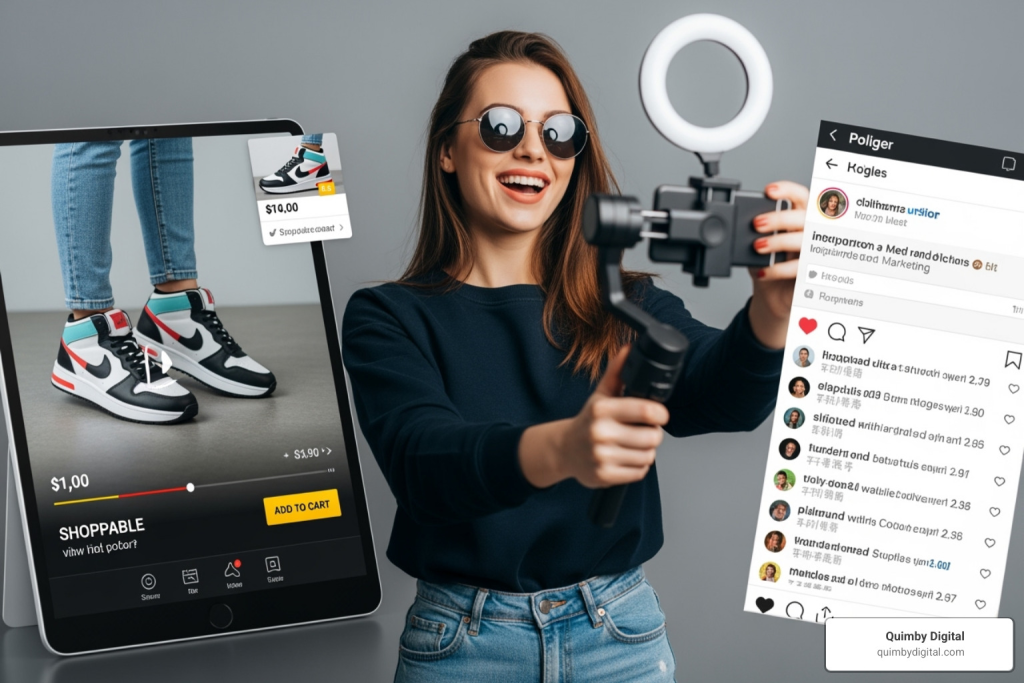
Influencer partnerships are a key tool for authentic engagement. The most effective partnerships are with influencers whose values align with your brand. Authentic excitement creates a ripple effect that traditional ads can’t match. The key to How to Use Social Media to Build Trust With Your Audience is authenticity. Consumers spot fake enthusiasm but are drawn to genuine recommendations.
Video content drives high engagement. From short TikToks to longer YouTube stories, video creates powerful connections. As detailed in 5 Ways for Brands to Create Effective Video Content, entertainment and education often outperform direct selling. Combining thoughtful content with strategic influencer partnerships creates effective Organic & Paid Social Media Campaigns.
Innovative Creative Strategies to Capture Attention
With thousands of daily marketing messages, innovative creative is essential for survival. Brands that break through make shopping feel effortless and engaging.
Dynamic Creative Optimization (DCO) personalizes ads based on real-time data like weather or time of day. This makes ads feel like helpful suggestions rather than interruptions.
Shoppable creative integrates content and commerce seamlessly. Allowing users to buy directly from a post or ad eliminates purchase barriers and encourages impulse buys.
Interactive advertising turns viewers into participants. Quizzes, polls, and games create memorable experiences that build a lasting connection with consumers.
Simple QR codes bridge the physical-digital gap. A code on packaging can link to exclusive content, recipes, or loyalty programs, deepening the customer relationship.
Direct-to-Consumer (DTC) models amplify these strategies but have unique considerations:
| Benefits of DTC Models | Challenges of DTC Models |
| Complete control over the customer experience from first impression to unboxing | Complex logistics including warehousing, shipping, and managing returns |
| Direct access to valuable first-party data about customer preferences and behaviors | Heavy customer service responsibilities requiring dedicated support teams |
| Higher profit margins by eliminating retailer markups | Significant marketing investment needed to drive traffic to your own channels |
| Authentic brand storytelling without retailer restrictions or competing messages | Potential channel conflicts with existing retail partnerships |
| Faster product development cycles based on direct customer feedback | Scaling challenges as order volumes grow and infrastructure needs expand |
| Personalized offerings like custom bundles and subscription services | Trust-building problems especially for newer brands without established retail presence |
The DTC approach offers incredible opportunities for brands willing to invest in direct customer relationships. Despite the challenges, the payoff in loyalty, data, and profit margins can be transformative.
The Engine Room: Data, AI, and Foundational Change
A successful CPG digital strategy requires robust data management, AI, and foundational tech change. Without this engine, even brilliant marketing campaigns will fail.

Supply chain digitization is critical for backend support. It’s not just about efficiency; it’s about providing the transparency modern consumers demand on sourcing and sustainability.
ERP modernization is a messy but necessary process happening alongside other digital initiatives. Legacy systems are often the biggest roadblock, but 75% of large CPGs plan to overhaul their core ERP systems within three years.
Data fragmentation is a frustrating challenge. With customer data scattered across departments and platforms, it’s nearly impossible to get a complete view of the customer.
The rewards are substantial: successful digital change can yield a 6 to 10 percent incremental revenue uplift and 3 to 5 percentage points in EBITDA growth over three to five years.
Leveraging Data and AI in Your CPG Digital Strategy
Data analytics goes beyond collecting information to anticipating customer needs, such as knowing when certain customers are most likely to buy.
Artificial Intelligence takes this further. Big data and AI can improve planning accuracy by 20 percentage points. Generative AI is gaining attention for its potential to boost marketing productivity by 5-15% by assisting with content creation and customer service.
The industry is sprinting toward AI integration, with nearly 90% of CPGs expecting large-scale AI implementation in the next 18-24 months. However, only 11% of companies report significant financial benefits from AI. Success requires deep organizational change, not just technology. As one expert noted, it requires “deep organizational surgery.”
This means breaking down data silos and building reusable “data products.” This strategic data architecture is key to capitalizing on digital change.
Predictive analytics, powered by clean, connected data, allows you to anticipate trends and deliver precisely targeted, personal messages.
Balancing Personalization with Consumer Privacy
As personalization improves, so do consumer privacy concerns. This is a trust issue that can make or break customer relationships.
The challenge is delivering expected personalization while respecting privacy. Personalization works best when it’s helpful, not invasive.
Data governance is crucial. Clear policies on data collection, use, and protection are needed. Building trust requires transparency and giving consumers control over their information, including easy data deletion.
Custom solutions that prioritize privacy by design are the gold standard. This can mean using anonymized data for insights or focusing on willingly shared first-party data.
The goal is ethical data use that improves the customer relationship. Personalization is becoming increasingly important, but it must be balanced with respect for privacy. Done right, it strengthens customer trust.
Measuring Success and Future-Proofing Your Brand
Measuring success in the digital CPG world is complex. The landscape shifts constantly due to market saturation, changing consumer preferences, and complex customer journeys.
Measuring ROI on digital initiatives requires looking beyond immediate sales. While a 6-10% revenue uplift is possible, only 11% of companies see major benefits from AI. This means we must expand our definition of success.
Success metrics should include engagement rates, community growth, brand sentiment, and customer lifetime value. A viral video building awareness or a growing Reddit community can be as valuable as immediate sales. The key is a comprehensive measurement framework that captures both quantitative (conversion rates) and qualitative (social listening scores) wins.
The Growing Importance of Sustainability
Sustainability is a fundamental consumer value, not a passing trend. Three-quarters of consumers are willing to pay more for sustainably sourced brands.
With over 380 million tons of plastic produced annually (half for single-use items), consumers are aware of the waste problem. They seek brands that offer solutions.
Smart CPG brands are responding with eco-friendly packaging like refills and reusable containers. A digital strategy is crucial for telling this sustainability story effectively, as consumers demand proof.
Digital platforms enable you to showcase your responsible sourcing via supply chain tracking, share behind-the-scenes content, partner with eco-conscious influencers, and build communities around shared values. This transparency builds trust and loyalty.
Essential Components of a Modern CPG Digital Strategy
A future-proof CPG digital strategy requires several key, interlocking components.
- A digital-first mindset: Build digital into your brand’s DNA, from product development to customer service.
- Data-driven decision making: Use consumer insights to segment, personalize, and predict. Turn data into action.
- Omnichannel consistency: Ensure a familiar brand voice, values, and identity across all touchpoints.
- Hyper-personalization: Cut through the noise with relevant experiences, balanced with respect for privacy.
- Video and voice optimization: Adapt your content strategy for short-form video and voice search.
- Agile methodology and cross-functional teams: Stay nimble with teams that can quickly test, learn, and iterate.
- Talent acquisition: Create an environment where top digital talent can thrive to ensure long-term success.
- Continuous optimization: As we do at Quimby E-commerce, constantly monitor, analyze, and adapt strategies based on performance and trends.
Thriving brands will accept this complexity while staying true to their values, combining digital sophistication with a human connection.
Frequently Asked Questions about CPG Digital Strategy
How can CPG brands effectively measure the ROI of their digital initiatives?
Measuring ROI for a CPG digital strategy goes beyond direct sales. While financial wins like a potential 6-10% incremental revenue uplift are key long-term goals, a complete picture requires a richer mix of metrics.
A “test-learn-scale” approach is most effective. Start with small pilot programs, measure results, and scale the successful initiatives. This minimizes risk while maintaining momentum.
Beyond financial metrics, track:
- Engagement rates: Monitor likes, shares, and comments across social platforms.
- Conversion improvements: Analyze website and e-commerce conversion data.
- Customer Lifetime Value (CLV): Track how CLV evolves with digital engagement.
- Brand sentiment: Use social listening to monitor conversations on platforms like Reddit and TikTok. Positive shifts indicate sustainable brand health and advocacy.
What is the biggest challenge CPG marketers face today?
The biggest challenge is navigating a rapidly changing landscape. Key difficulties include:
- Market Saturation & Shifting Behavior: The CPG space is crowded, and consumer habits are constantly evolving, making it difficult to stand out.
- Personalization vs. Privacy: Consumers demand personalized experiences but are increasingly concerned about data privacy, creating a difficult balance to strike.
- Data Fragmentation: Customer data is often siloed across retailers, distributors, and internal platforms, preventing a holistic customer view.
- Talent Acquisition: CPG companies compete with the tech industry for skilled digital professionals.
- Scaling Initiatives: Many brands struggle to scale successful pilot programs across the entire organization, getting stuck in “pilot purgatory.”
What role does the supply chain play in a CPG digital strategy?
Your supply chain is a critical component that can make or break your digital efforts. Its role includes:
- E-commerce Fulfillment: A digitized supply chain is the backbone of meeting online demand, ensuring timely and accurate delivery that meets customer expectations.
- Sustainability Transparency: It’s where you prove your green credentials. A transparent supply chain allows you to track and share sourcing and manufacturing information, which is a competitive advantage when 75% of consumers will pay more for sustainable brands.
- Direct-to-Consumer (DTC) Enablement: For DTC models, a sophisticated supply chain is essential for managing complex last-mile delivery to individual customers.
- Inventory Management: AI integration improves forecasting accuracy, ensuring products are in stock when and where customers want them. This prevents lost sales from out-of-stock items promoted through digital marketing.
The supply chain enables the promises your CPG digital strategy makes to consumers. A seamless supply chain is invisible; a broken one undermines all your digital efforts.
Conclusion
Developing a CPG digital strategy requires rethinking how you connect with consumers in a digital-first world.
Consumer behavior has shifted dramatically. With 93% of consumers buying household staples online, the old playbook is obsolete. Today’s shoppers expect seamless omnichannel experiences and make decisions based on reviews, influencers, and personalized content.
Thriving brands accept this digital-first reality. They build authentic communities, use AI for personalization, ensure supply chain transparency, and optimize for the unique challenges of the digital shelf.
Success isn’t just about technology or ad spend. It’s about creating genuine connections, telling your story authentically, and building trust through valuable interactions like shoppable video, natural influencer partnerships, and convenient subscription services.
The future belongs to agile CPG brands that can balance personalization with privacy, leverage retail media, and deliver on sustainability promises.
At Quimby Digital, we focus on building authentic connections through organic growth and community building, changing customer relationships through genuine engagement.
The future of CPG is digital, and the time to act is now. Brands making these changes today will be tomorrow’s market leaders.
Ready to transform your brand’s digital presence? Let’s build your CPG digital strategy together and create something that truly connects with your audience.