

Brand awareness growth is about making your target audience more familiar with your brand, products, and values. For wellness, CPG, and tech brands struggling to cut through the noise, it’s a lifeline to sustainable growth.
Quick Answer: Essential Brand Awareness Growth Strategies
- Build a strong brand identity with consistent messaging and visuals
- Create valuable content that educates and engages
- Focus on community building through authentic social media engagement
- Leverage strategic partnerships with complementary brands
- Measure your progress with metrics like branded search volume
- Stay consistent across all touchpoints
When you ask for a Kleenex instead of a tissue, you’re seeing the power of brand awareness. Some brands become so embedded in our lives that their names replace common words.
Research shows that 46% of consumers will pay more to purchase from brands they trust. Even more compelling, brands with consistent presentation see revenue increases of up to 33%. Yet many businesses treat brand awareness as a “nice to have” rather than a critical investment.
Brand awareness creates an economic moat around your business. When customers know and trust your brand, you compete on relationships and emotional connection, not just price.
The challenge? It takes 5-7 impressions for consumers to even remember your brand. Breaking through today’s digital noise requires strategy, consistency, and authentic community engagement. This is where understanding reach in marketing becomes essential, as it helps measure how many unique users are actually seeing your brand.
Understanding Brand Awareness: The Foundation of Growth
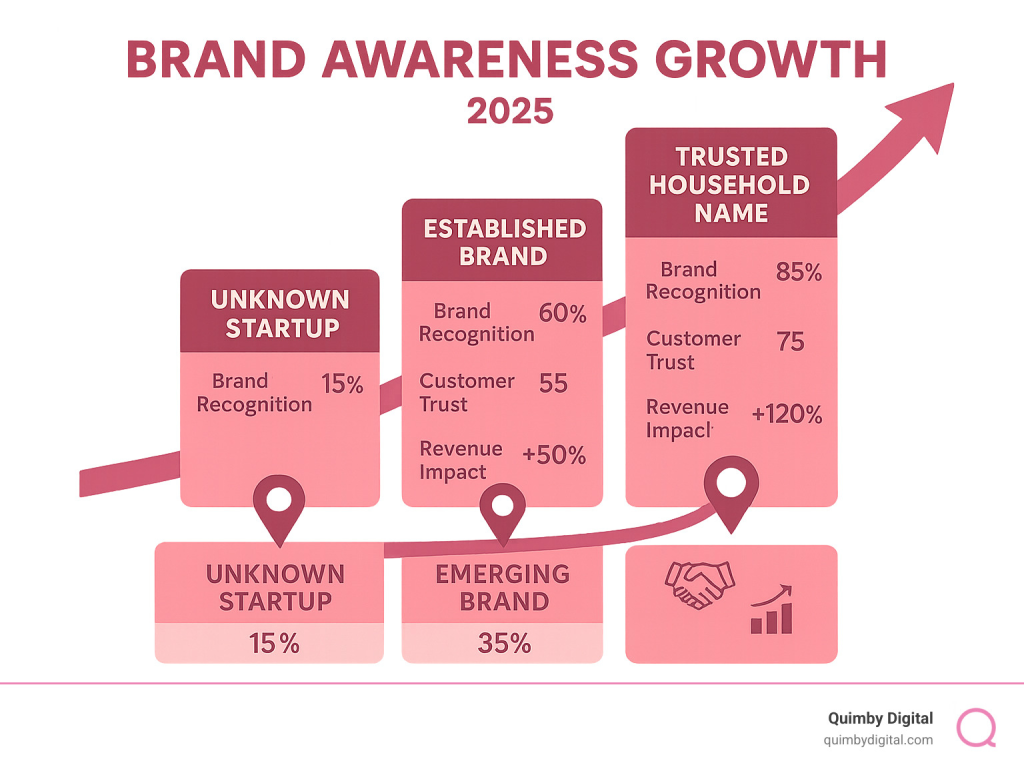
Think of brand awareness growth as shifting your brand from “Who are they?” to “I know exactly who they are.” It’s how well consumers recognize and remember your brand, but it’s more than just name recognition. It’s about building genuine brand equity—the intangible value that makes customers choose you over competitors. This trust creates an economic moat, protecting your business in a crowded market.
The cognitive impact is deep. Research shows that familiar brands feel safer to our brains, leading to more frequent selection and building pathways to loyalty.
Brand Awareness vs. Brand Recognition
Brand awareness and brand recognition are often confused, but they’re different.
Brand recognition is spotting a familiar logo or color scheme. It’s aided recall—recognizing a brand with a visual prompt.
Brand awareness is deeper. It’s when your brand comes to mind without a prompt (unaided recall), achieving top-of-mind awareness.
| Feature | Brand Awareness | Brand Recognition |
| Definition | Deep familiarity with brand values and offerings | Ability to identify a brand by visual cues like logos and colors |
| Recall Type | Unaided recall (remember without prompting) | Aided recall (recognize with prompting) |
| Goal | Be top-of-mind for a product category or need | Be identifiable through visual elements |
| Example | “What social media tool do you use?” → “Buffer” | Seeing a swoosh and knowing it’s Nike |
The goal is to be the first brand people think of when they need a solution you offer.
Why Brand Awareness is Crucial for Your Business
Brand awareness growth directly impacts your bottom line. Trust is key: 46% of consumers will pay more for brands they trust. Familiarity creates preference and a willingness to invest more.
Consistency also pays off. Brands with a consistent presentation see revenue increases up to 33% by building recognition, trust, and sales.
The benefits extend beyond sales. Strong brand awareness provides a competitive edge in talent acquisition, with recognizable brands attracting 50% more job applicants. Investing in brand awareness impacts customer loyalty, sales, and talent acquisition, securing your market position.
Take your awareness strategy to the next level — learn how to boost your brand’s online visibility with proven digital frameworks.
How Awareness Shapes Customer Loyalty and Decisions
Human psychology’s familiarity principle explains why brand awareness is so powerful: we naturally prefer what we know. A consistent brand presence builds trust and emotional bonds, leading to repeat purchases driven by genuine brand association and loyalty.
Visual consistency is critical, as people are 81% more likely to remember brand colors than the company name. This is why we focus on building authentic communities and fostering real engagement. When you create genuine connections, you move your brand from being merely recognized to being genuinely trusted and advocated for.
Want to dive deeper into this trust-building process? Check out our guide on How to Use Social Media to Build Trust With Your Audience. Because at the end of the day, brand awareness growth is really about relationship growth.
Core Strategies for Building Brand Awareness
Meaningful brand awareness growth requires a thoughtful approach, weaving together brand identity, valuable content, and strategic partnerships. Like building a house, you need a solid foundation (brand identity), quality materials (content), and the right connections (partnerships) for a cohesive and lasting presence that your audience will notice.
Crafting a Strong and Memorable Brand Identity
Your brand identity is your business’s personality, starting with your brand mission and core values—the “why” behind what you do. Your brand voice must be consistent everywhere, reflecting this personality.
Visuals like your logo and color palette are memory-making tools. Colors can boost brand recognition by 80%, and consumers are 81% more likely to remember your colors than your name. The right palette is about memorability, not just aesthetics. When these elements work together, your brand becomes instantly recognizable. For a deeper dive, check out How to build a brand.
The Power of Content Marketing and SEO
Content marketing builds trust by being genuinely useful. Creating content that solves problems or entertains establishes your brand as a helpful expert. Blogging establishes expertise, video content is highly engaging (91% of consumers want more), and podcasting allows for intimate conversations.
But brilliant content is useless if unfindable. SEO—including a smart keyword strategy, on-page SEO, and link building—ensures your content reaches the right audience. Combining content and SEO means you appear when people are actively searching for your solutions. For practical tips, explore our guide on 5 Ways for Brands to Create Effective Video Content.
Expanding Reach with Strategic Partnerships
Strategic partnerships with complementary brands introduce you to new, relevant audiences. Co-marketing campaigns with partners who share your values but serve different needs can be highly effective. For example, a wellness brand could partner with a sustainable packaging company.
Community involvement, both online and local, builds goodwill when you engage authentically. User-generated content is also a goldmine. Customer-created content is an authentic, trustworthy endorsement that spreads organically. For our wellness and CPG clients, their communities often become their best advocates.
Leveraging Social Media for Explosive Brand Awareness Growth
Social media is the heartbeat of modern brand awareness growth. It’s where customers find and connect with brands. Over 50% of a brand’s reputation now comes from online sociability. With the average person spending over two hours on social media daily, it’s a huge opportunity to connect.
Social media success isn’t about broadcasting; it’s about building communities, engaging authentically, and listening to your audience. Done right, organic growth can transform a brand.
Choosing the Right Platforms for Your Brand
You don’t need to be on every platform. Focus your efforts by matching your audience demographics with the right platform-specific content.
- Instagram is ideal for visual storytelling, helping wellness and CPG brands build visual recognition.
- TikTok excels at connecting with younger audiences through authentic, short-form video. A single viral video can generate massive brand awareness growth.
- Reddit provides access to niche communities. It’s great for tech-forward brands, as users value authenticity and expertise.
- LinkedIn is the powerhouse for B2B brands to establish thought leadership.
The key is matching your brand’s strengths to each platform’s culture. Understanding the latest Social Media Demographics to Inform Your Brand’s Strategy helps ensure you’re investing your time wisely.
Creating Shareable Content and Fostering Community
Shareable content often taps into emotions. Viral content makes people laugh, think, or feel inspired. Interactive posts like polls boost engagement, and contests create excitement.
The secret is responding to comments to build authentic connections. Acknowledge engagement, ask questions, and share user-generated content to turn followers into advocates. People remember brands that make them feel heard. For a fun way to boost engagement, try Mastering Twitter Polls: How to Directly Engage With Your Audience.
Crafting a Long-Term Strategy for Brand Awareness Growth
Brand awareness growth is a long-term effort built on consistent, authentic engagement. A solid strategy is your competitive advantage.
Consistency is key. A consistent brand voice and visual identity across platforms can increase revenue by up to 33%. Employee advocacy also organically amplifies reach, as shares from personal accounts feel more authentic.
Analyzing trends and adapting is crucial for staying relevant. Thriving brands are curious, test new ideas, and pivot based on data. We also recommend checking out 6 Ways to Grow Your Social Media Following.
Measuring What Matters: Tracking Your Brand Awareness Campaigns
Brand awareness growth, while seemingly abstract, is measurable. The key is to set clear KPIs and use analytics to track your efforts. Measurement is your brand’s GPS, enabling data-driven decisions to optimize marketing efforts and ensure every action contributes to your goals.
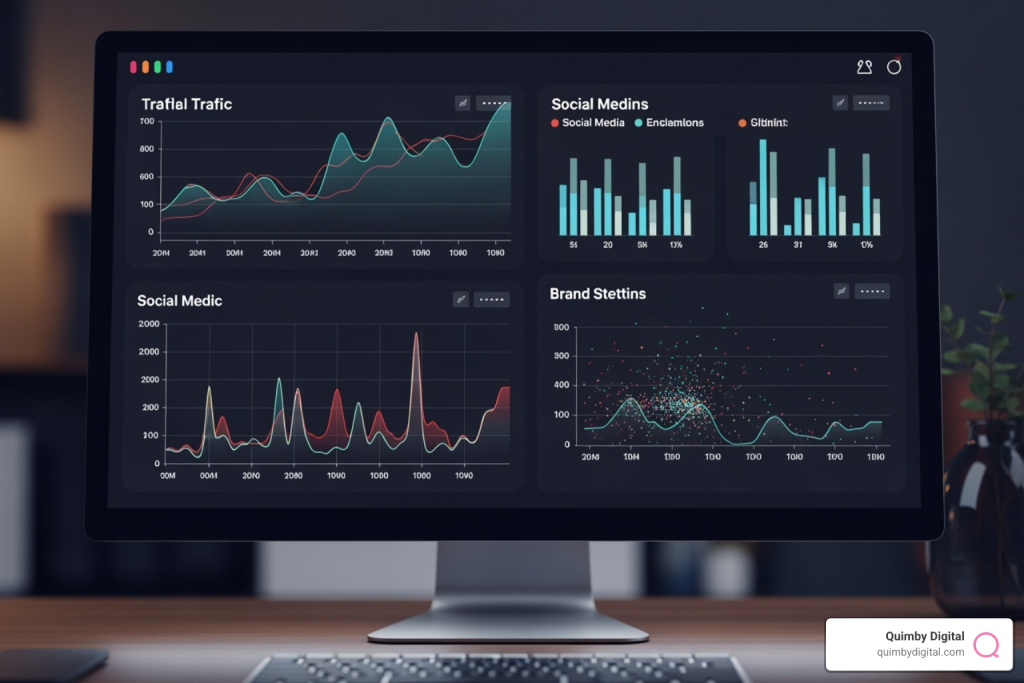
Key Metrics for Measuring Brand Awareness Growth
Measuring brand awareness growth combines hard data with behavioral insights. Here are the metrics that matter:
- Direct traffic is a strong indicator of brand recall. When users type your URL directly, it means they already know you.
- Branded search volume shows unprompted awareness. When people search for your brand name, they already know and trust you.
- Social media reach measures how many unique users see your content, while engagement rate shows how much they interact with it. High engagement builds community and loyalty.
- Share of Voice (SOV) measures your brand’s share of the conversation in your industry. A larger SOV indicates greater market visibility.
- Mentions (tagged and untagged) across platforms provide a pulse on your brand’s organic visibility.
For a deeper dive into the social metrics that matter most, check out 5 Metrics to Record for Social Growth.
Using Analytics and Surveys for Deeper Insights
To understand the why behind the numbers, you need analytics tools and direct customer feedback.
Google Analytics shows how users find and interact with your site, revealing traffic sources and engaging content to explain how your awareness efforts are working. Social media analytics tools offer platform-specific insights into audience behavior, helping you refine your content strategy.
Customer surveys are goldmines for understanding brand perception. Use aided (e.g., showing a logo) and unaided (e.g., naming brands in a category) recall questions to measure awareness. Net Promoter Score (NPS) surveys gauge loyalty and satisfaction, which are direct outcomes of strong brand awareness. Regular surveys help track progress. For comprehensive guidance, explore How to Measure and Improve Brand Awareness.
Analyzing Campaign Effectiveness and Optimizing for the Future
Measurement is about learning and adapting. Use data to optimize future campaigns. A/B testing helps you understand what resonates with your audience by testing headlines, images, and formats. Campaign reporting should identify top-performing content and analyze why it succeeded so you can replicate that success.
The key is reallocating resources based on data. If video outperforms images, invest more in video. This continuous improvement cycle keeps your brand relevant, ensuring your brand awareness growth strategy evolves and succeeds long-term.
Overcoming Challenges and Learning from the Best
Building brand awareness growth has its challenges, from market saturation and budget constraints to negative feedback and evolving algorithms. However, every challenge is an opportunity to innovate and connect more authentically. Thriving brands learn from obstacles and adapt.
Common Pitfalls and How to Avoid Them
We’ve seen common pitfalls derail brand awareness growth, but they are avoidable.
- Inconsistent branding confuses your audience. A consistent presentation can increase revenue by up to 33%.
- Neglecting your online reputation is risky. Respond to criticism quickly and genuinely; your audience is watching.
- Focusing only on sales feels pushy. Build trust by providing value first.
- Ignoring audience feedback means missing opportunities. Listen to your community to understand what they want.
- Lack of authenticity is a major pitfall. Consumers can spot fake content and want to connect with real, caring brands.
Examples of Successful Brand Awareness in Action
Inspiring brand awareness growth stories often involve creative risks and an authentic voice.
- Verizon’s ‘Can you hear me now?’ campaign became part of pop culture, resulting in a 10% customer increase in its first year.
- The PGA Tour’s Valspar Championship sponsorship creatively integrated the paint brand into the event, leading to a 10-point jump in brand recognition.
- Duolingo’s ‘Love Language’ April Fools’ campaign generated over 70 million impressions because its humor was authentic to the brand’s playful personality.
- HP’s ‘Little Moments’ commercial focused on emotional storytelling over product features, leading to rapid sell-outs of its printers.
- Volvo’s ‘Little Things’ campaign used emotional storytelling about parenthood instead of car specs, driving significant brand engagement.
- IKEA Norway’s ads showing life’s messiness resonated because they felt genuine and relatable.
These successes show the power of understanding your audience, staying authentic, and taking creative risks to connect genuinely with your community.
Frequently Asked Questions about Brand Awareness Growth
Juggling business priorities can make brand awareness growth feel overwhelming. Here are answers to the most common questions we hear.
How long does it take to build brand awareness?
Brand awareness growth is a marathon, not a sprint. It’s an ongoing process requiring consistent effort. It takes 5-7 impressions for a consumer just to remember your brand. With a focused, consistent campaign, you can start seeing initial results, like increased branded search, within 3-6 months. While these early wins are exciting, building deep loyalty and top-of-mind awareness takes years. The key is consistency, value, and authenticity.
Can a small business with a limited budget build brand awareness?
Absolutely. Budget constraints can force strategic creativity, often leading to better results. Focus on organic strategies: create helpful, targeted content, invest in SEO, and engage authentically in niche communities where your customers are active.
User-generated content is a powerful, free marketing tool. Encouraging customers to share their experiences can create explosive, authentic growth. Platforms like Reddit and TikTok reward authenticity over production value, making them ideal for budget-conscious brands.
What is more important: brand awareness or lead generation?
Brand awareness and lead generation are two sides of the same coin; you need both. Successful brands understand how they work together. Brand awareness fills the top of your marketing funnel, building the trust that makes sales conversations smoother and more effective. Lead generation without brand awareness is like proposing on a first date—not a sustainable strategy.
A healthy strategy balances both. Build a foundation of trust with brand awareness, and your lead generation efforts will be far more effective because you’re not starting from zero.
Conclusion: Start Your Brand’s Growth Journey Today
Building brand awareness growth is the foundation that transforms your business. The right strategies can shift your brand from being one of many to the first one customers think of.
The path forward is clear: Consistency creates recognition, authenticity builds trust, value-driven content establishes expertise, and measurement ensures your efforts are effective. The brands you love and recommend got there by focusing on these fundamentals: a strong identity, helpful content, genuine community engagement, and data-driven refinement.
Your brand has the same potential. The principles apply to any industry. Start where you are, use what you have, and be consistent. The power of brand awareness growth lies in compounding returns. Small, consistent actions—a helpful blog post, an authentic comment—add up to create significant impact.
Ready to transform your brand’s visibility and build the kind of community that drives real business growth? Explore our social media growth services and let’s build your brand together. Your unforgettable brand story starts today.