


Master your social media audits while ensuring HIPAA compliance. Learn how to analyze performance, optimize strategy, and boost ROI with our comprehensive guide.
A social media audit is a comprehensive review of your brand’s social presence, evaluating what works, what doesn’t, and where to find growth opportunities. Think of it as a report card for your social performance. It reveals which platforms drive real results, what content resonates, and where you’re wasting resources.
Many brands operate on autopilot, spending time and money on social media without knowing if their efforts are moving the needle. Audits connect your daily social media tasks to larger business goals, empowering you to make data-driven decisions instead of guessing what might work. The insights gained can increase brand awareness, boost engagement, and ultimately drive revenue.
What Are Social Media Audits and Why Do They Matter?
A social media audit is a structured review of your performance across all platforms. It’s like looking under the hood to see what’s running smoothly and what needs a tune-up. Social media is constantly evolving—new platforms emerge, algorithms shift, and audience behaviors change. Without regular audits, you risk spending resources on outdated strategies and missing significant growth opportunities.
Audits are essential for optimizing your presence, aligning with business objectives, and making informed decisions. They are the diagnostic tool we use to ensure our social media marketing is impactful, efficient, and aligned with our strategic vision. For more insights, check out our guide on More info about social media marketing services.
The Key Benefits of a Regular Audit
Conducting social media audits regularly opens up benefits that can transform your strategy, drive business growth, and ensure HIPAA adherence:
- Increased ROI: Identify underused resources and refine your approach based on data to maximize your return on investment.
- Improved Engagement: Analyze what content resonates most with your audience to foster deeper connections and higher engagement rates.
- Better Audience Understanding: Dive deep into audience demographics to confirm you’re reaching your target market and find new potential personas.
- Content Strategy Optimization: Identify top-performing content types and formats to fill gaps and focus on what works best for your brand.
- Competitive Advantage: Benchmark your performance against competitors to identify strategic gaps and gain inspiration for new campaigns.
- Brand Consistency: Ensure all social profiles align with your brand’s style, guidelines, and messaging for a cohesive identity.
- Fraudulent Account Identification: Uncover and address imposter accounts that could be misrepresenting your brand.
Regular audits provide the clarity needed to optimize your social media presence. Learn more about how we can help you Build trust with your audience.
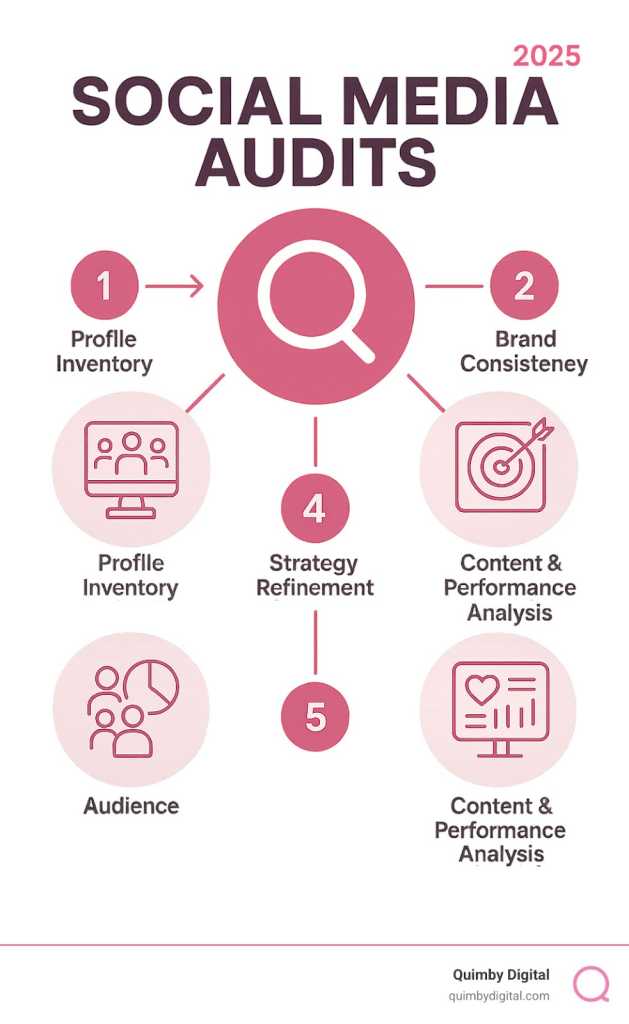
The Essential Steps to Conducting Comprehensive Social Media Audits
Ready to dive into your social media audit? A systematic approach ensures nothing falls through the cracks. The goal isn’t just to collect data—it’s to transform that information into actionable insights that drive real growth.

Step 1: Locate and Catalog All Your Social Profiles
Before you can improve your presence, you need a complete inventory. This work often reveals forgotten accounts, imposters, or dormant profiles.
Create a spreadsheet and search for your brand name across all major platforms. Look for official accounts, inactive profiles with outdated information, and imposter accounts that could damage your reputation. For each profile, track its URL, owner, purpose, and key metrics. This inventory is your foundation—you can’t optimize what you don’t know exists. Also, ensure all accounts are secure with two-factor authentication.
Step 2: Ensure Brand Consistency and Profile Completeness
Your profiles should present a unified brand identity to build trust and recognition.
- Visuals: Your profile images, cover photos, and color schemes should align with your brand guidelines.
- Voice and Tone: Your brand personality should be consistent, adapted for each platform’s unique style.
- Bios and Links: Ensure all bios are current, include relevant keywords, and have working links.
- Pinned Posts: Use this prime real estate to showcase your most important messages or best-performing content.
Consistency builds recognition, and recognition builds trust.
Step 3: Define Goals and KPIs for Each Platform
Don’t treat every social platform the same. Each one serves a unique purpose and attracts different audiences. Your goals should reflect this reality.
Set SMART goals (specific, measurable, attainable, relevant, and time-bound) for each platform. For example, instead of “get more followers,” aim to “increase Instagram followers by 20% in Q3.”
- Brand Awareness: Track reach, impressions, and follower growth.
- Lead Generation: Track click-through rates and conversions.
- Community Engagement: Monitor comments, shares, and saves.
- Website Traffic: Measure referral traffic from social sources.
Align your social media goals with your broader business objectives to ensure your efforts contribute to what matters most. When you’re feeling overwhelmed, our guide on so many platforms, so little time can help you prioritize.
Step 4: Analyze Your Content and Channel Performance
This step reveals the gap between what you think works and what actually drives results.
Identify your top-performing content by looking at metrics that align with your goals. Note which content types (e.g., educational, promotional) and formats (e.g., videos, carousels) perform best. Don’t ignore underperforming content—it offers valuable lessons on what to avoid.
Analyze your posting frequency and timing to see if you’re posting when your audience is most active. Finally, look at the quality of engagement. Are you attracting your target audience? This analysis is the blueprint for your future content strategy. For brands ready to level up their visuals, check out how to create effective video content.
Step 5: Dig Into Audience Demographics
If you’re speaking to the wrong audience, even the best content will fail. This step ensures you’re reaching the right people.
Compare your actual audience with your ideal customer personas. Dive into the demographics data (age, gender, location, interests) available in each platform’s native analytics. You might find surprising new market opportunities or gaps that need addressing.
Recognize that platform-specific audiences behave differently. Tailor your content to what each audience prefers. Understanding who you’re talking to makes every piece of content more intentional and effective. Learn more strategies with our guide on how to grow your social media following.
Key Metrics & Data: What to Track for Actionable Insights
Once we’ve gone through the essential steps of our social media audit, we need to gather and interpret the data. This involves tracking specific metrics that provide actionable insights into our performance. Knowing what to measure is just as important as knowing how to measure it.
Engagement Metrics
Engagement metrics show how much our audience interacts with our content, indicating connection and interest.
- Likes/Reactions: Indicate initial approval and can boost visibility.
- Comments: A strong sign of audience interest and conversation.
- Shares: Extend your reach when users find content valuable enough to pass on.
- Saves: Signal high-utility content that users want to reference later.
- Engagement Rate: Calculated as (Total Engagements / Reach) x 100, this metric provides context by showing how effectively your content resonates with its audience.
For an in-depth look at sparking conversations, check out our insights on how to Directly engage with your audience.
Awareness Metrics
Awareness metrics measure your brand’s visibility and the potential size of your audience.
- Reach: The number of unique users who saw our content.
- Impressions: The total number of times our content was displayed.
- Follower Growth: Tracks audience expansion over time. Focus on the quality of followers, not just the quantity.
- Brand Mentions: Monitors organic buzz and brand perception across social media.
- Share of Voice: Compares our brand’s presence in social conversations to that of our competitors.
Conversion & ROI Metrics
These metrics connect our social media activity directly to our bottom line.
- Click-through Rate (CTR): The percentage of people who clicked a link in our post.
- Conversion Rate: The percentage of users who complete a desired action (e.g., a purchase or sign-up) after clicking through.
- Referral Traffic: The amount of website traffic that originates from our social channels.
- Leads Generated/Sales: The number of leads or direct sales attributed to social media.
- Measuring ROI: Use tracking tools like UTM codes and Google Analytics to attribute revenue to specific social media efforts and calculate your return on investment.
By focusing on these conversion and ROI metrics, we ensure our social media audits provide a clear picture of our social media’s impact on our business goals. For a deeper dive, explore our guide on 5 Metrics to Record for Social Growth.
From Data to Decisions: Using Your Audit to Boost Your Strategy
The real power of a social media audit is turning insights into an actionable strategy. This is where we shift from analysis to implementation to drive real business impact.

Identify What’s Working and Double Down
Your audit will highlight your successes. Understand why they worked so you can replicate and amplify them.
- Content Pillars: Identify the core themes and topics that consistently resonate with your audience.
- Successful Formats: Lean into the content types (e.g., Reels, carousels) that perform best.
- Optimal Posting Times: Adjust your schedule to post when your audience is most active.
- High-Performing Platforms: Allocate more resources to the channels that deliver the best results.
By focusing on what works, you can allocate resources more effectively. See a real-world example of this in action: We Grew a Client by 20k Followers in Two Months.
Rethink What Isn’t Working
Confronting what isn’t working is just as important as celebrating wins. An audit provides the objective data needed to make tough decisions.
Identify content gaps and ineffective messaging that lead to underperformance. If a social channel consistently fails to meet its goals, ask if it’s worth the effort. Sometimes, the most strategic move is to ditch a low-performing platform and reallocate those resources to channels where you’re thriving. Use these insights to spark A/B testing ideas for headlines, visuals, or calls to action to see if a new approach yields better results.
The Role of Competitor Analysis
A comprehensive audit includes a look at what others in your industry are doing. This provides context, helps establish benchmarks, and uncovers opportunities.
Benchmark your key metrics against industry leaders to see where you stand. Analyzing competitors can reveal opportunities—such as content formats they aren’t using—and help you understand industry standards for performance. This analysis can also provide content inspiration for your own unique strategy.
Here’s a simplified example of a competitor comparison:
| Metric (Avg. per post) | Your Brand | Competitor A | Competitor B | Industry Avg. |
| Engagement Rate | 2.5% | 3.1% | 1.8% | 2.8% |
| Avg. Reach | 15,000 | 20,000 | 10,000 | 18,000 |
| Avg. Link Clicks | 120 | 180 | 70 | 150 |
This table shows you’re performing below the industry average but better than Competitor B, while Competitor A serves as a good benchmark.
Create an Actionable Plan for the Future
An audit without an action plan is just a report. Translate your findings into a concrete plan.
- Update Your Strategy: Refine your core messaging, content pillars, and platform priorities.
- Set New Goals: Establish clear, data-informed goals for the next quarter.
- Create a Content Calendar: Outline specific content themes and posting schedules.
- Assign Tasks: Ensure clear ownership and accountability for each action item.
- Schedule Your Next Audit: Plan for quarterly reviews to maintain momentum and adapt to changes.
This systematic approach transforms data into tangible improvements and sustained growth.
Tools, Templates, and Common Pitfalls
With the right tools and an awareness of common stumbling blocks, conducting a social media audit becomes a manageable and effective process.

Helpful Tools and Templates to Streamline Your Audit
You don’t need expensive software to conduct a valuable audit. Many effective audits start with simple tools.
- Social Media Management Platforms: These tools can streamline data collection by providing a unified view of your performance across multiple networks.
- Native Analytics Tools: Free and accurate, tools like Instagram Insights and LinkedIn Analytics offer granular, platform-specific data straight from the source.
- Website Analytics: Tools like Google Analytics are essential for connecting social media efforts to business results like referral traffic and conversions.
- Spreadsheets: A well-organized spreadsheet (Google Sheets or Excel) is perfect for cataloging accounts, recording metrics, and organizing your findings.
- Templates: A structured template ensures you cover all critical elements. You can find free templates online to get started or create your own based on the steps outlined in this guide.
Common Mistakes to Avoid in Your Social Media Audits
Being aware of these common pitfalls will ensure your audit leads to meaningful improvements.
- Auditing Infrequently: Social media moves fast. Annual audits aren’t enough. Conduct them quarterly to stay responsive.
- Focusing on Vanity Metrics: Follower counts can be misleading. Focus on meaningful metrics like engagement rate, shares, and conversions that align with business goals.
- Ignoring Qualitative Data: The story is often in the comments and conversations. Analyze brand sentiment and what people are actually saying.
- Overlooking Smaller Platforms: Niche communities on platforms like Reddit can offer highly engaged audiences that deliver better results than the major networks.
- Failing to Create an Action Plan: An audit’s value comes from implementation. Translate findings into concrete next steps with clear ownership and deadlines.
- Forgetting to Secure Profiles: During your inventory, ensure you have control of every account and that proper security measures, like two-factor authentication, are in place.
Frequently Asked Questions about Social Media Audits
We get a lot of questions about social media audits. Here are the answers to the most common ones.
How often should you conduct a social media audit?
While it depends on your brand, quarterly is the sweet spot for most businesses. This frequency allows you to see real patterns in your data without letting your strategy drift off course. At a minimum, commit to one deep-dive audit annually to set benchmarks and review your overall strategy. Consider more frequent check-ins during periods of rapid growth, before new market entries, or after major campaigns.
What is the difference between a social media audit and a report?
People often confuse these, but they serve different purposes.
A social media report is a performance snapshot that shows what happened over a specific period (e.g., monthly reach, engagement). It’s for tracking progress.
A social media audit, on the other hand, is a deep, strategic review that explains why the numbers are what they are. It analyzes your entire presence—from profile consistency to competitive landscape—and provides actionable recommendations for improvement. In short, reports feed the data into audits, and audits inform future strategy.
Can I do a social media audit myself?
Absolutely! A DIY audit is very feasible, especially for smaller brands. You can get started with free tools like each platform’s native analytics (e.g., Instagram Insights), Google Analytics, and a simple spreadsheet.
However, professional help makes sense if you’re a larger brand, are short on time, or want an unbiased, expert perspective. At Quimby Digital, we use specialized tools and have the experience to spot opportunities and patterns that might not be obvious, delivering deep insights efficiently. The most important thing is to start—pick the approach that fits your resources and goals.
Conclusion: Turn Insights Into Impact
Your social media audit journey doesn’t end with collecting data—it begins there. Think of your audit as the foundation that transforms scattered social media activities into a strategic powerhouse that actually moves the needle for your business.
Regular social media audits lie in their ability to cut through the noise and show you what’s really working. Instead of posting content and hoping for the best, you’ll have concrete insights about which platforms drive genuine engagement, what content formats resonate with your audience, and where your resources create the biggest impact.
For brands in wellness, CPG, and tech-forward industries, this clarity is especially valuable. Your audience expects authentic connections and meaningful conversations, not just promotional posts. A thorough audit reveals how well you’re meeting these expectations and where you can strengthen those authentic community bonds.
Audits transform guesswork into strategy. When you know that educational carousels perform better than promotional posts, or that your TikTok audience engages most with behind-the-scenes content, you can confidently allocate your time and budget where they’ll make the biggest difference.
The most successful brands treat social media audits as an ongoing practice, not a one-time event. Regular reviews keep you agile in the fast-changing social landscape, help you spot emerging opportunities, and ensure your social presence continues supporting your business goals as they evolve.
Your social media presence is too important to leave to chance. Social media audits give you the roadmap to turn your daily posts into measurable business growth. Whether you tackle your first audit yourself or bring in expert support, the insights you gain will pay dividends in stronger engagement, better ROI, and more meaningful connections with your audience.
Ready to see what strategic social media can do for your brand? If you’re in the FemHealth and wellness space and want to explore how targeted advertising can complement your organic social strategy, learn how we can help you Get expert help with your FemHealth & Wellness PPC strategy.
Compliance is growth’s foundation. Learn from top femtech agencies, read IVF marketing success, and explore sustainable social media strategy.